


 Salerno longobarda Artistic Historic
Complex of San Pietro a Corte
- Description
- Event
- News
- Gallery
- Contacts
- Map
- Opening hours
- Itineraries
It is one of the most important acquisitions in the recent history of the city of Salerno, as an extensive excavation campaign has returned several layers of the complex.
The Palatium Chapel of St. Peter’s Court was built at the behest of Prince Arechi II, between 758 and 787, as part of a precise political program, according to which the prince considered it necessary to provide himself with a second well-fortified city in addition to Benevento, the capital of the Duchy. The construction of the palatium and church involved a Roman bath building, active between the 1st and 3rd centuries. The chapel, connected to the palace by an arcade, was superimposed on the hall of a largefrigidarium, partly already reused in early Christian times as a place of worship and burial.
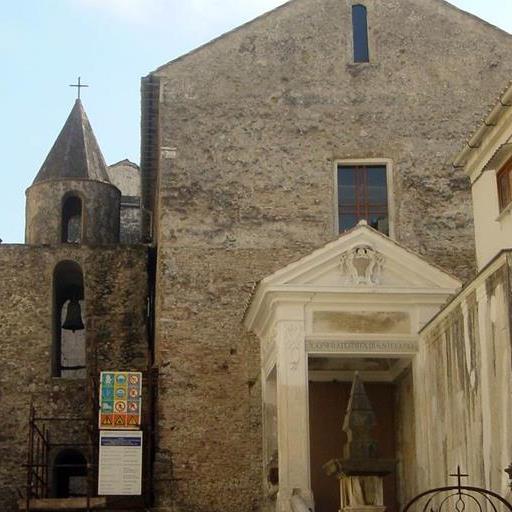
The campanile, which stands on the northern side of the chapel, is a 16th-century addition, along with the stairs, which today provides access to the church from the outside, restored in the 18th century. The’interior has a single nave with apse. On the north wall, two mullioned windows with a central column can be seen on either side of the bell tower, while, in the direction of the apse, the wall ends with two single-lancet windows. The windows and the loggia were the only light outlets for the interior of the chapel.
In the 13th century, the church was used for public ceremonies, including the conferment of degrees from the Salerno Medical School.
From the sixteenth to the nineteenth century, the church, with ups and downs, was disputed between the abbots of San Pietro a Corte and the archbishops of Salerno. With the legislation of 1867, the abbey was suppressed. In 1881 the Pignatelli princes sold the property to the Confraternity of the’Immaculate Conception, extinguished by which, the church passed in 1938 to the Confraternity of St. Stephen, from which it also took its name.
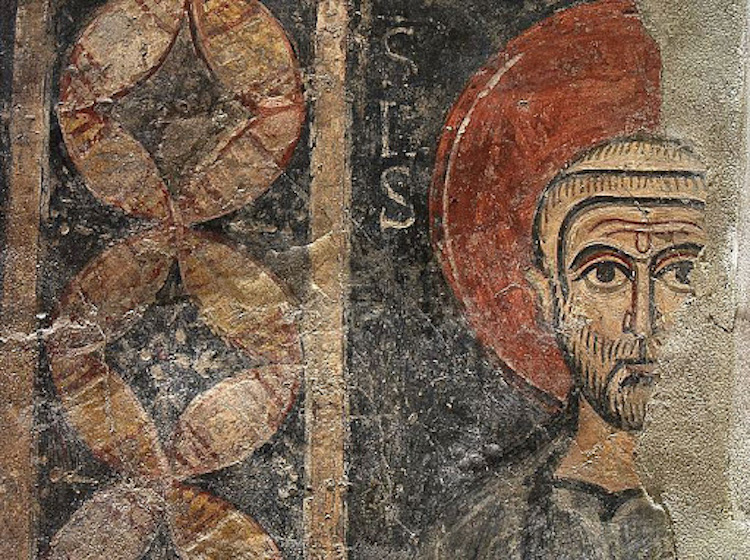
The lower room, or hypogeum, is divided into two compartments placed on different levels: one level is concerned with the sepolcrete, the other concludes to the east with a rectangular apse, with a presbytery bordered by low walls and provided with a small altar. The walls of the latter room are also found to be frescoed with iconic paintings, dating from the late 12th century, of strong Byzantine influence.
Addressed to the medieval complex of St. Peter a Corte is, finally, a small chapel called St. Anne, the vault of which is painted with Marian scenes, the work of the painter Filippo Pennino from the second decade of the 18th century, while on the southern wall is located a second painting depicting St. Anne with the Virgin child and two saints, the chronology of which does not exceed the mid-16th century.
Loading…
| Monday | temporarily closed | |
| Tuesday | temporarily closed | |
| Wednesday | temporarily closed | |
| Thursday | temporarily closed | |
| Friday | temporarily closed | |
| Saturday | temporarily closed | |
| Sunday | temporarily closed |
Salerno longobarda Artistic Historic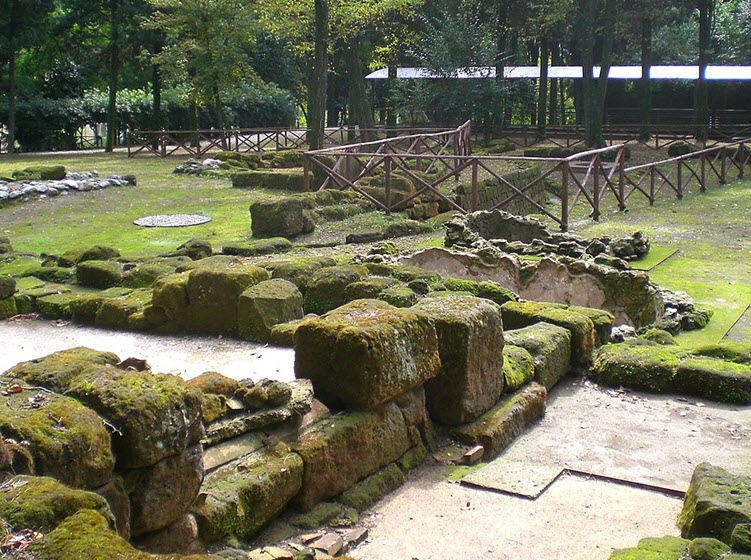 Ancient Salerno: between Etruscan and Romans Artistic Historic