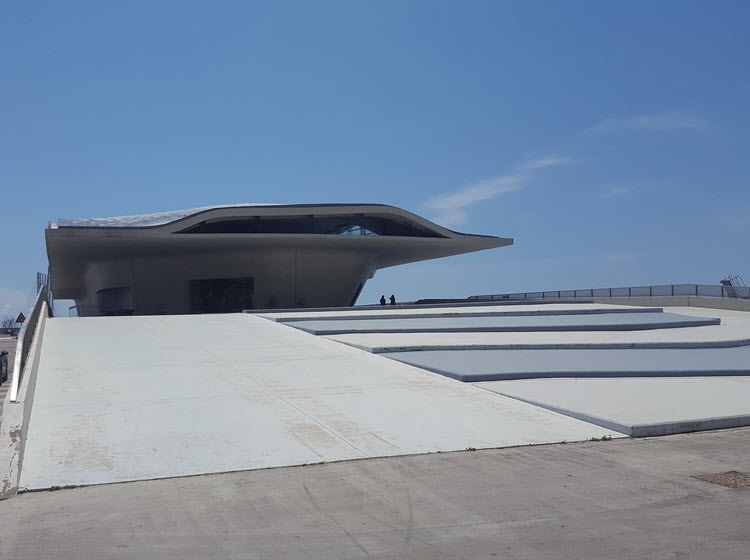
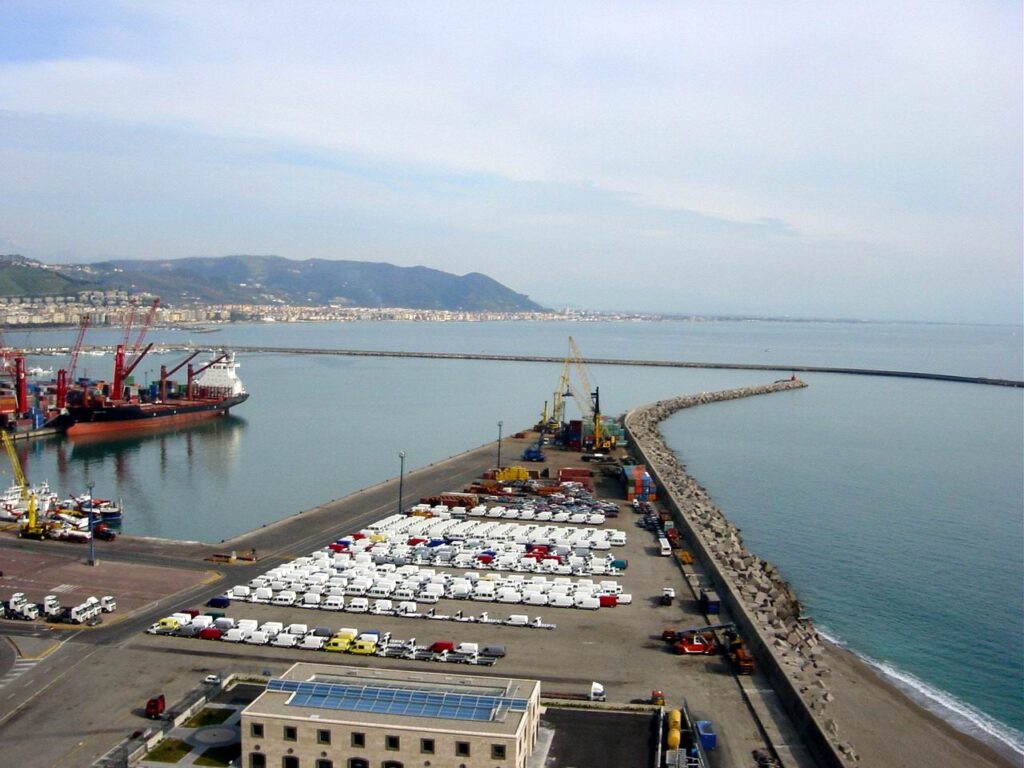
The waterfront in Salerno is the largest urban development that foreshadows the city’s future. Ever since the architect Bohigas envisioned the development of the city in services and tourism in the 1990s, he decided that the waterfront should become the focus of new urban planning.
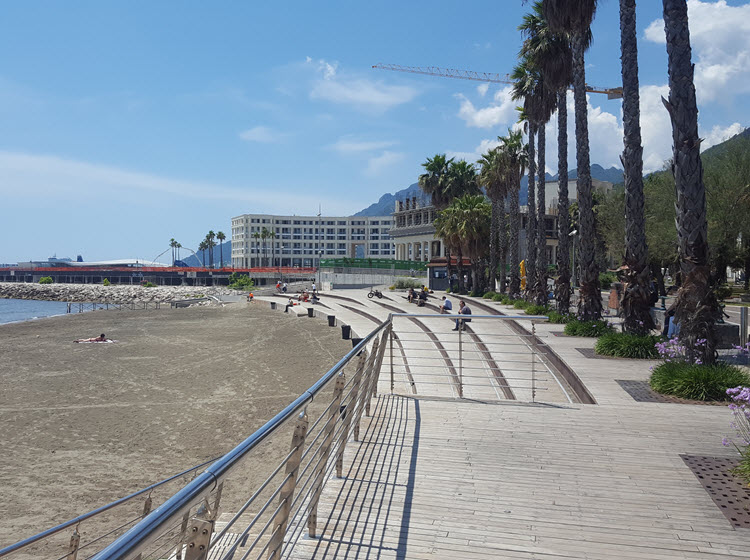
The Piazza della Libertà represents the junction point of the interventions: the relationship with the Lungomare, the connection with the Tourist and Commercial Port and the Maritime Station, the redevelopment of a degraded port area close to the Villa Comunale and thus with the entrance to the city are the elements that have characterized the design of this place of the new Salerno. An intervention that has had a tormented vicissitude, due to the controversies that have arisen on the correctness of the realization, both from the administrative and aesthetic/functional point of view, but that have finally come to an end, with the expectation of the end of the work soon (end of 2020).
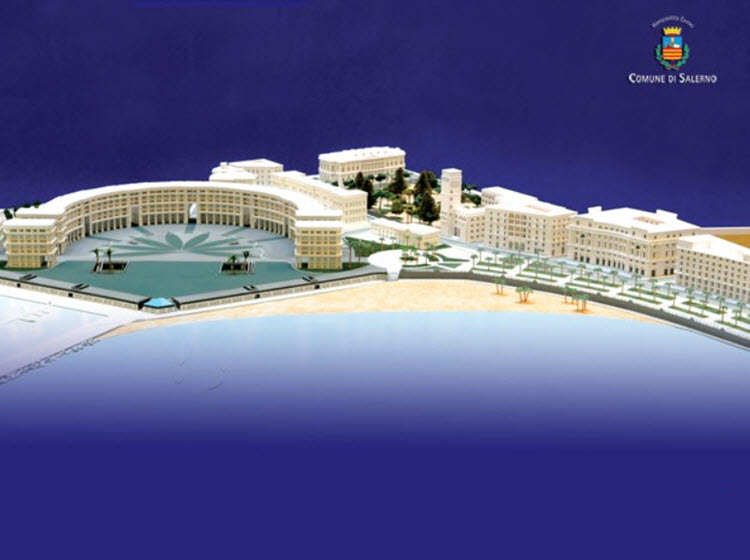
The square has as its backdrop the Crescent, a semicircular building of great scenic impact, with residential purposes, and with a wing intended to house a hotel. The intervention was entirely designed by Catalan architect Ricardo Bofil, and aims to recover both the visual and functional relationship with the sea, restoring, as mentioned, the surrounding environment and connecting the sea front with nearby architectural emergencies – City Palace, Villa Comunale, Teatro Verdi – and the old town not far away. The building is semicircular, while the square is triangular, slightly raised above the surrounding level, and has a promenade that connects the Saint Teresa area on the Waterfront with the harbor and the Maritime Station. A system of parking lots, services, and commercial environments will functionally complete the entire area.



 L'evento inizierà tra 167 giorniSan Matteo fest Free admission 21 Sep 2026