


 Places of the Salernitana Medical School Artistic Historic
Minerva Garden
- Description
- Event
- News
- Gallery
- Contacts
- Map
- Opening hours
- Itineraries
Historical background
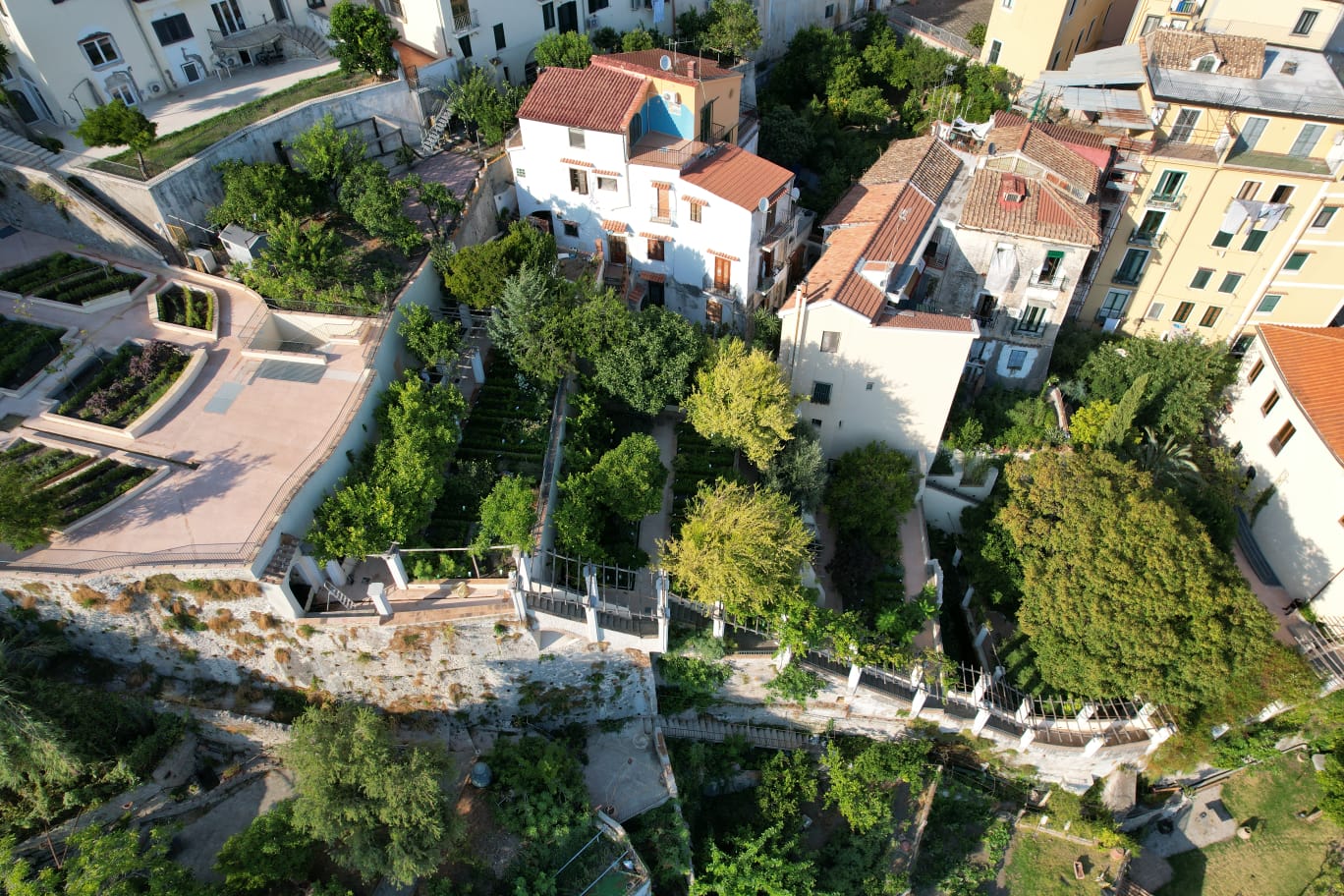
The Minerva Garden is an ancient botanical garden garden in the upper part of Salerno’s historic center. Located on the slopes of Bonadies Hill, enclosed between the Fusandola Creek and the city’s ancient city walls, the garden is what remains of the medical garden of Matteo Silvatico, illustrious master of the Salerno Medical School.
It was Matthew who wrote, around 1317, the “Liber Cibalis et Medicinalis Pandectarum“, a valuable collection on the so-called ‘simple’, plants with which medicines could be made. A great number of medicinal herbs and plants were cultivated and classified here, and it was in this place that Matteo Silvatico himself taught his students. Thus, on this hill was born the first botanical garden in the Western world, whose particular type of design and use of vegetation were taken up in the botanical gardens of Padua, Pisa, Florence, Pavia and Bologna.
The area of the’ancient garden has had numerous owners over the centuries, who have partly modified and integrated its architecture and landscape. After World War II, the last owner, Professor Giovanni Capasso, donated the entire structure, allowing it to be put to public use once again. The Municipality of Salerno, the current owner of the property, in 2000 gave light to the project of a new botanical garden inspired by Matteo Silvatico, working in the tradition of that Medical School that made the city of Salerno one of the most important centers for ancient Western science.
The Garden
The Minerva Garden is divided into terraceswith a water distribution system characterized by basins and fountains for each terracing, which has ensured that the plots have been kept in cultivation over the centuries.
The most valuable element of the gardens is the seventeenth-century staircase, built on the ancient walls, supported by square pillars with simple stucco decorations. The staircase, located on the outermost side of the garden, connects the various terraces, leading to a belvedere pergola, from which one can admire the harbor and the historic center of the city. The first level of the garden, the lowest one, is the largest in size and features regular square flowerbeds that echo the oldest layout found by scouring the deepest layers of the soil.
The basin on this level is the one with the largest size.
The basin present on this level, called the peschiera because of its elongated rectangle shape, is punctuated on its outer side by four columns. This first level features a balustrade that forms a’wide and long terrace overlooking an exceptional panorama.
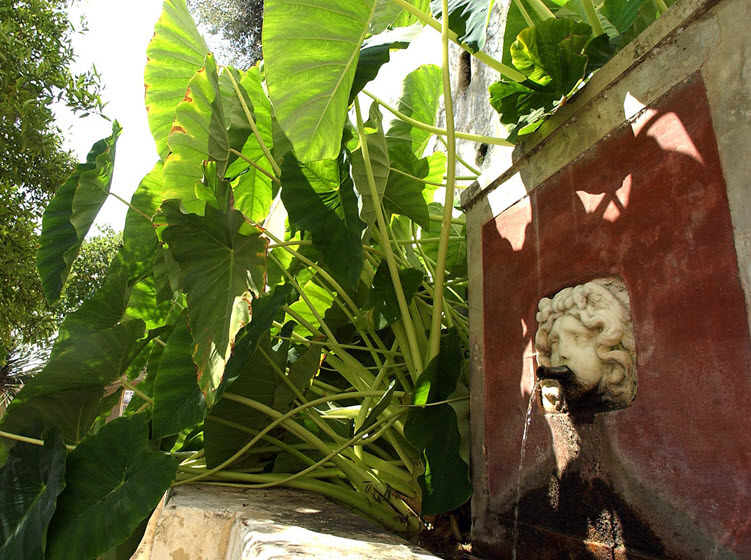
The staircase leads to the second level, where there is a tub with simple lines and a distinctive marble mask. Continuing uphill, one reaches a narrow terrace on which there is a small fountain decorated with limestone creations. The still higher level features a pergola, placed in the corner sheltered by the terraced walls. The latter terrace is enriched by the artificial grotto with afishpond, where a spring of water creates a striking decoration of mosses. The cavern is entirely covered with limestone concretions, and the light filtering through the mosses creates with the water a pleasant play of reflections.
In the garden there is a refreshment point run by the Nemus Association, which specializes in the preparation of herbal teas with indigenous and certified products, and it is also possible to admire some painted medieval tiles, found during the restoration of the overlooking Palazzo Capasso.
To be discovered
- The plants
.
There are over 300 species of plants in the Garden. In the first and largest terracing of the garden, the plants are arranged according to the ancient system of plant classification. In all other flowerbeds, however, the plants are arranged according to a landscape criterion.
- The water system
.
A complex system of water distribution, consisting of canals, tanks and fountains, one for each terrace, denotes the presence of conspicuous sources that have allowed, over the centuries, the maintenance of the plots for cultivation.
- Artemisia absinthium – True Wormwood
Among the many species present, appears True Wormwood known since Antiquity for its beneficial properties in stimulating appetite and the secretion of gastric and bile juices and against intestinal colic. Its distillate is aromatic and very bitter and forms the main basis in the preparation of vermouth wine.
Curiosities
- A garden and a herbarium
.
During the Middle Ages botanical gardens had primarily medicinal and culinary purposes. Herbs and plants were catalogued and used to obtain traditional remedies, but also to create herbaria and botanical manuscripts, that is, collections of dried plants accompanied by descriptions of medicinal properties, which were then used as resources by physicians and pharmacists.
- A matter of ‘humors’
According to medieval medical botanical studies, the human body consisted of the four humors (blood, black bile, yellow bile and phlegm), which in turn corresponded to the four elements (air, earth, fire and water). An imbalance of the four humors generated disease in the patient, which therefore had to be counteracted by using a product of nature opposite to the prevailing mood than the others.
- Boccaccio and “The King’s Physician”
Giovanni Boccaccio dedicated the fourth day of the Tenth novella of the Decameron to Matteo Silvatico, reporting him under the pseudonym of maestro Mazzeo della Montagna, an elderly doctor from Salerno. The meeting between the two would have taken place in Naples between 1327 and 1340 at the court of King Robert of Anjou, whose personal physician Silvatico was.
Loading…
| month | Horary | Opening Days |
|---|---|---|
| January | 9:30 a.m. – 4:30 p.m. | Mar – Sun |
| February | 9:30 – 13:00 | Mar – Sun |
| March | 9:30 – 17:00 | Mar – Sun |
| April | 9:30 – 19:00 | Mar – Sun |
| May | 9:30 a.m. – 7:30 p.m. | Mar – Sun |
| June | 9:30 – 20:00 | Mar – Sun |
| July | 9:30 – 20:00 | Mar – Sun |
| August | 9:30 – 20:00 | Mar – Sun |
| September | 9:30 – 19:00 | Mar – Sun |
| October | 9:30 – 18:00 | Mar – Sun |
| November | 9:30 – 16:30 | Mar – Sun |
| December | 9:30 a.m. – 4:30 p.m. | Mar – Sun |
PAID ADMISSION: Euro 6.00.
(valid for the Minerva Garden, the “E. Papi” Museum and the Virtual Museum of the Salerno Medical School)
REDUCTIONS (€2.00): School groups of all grades (free admission for the accompanying person); University students (upon presentation of ID card); Individual visitors d’over 70 years old or under 12 years old.
REDUCTIONS (€ 4.00): Tourist groups with licensed guide (minimum 15 visitors)
ANNUAL SUBSCRIPTION € 30. You can purchase the subscription by paying directly at the Garden ticket office. The card will be collected only at the Garden ticket office and the expiration date will take into account the day of collection.
For group visits (reservation required) contact the Garden Secretariat.
DOG ACCESS PROHIBITION.
Facebook page: Minerva’s Garden
Instagram page: Garden of the Minerva
Places of the Salernitana Medical School Artistic Historic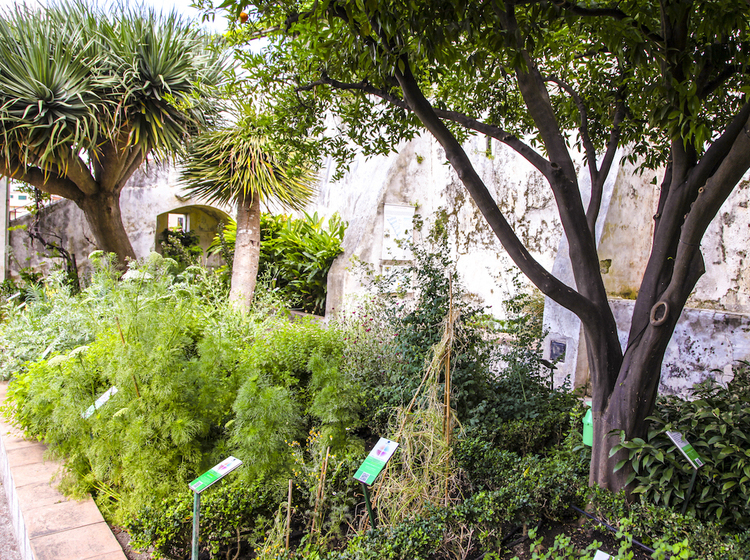 Salerno angioina-aragonese Artistic Historic