• Home
  • Salerno
    • History of Salerno
    • Historical Figures
    • Traditions
    • Food and Wine
    • Mobility in Salerno
    • Places Nearby
    • Useful Links
  • Events
    • Find an Event
    • Artist Lights
    • Must-see events 2026
  • Explore places
    • Itineraries
    • Verdi Theater
      • Theater Home
      • The season 2026
      • Ticket office
      • Guided Tours Verdi Theater
    • Cultural Venues and Theatres
    • Churches and Monasteries
    • Palaces and Squares
    • Museums and Archaeology
    • Gardens and Parks
    • Modern Architecture
  • News
  • English
    • English
    • Italiano
    • Français
Salerno Cultura -
  • Home
  • Salerno
    • History of Salerno
    • Historical Figures
    • Traditions
    • Food and Wine
    • Mobility in Salerno
    • Places Nearby
    • Useful Links
  • Events
    • Find an Event
    • Artist Lights
    • Must-see events 2026
  • Explore places
    • Itineraries
    • Verdi Theater
      • Theater Home
      • The season 2026
      • Ticket office
      • Guided Tours Verdi Theater
    • Cultural Venues and Theatres
    • Churches and Monasteries
    • Palaces and Squares
    • Museums and Archaeology
    • Gardens and Parks
    • Modern Architecture
  • News
  • English
    • English
    • Italiano
    • Français
Salerno Cultura -
  1. Home
  2. Explore places
  3. Palaces and Squares
  4. Terracena Castle

Terracena Castle


  • Description
  • Event
  • News
  • Gallery
  • Contacts
  • Map
  • Opening hours
  • Itineraries

Extended description

Robert the Guiscard conquered Salerno, founding a new dynasty, no longer Lombard, but Norman, and, perhaps in tribute to his wife, Princess Sichelgaita, he built a new Reggia to replace Palazzo San Massimo and Palazzo d’Arechi, the ancient residences of the city’s lords. Salerno was the capital of a dominion that stretched across the whole of the Mezzogiorno, and before the conquest of Sicily, it was the city from which the new Norman duchy, soon to become the Kingdom of the Two Sicilies, was governed.

The palace had to live up to the role that the city and its lords gave themselves. Unfortunately, the traces of Castel Terracena are few today, but they hint at the splendor of the palace, certainly with also military scopes – hence the name of Castle – close to the Duomo that Guiscard had wanted to build. The period of construction is between 1076 and 1080. It was located near the eastern walls of Salerno, on top of a hill, east of the cathedral and also close to the Complex of St. Benedict, which was the religious counterpart of the secular domain.

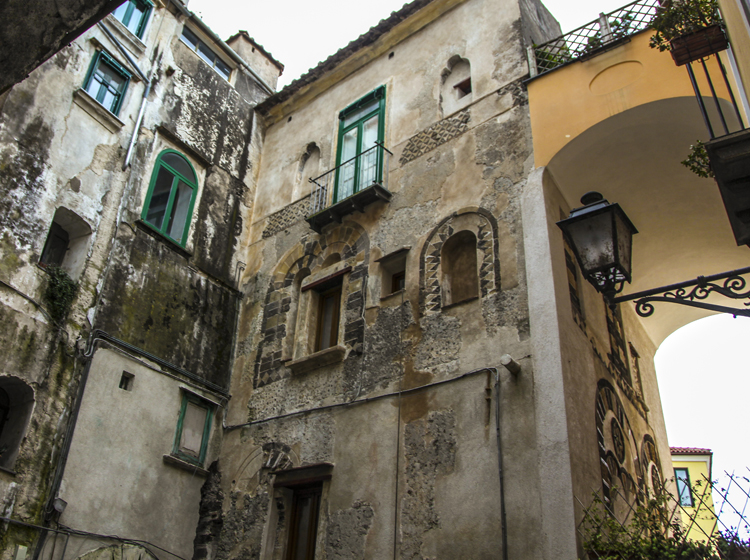
Today of the complex, which covered an area from the present Archaeological Museum to almost the Duomo, some towers decorated in “tarsias” of yellow and gray tuff are clearly recognizable, which have had a recent restoration, which has enhanced them. The windows are animated by bands with various motifs, some with geometric patterns others more complex.

The palace was probably destroyed by a terrible earthquake in the 13th century and was later incorporated into new buildings.

Loading…


Orari di apertura

always open


Itineraries
Salerno Normandy Artistic Historic

Comune di Salerno
Via Roma – Palazzo di Città, 84121 Salerno
C.F. 80000330656 P.IVA 00263650657

Email: cultura@comune.salerno.it

Segnalazione disservizi sul portale: 
utd@pec.comune.salerno.it

Esplora Luoghi

  • Itinerari
  • Teatri e Spazi Culturali
  • Architettura Moderna
  • Musei e Archeologia
  • Palazzi e Piazze
  • Chiese e Monasteri
  • Giardini e Parchi

Eventi

  • Teatro
  • Concerti
  • Danza
  • Fiere
  • Manifestazioni
  • Mostre
  • Musica
  • Opera
  • Prosa
  • Rassegne

Salerno

  • Personaggi
  • Enogastronomia
  • Calendario Crociere
  • Mobilità a Salerno
  • Progetti
  • Luoghi nei Dintorni
  • Link utili

© 2026 Comune di Salerno – Tutti i diritti riservati

  • Credits
  • Privacy Policy
  • Cookie Policy