


 L'evento inizierà tra 108 giorniSt. Matthew 2026 Free admission 21 Sep 2026
Cathedral of St. Matthew – Salerno Cathedral
- Description
- Event
- News
- Gallery
- Contacts
- Map
- Opening hours
- Itineraries
The Duomo di S. Matteo or Cathedral is in the heart of Salerno, placed at the center of the triangle, by which the plan of the historic city is defined, with the Arechi Castle and at the lower vertices the Church of the Annunziata and Porta Nova.
The cathedral that dominates the square dedicated to Alphanus, was founded following the conquest of Salerno by the Norman armies of Robert the Guiscard and was consecrated in 1084 by Pope Gregory VII, who had taken refuge in Salerno to escape the attacks of Emperor Henry IV.
The cathedral today bears a mixture of elements reminiscent of its evolution, from Romanesque to Baroque, via Lombard, Byzantine, Norman and Renaissance.
The current appearance is due to Baroque renovations initiated in the aftermath of the 1688 earthquake. Ascending a double-ramped staircase, leaning against a neoclassical facade, one arrives at the entrance, greeted by sculptures of the lion and lioness.
The City Hall is a small, elegant building.
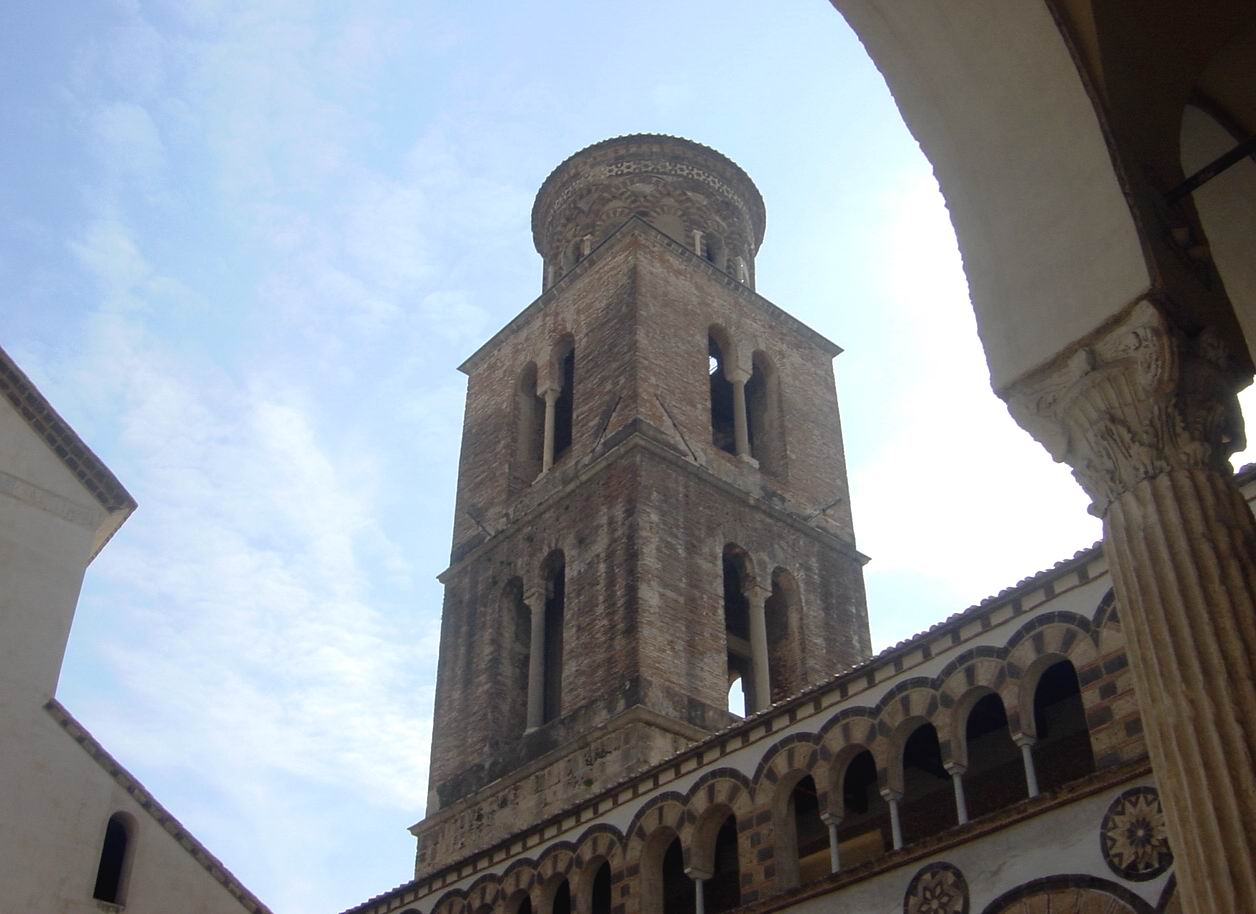
The Lion Gate opens to an atrium with a quadriporticus of 28 bare columns and raised round arches of Islamic character, on whose side and southern arms is raised a loggia with mullioned windows and pentaphores. Roman sarcophagi reused in medieval times, tombstones, erratic pieces walled into the walls, and frescoes enrich the arcade, which closes on the southern side with a monumental campanile Norman, erected by Archbishop Guglielmo da Ravenna between 1137 and 1152.
The church is a monumental building with a bell tower, a bell tower, and a bell tower.
A medieval marble portal with a Byzantine bronze door gives the main entrance to the upper basilica with three longitudinal naves and three apses, in which the total 18th-century makeover is evident. The most interesting part is the choir area, which leads into the chancel and is preceded by two monumental amboes. These are two masterpieces of medieval art, built and decorated between the 12th and 13th centuries. Particularly beautiful are the sculptures that adorn them.
Another artistic jewel is the Funeral Monument of Queen Margaret of Durazzo, a fascinating example of late Gothic sculpture, dating from the early 1400s and executed by Antonio Baboccio di Piperno.
From the basilica one descends into the splendid crypt aula. It was the first body built, although its present appearance is due to work carried out in the seventeenth century to plans by architects Domenico and Giulio Fontana. The space is organized around the famous two-faced statue of St. Matthew, created by Michelangelo Naccherino (1606) and erected above the tomb of the patron saint with a double altar. On the vault we find frescoes by Belisario Corenzio (1611) with sacred scenes from the life of Jesus.
Inside the Cathedral, accessible from the street level to the right of the entrance, are the two chapels of St. Catherine. Both chapels were used for teaching between the 12th and 13th centuries and are believed to be among the most prestigious seats of the Salerno Medical School. The lower chapel, variously decorated in the two naves divided by pillars, is known as the Sala San Lazzaro. The upper chapel is, on the other hand, known as the St. Thomas Room, because St. Thomas Aquinas taught theology here, between 1259 and 1273.
L'evento inizierà tra 108 giorniSt. Matthew 2026 Free admission 21 Sep 2026| Monday | 09:30 am – 6:30 pm | : – : | |
| Tuesday | 09:30 am – 6:30 pm | : – : | |
| Wednesday | 09:30 am – 6:30 pm | : – : | |
| Thursday | 09:30 am – 6:30 pm | : – : | |
| Friday | 09:30 am – 6:30 pm | : – : | |
| Saturday | 09:30 am – 6:30 pm | : – : | |
| Sunday | 09:30 am – 6:30 pm | : – : |
Cost: Full Pass -> Cathedral, Diocesan Museum and St. George’s Church:
10 euros (Reduced 6 euros) / Smart Pass -> two sites of your choice from Diocesan Museum,
Cathedral and Church of St. George: 7 € – Reduced 5 € / Single Pass -> 5 € (Reduced 3 €)
Reduced Cost: Reductions for students aged 6 to 18;
over 65; seminarians. // Info, rates and tickets at www.salernosacra.it
For pilgrimages, reservations are required at the Primatial Cathedral by calling 089231387 or by e-mail at cattedraledisalerno@gmail.com
.
 Places of the Salernitana Medical School Artistic Historic
 The Grand Tour and Salerno Artistic Historic
 Salerno in modern age Historic Religious
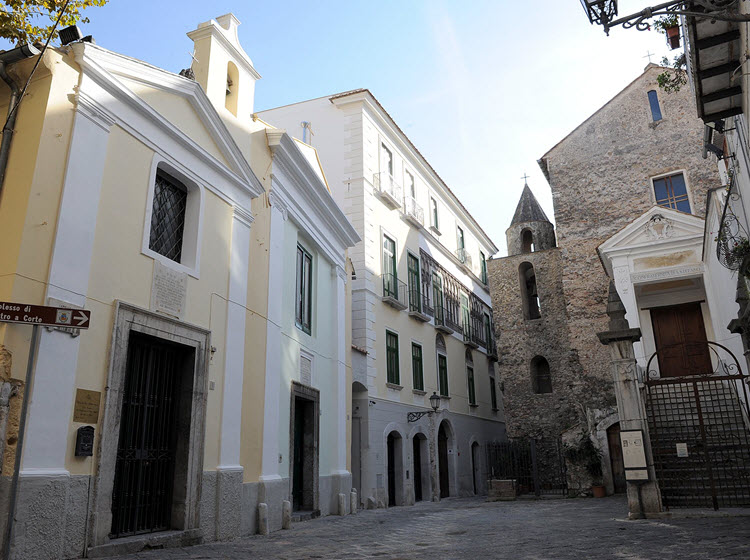 Salerno Normandy Artistic Historic
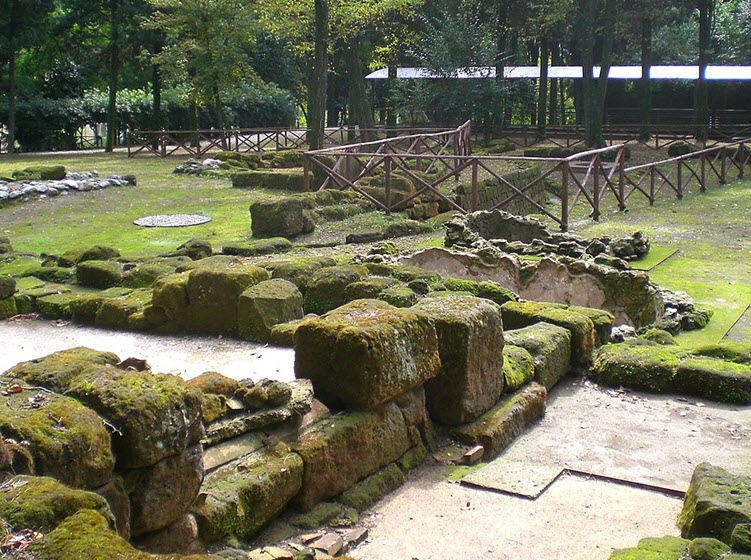 Ancient Salerno: between Etruscan and Romans Artistic Historic
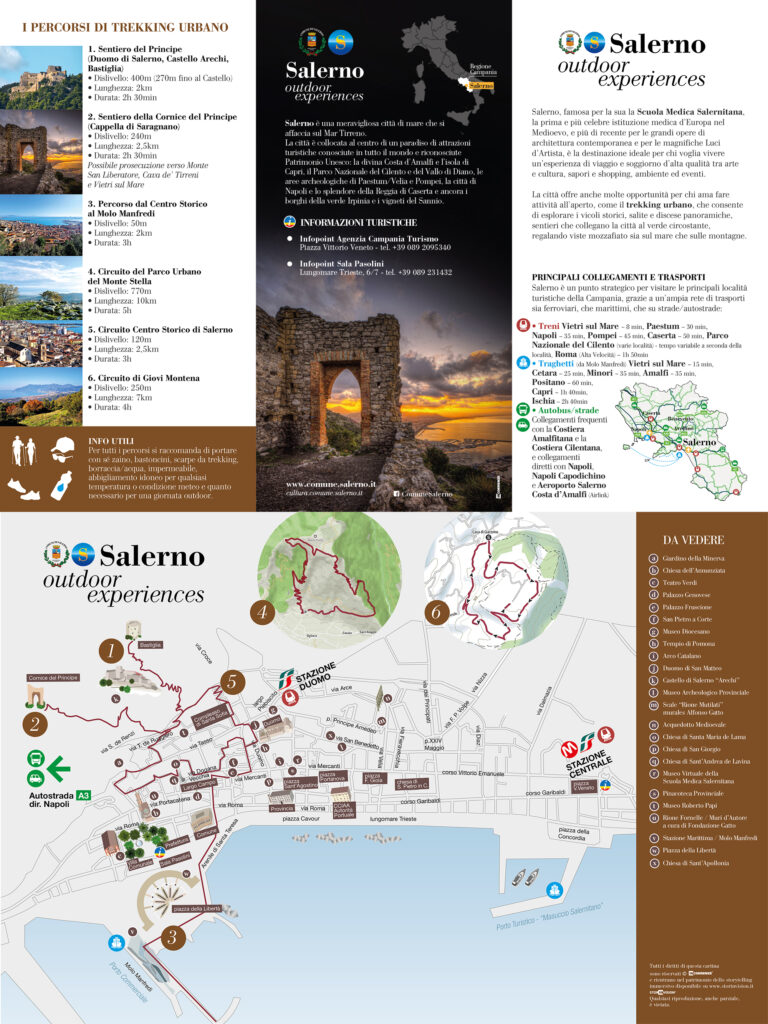 Salerno outdoor experiences – Map Artistic Historic Several days Media