


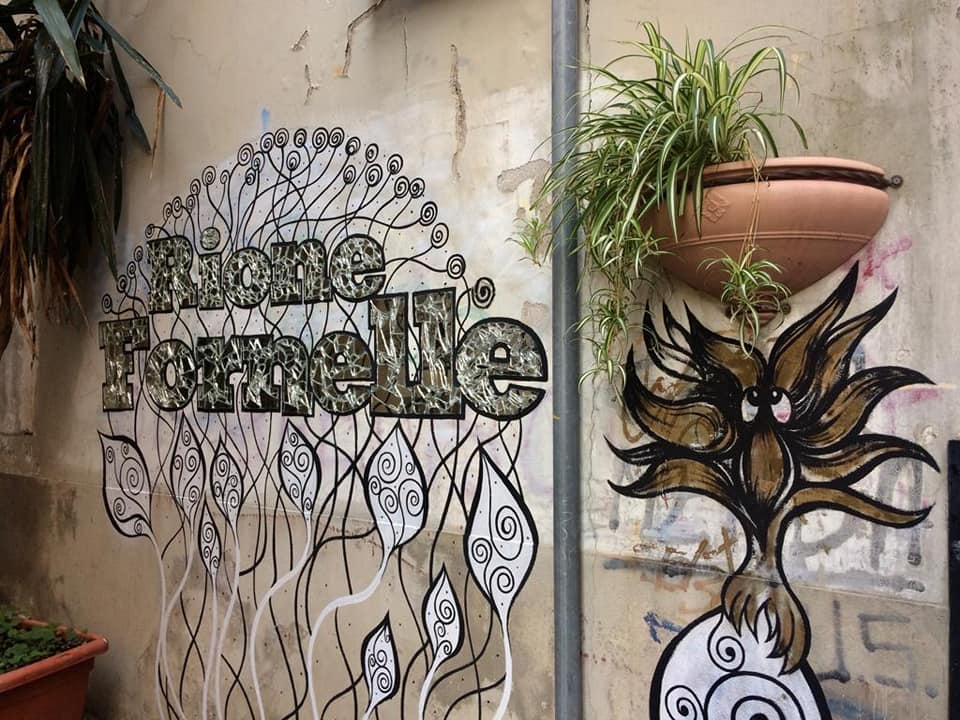
 Street Art in the Fornelle District Artistic Historic
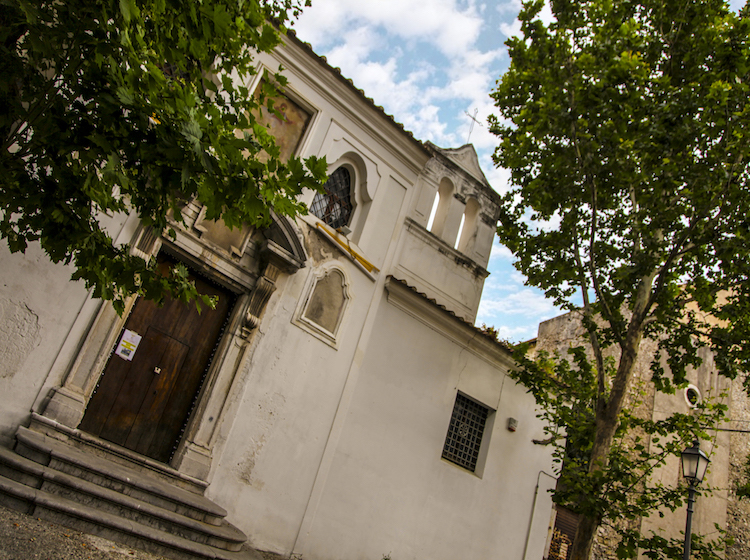
Among the churches in the historic center
- Description
- Event
- News
- Gallery
- Contacts
- Map
- Opening hours
- Itineraries
We start from Piazza Portanova, with a visit to the Church of St. Peter in Vinculis, home, originally, of the Confraternity of the same name, which was founded in the second half of the 16th century to carry out assistance to prisoners. The most interesting elements are the high altar in polychrome marble and the ceiling decorated with hagiographic paintings of Saints Peter and Paul. Not far away is the small Cappella della Madonna delle Grazie, built in the late 17th century to give comfort to those condemned to death who stopped here to address their last prayers to the Virgin. Continuing along Via Mercanti, at no. 46, we come across the ancient Church of San Pietro de Grisonte (now called San Rocco), which has a rectangular floor plan with barrel vaults divided into squares decorated with stucco and frescoes; on either side of the 18th-century altar are statues of San Rocco and Christ.
Continuing on, through the steps adjoining the Virtual Museum of the Salerno Medical School, one arrives at the small De Crescenzo square, in the ancient San Giovanniello neighborhood. Taking the characteristic Castel Terracena alley, which takes its name from the location of the Castle, you come out onto Via S. Benedetto where you can visit the Monastery of St. Benedict and the Church of St. Apollonia, closed to worship but used as a space for cultural events. After turning right onto Via Sant’Alferio, continue walking along Via Bastioni and, having crossed Piazza di Portarotese, you will arrive at Largo Plebiscito, where the Diocesan Museum overlooks. A short distance from the museum is the Church of the Morticelli, one of the four churches (along with the church of S. Salvatore de Fondaco, that of Sant’Anna al Porto and the chapel of San Filippo Neri) with an octagonal plan present in the center of Salerno. Travelled along Via Matteo della Porta, one enters Piazza S. Tommaso d’Aquino, where the former Monastery of Santa Maria della Mercede (1692) is located, which became, in the early 18th century, a cloistered convent for the Mercedarian nuns who practiced the rule of St. Augustine; today it is occupied by the offices of the Tar and the Juvenile Court. The Church of Santa Maria della Porta and San Domenico, located in the same square, was built in 1275 and is known to have housed St. Thomas Aquinas. It is divided into three spaces: the nave with four chapels adorned with valuable paintings, the choir surmounted by the dome, and the chancel raised by four steps.
You go down Via Romualdo Guarna II and continue to Abate Conforti Square: on the right, the former Convent of Santa Maria Maddalena now home to the State National Boarding School T. Tasso. To the left, the eponymous ascent will lead to the steps of Montevergine, close to the ancient walls. A small dome marks the entrance to the 11th-century Monastery of Santa Maria de Monalibus, since 1716 Conservatory of Montevergine. Leaving on via De Renzi one can continue, via Santa Maria della Consolazione, to the Church of San Filippo, which is not accessible today. Turning back along Via Tasso, along the old Intendenza salita, one reaches the ancient Church of Santa Maria de Alimundo, in which, according to Salerno historian Matteo Fiore, Masuccio Salernitano.
The convenient elevator on Via Tasso will take you to Piazza d’Aiello in the heart of the Quartiere Fornelle, where there is a church of Lombard origin dedicated to S. Trofimena which, it is said, was built to house the saint’s relics transferred from Benevento. Through Santa Trofimena alley, one comes to Portacatena Street. To the right are the buildings of the Lanzalone Middle School, which once housed the Convent and Hospital of San Biagio and those of the respective church renovated in the Baroque era. Continuing in the direction of the Villa Comunale, near the Teatro Verdi rises the Church of Sant’Anna al Porto, so named to distinguish it from the other church dedicated to the saint, located on Via S. De Renzi (Canalone district). The festival with procession dedicated to St. Anne is one of the most characteristic and appreciated by the citizens of Salerno and takes place on July 26 in alternate years in the port area and in the Canalone area (where the Church of St. Anne in San Lorenzo stands).
Loading…
| Monday | : – : | : – : | |
| Tuesday | : – : | : – : | |
| Wednesday | : – : | : – : | |
| Thursday | : – : | : – : | |
| Friday | : – : | : – : | |
| Saturday | : – : | : – : | |
| Sunday | : – : | : – : |
Street Art in the Fornelle District Artistic Historic