


The History of the Salerno Medical School spans nearly a millennium, with its legendary foundation occurring in the Lombard era until the early 19th century with its final closure.
The Salerno Medical School is considered the oldest institution in Western Europe for teaching not only medicine but also other disciplines.
Very important is the connection between the city and its School. Salerno’s geographical position in the heart of the Mediterranean placed the city at the center of important maritime exchanges with the East and Africa, mediated by Amalfi and Sicily. From the variety of cultures converging in Salerno in the early Middle Ages precisely the medical tradition inspired by the Greek Hippocrates developed. The city, included in the Lombard kingdom and closely allied to the Roman Curia, kept the Greek-Latin tradition alive in southern Italy, so that it was called “Urbs graeca” or “Hippocratica civitas.” Salerno in the Middle Ages was known as a place that brought well-being: people came there from other cities to regain their health, trusting in the wisdom of its famous doctors.
The elements of fascination are already in the birth of the Salerno Medical School, shrouded in mystery and disputed between history and legend.
The hypotheses are many:
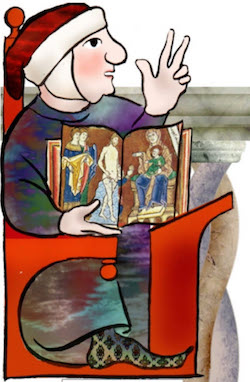
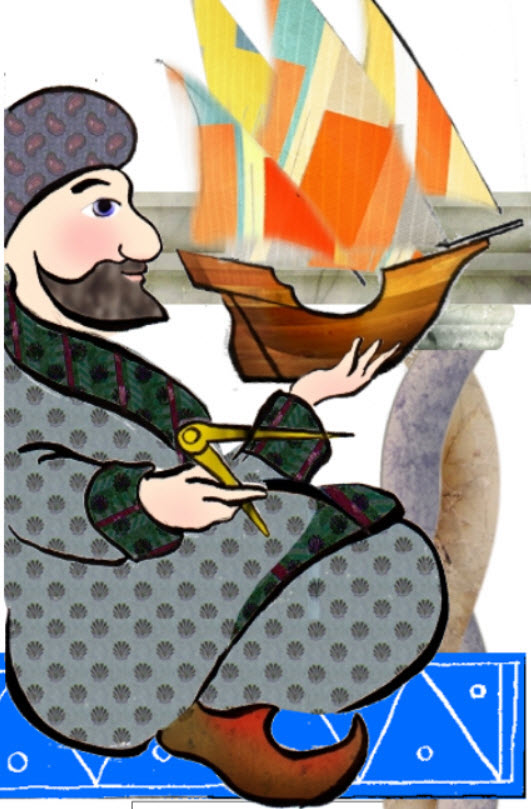
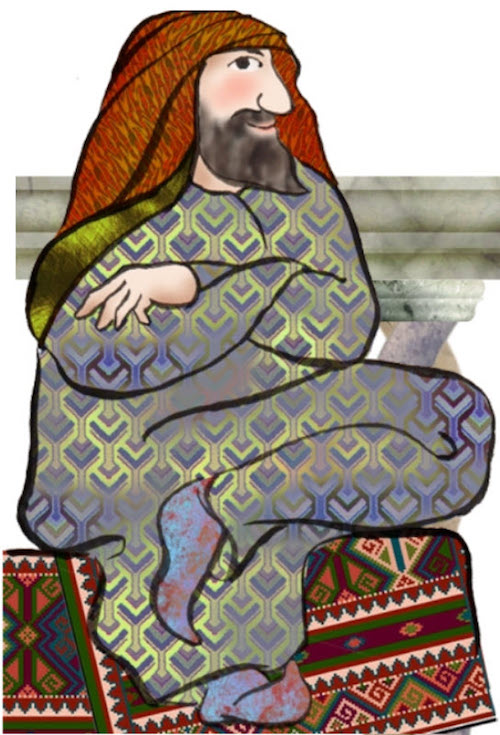
The school was founded by four masters of different nationalities: the Jew Elinus, the Greek Pontus, the Arab Adela and the Latin Salernus. This legend, reported by Antonio Mazza, the seventeenth-century prior of the medical college, is now set aside, but it nicely underscores the international and perhaps secular character of the school at a time, the Middle Ages, when all teaching was the preserve of the clergy.
The school came into being around the 6th century AD, building on a medical school operating in Velia since the 5th century BC. Velia (today Ascea in the heart of Cilento) was in fact a flourishing commercial and cultural center, founded by the Phocians on the left bank of the Alento River, later becoming known as Elea and as the seat of the very famous Eleatic school of the philosopher and physician Parmenides. Some statues of physicians found in Velia in the 1960s would confirm the continuity between the Velia and Salerno schools.
The school has Roman origins, as indicated in a document found by the nineteenth-century scholar Salvatore De Renzi. In this sort of treaty between Salerno and Count Roger, who took possession of the city after the death of Duke William (1127), Article X states that the College of Physicians, founded by the Roman emperors, would continue to confer medical degrees without interference from the Curia or Regi officials.
The school was never founded, but was slowly established, augmenting the medical knowledge inherited over the centuries.
The earliest documents, in which clear traces of Salerno medical knowledge appear, spread and integrated with other Italian and foreign medical teachings, date back to the 9th century.
The history of the Salerno Medical School can be divided into three periods:
from the origins to about the year 1000: this period ends with the arrival of the Carthaginian monk Constantine the African, who introduced his Latin translations of Arabic and Greek works to Salerno;
11th to 13th centuries: it begins with the Norman conquest and is the school’s golden age; in 1280 the school receives from Charles I the first statute of “Studium generale” in medicine;
from the first half of the 13th to the early 19th century: the school continues its activity with less luck and ups and downs until 1811. In this year, with the reorganization of public education in the Kingdom, Joachim Murat gives exclusively to the University of Naples the faculty to confer degrees.
 L'evento inizierà tra 165 giorniSan Matteo fest Free admission 21 Sep 2026