


Horace wants to vacation there, Boccaccio sets some novellas there, Basile sends a character to the Fair. Salerno is present in novellas and novels throughout two millennia.
Salerno was a Roman colony, and evidently already in the days of the Empire it had a reputation as a resort town. Horace in the 15th epistle decides to go on vacation to the sea and wants to escape from too well-known resorts such as Baia. He therefore turns to his friend Numonius Vala and asks him:
What is the winter like in Velia? What is the climate like in Salerno, Vala?
What kind of people live there? And what does the road look like?
What the Lucanian poet is interested in is a pleasant climate, the possibility of eating good fish, “a generous, lovable wine, that frees me from thoughts, runs through my veins and my heart filled with hope.” We do not know whether he finally chose Salerno or Velia (today Ascea on the Cilento coast), but in any case he must have found what he was looking for.
In the Middle Ages, however, Salerno was known for its Medical School and the not always pleasant reputation of its physicians as experts in poisons, a reputation that we know also concerned Sichelgaita. One legend tells of Robert, son of the Norman king William the Conqueror, who was wounded by a poisoned arrow and then came to Salerno to be cured. Terrible cure, because only someone who sucked the poison out of the wound, yet died in its place, could save him. And so did his wife Sibyl, who healed Robert and died of it.
Similar story is told by Hartmann von Aue who lived at the turn of the 11th and 12th centuries, who in his poem The Poor Henry, written in High German, tells of Prince Henry who, stricken with leprosy, arrives in Salerno from Germany to be cured, but what is prescribed for him is terrible: only the blood of a virgin can save him. A maiden offers herself, but Henry disdainfully refuses and is rewarded by a miracle that heals him and allows him to marry the young woman. A story later retold in the 19th century by Longfellow, the poet who translated the Divine Comedy into English.
Salerno remains linked to the Medical School, so much so that of the three novellae in the Decameron set in Salerno, one is dedicated to Mazzeo della Montagna, a doctor who is perhaps inspired by Matteo Silvatico. But Salerno from the thirteenth century onwards is also spoken of for the fair, and so does Boccaccio himself in another novella, in which a young Florentine merchant, passes to trade for the Salerno Fair.
Salerno is, of course, mentioned in many of the novelle by Masuccio, who sets a number of events in which the Salernitani make a good impression and mock the Amalfitani and Cavuoti (i.e., inhabitants of Cava dei Tirreni). These novellas mention the Church of St. Augustine and Drapparia Street, today’s Via dei Mercanti. Two centuries later, the author of Lo Cunto de li Cunti is also familiar with the Salerno Fair. Basile in the novella entitled “The Cockroach, the Mouse and the Cricket” has a character say:
“Here, therefore, are these hundred ducats: go to the Salerno Fair and buy as many heifers, so in three or four years we will make as many oxen.”
In later centuries Salerno is spoken of by Grand Tour travelers, who describe the amenity of the landscape and the natural riches of the Gulf.
Foscolo set one of his tragedies, Ricciarda, in Salerno, with a fictional medieval setting: “it is a tragedy all love, and terrible for contrasts of pity and ferocity, and of affections of friendship, of love, of brotherhood.” So wrote Foscolo to Silvio Pellico.
Among the many nineteenth-century travelers to Northern Europe was the great Christina Andersen, who in her fantasy novel The Improviser sets several episodes in Salerno, including the unlikely discovery of Alexander the Great’s burial in the cathedral. Fanciful is the reconstruction, but true is the description of the tomb, a Roman sarcophagus, of the kind that still stands in the atrium of the Cathedral.
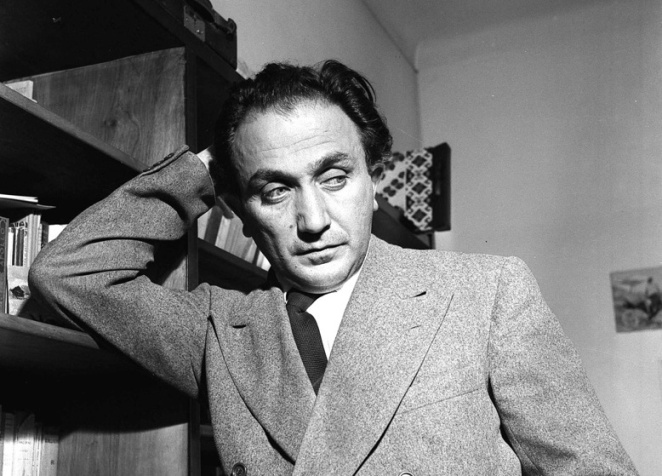
Rapid skim through the two-thousand-year-old literature, which we conclude with the verses of Salerno’s most famous poet, Alfonso Gatto, who wrote the poem known to all fellow citizens:
Salerno rhymes winter,
O sweetest winter.
Salerno rhymes of eternity.
 L'evento inizierà tra 167 giorniSan Matteo fest Free admission 21 Sep 2026