The picture gallery
The history of the Picture Gallery began in the first half of the last century, when Baron Gennaro Pinto donated the second floor of his palace and his personal collection of paintings to the Provincial Administration of Salerno. Over the following decades the collection was enriched through purchases, donations and testamentary bequests from the entire Salerno area.
Initially, the Pinacoteca was distributed among the different offices of the Province of Salerno, as the rooms of Palazzo Pinto housed part of the provincial library. A long and important restoration work interested this ancient noble residence with a medieval layout in the last years of the last century, bringing it back to its former glory.
Since 2001, the Picture Gallery has been welcoming visitors in a stately and prestigious setting in the heart of the historic center. In addition to its valuable collection, the museum hosts exhibitions and events of national and international scope and has become an obligatory stop on an ideal tour of the city.
The Collection
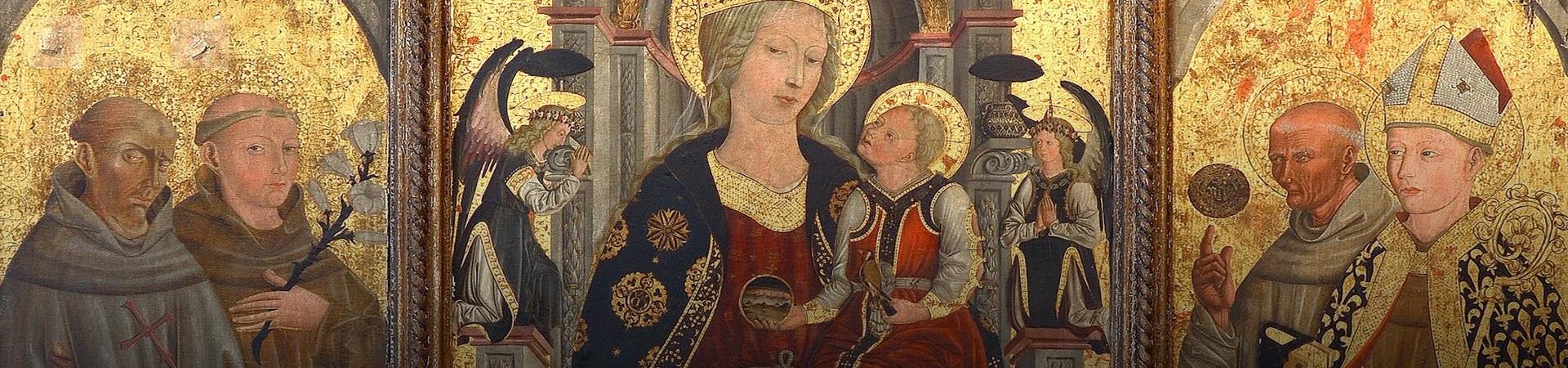
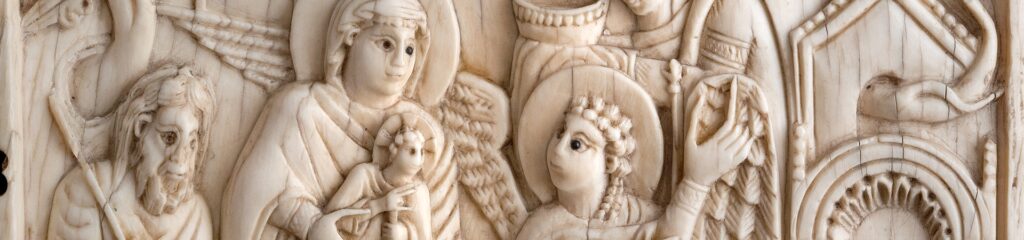
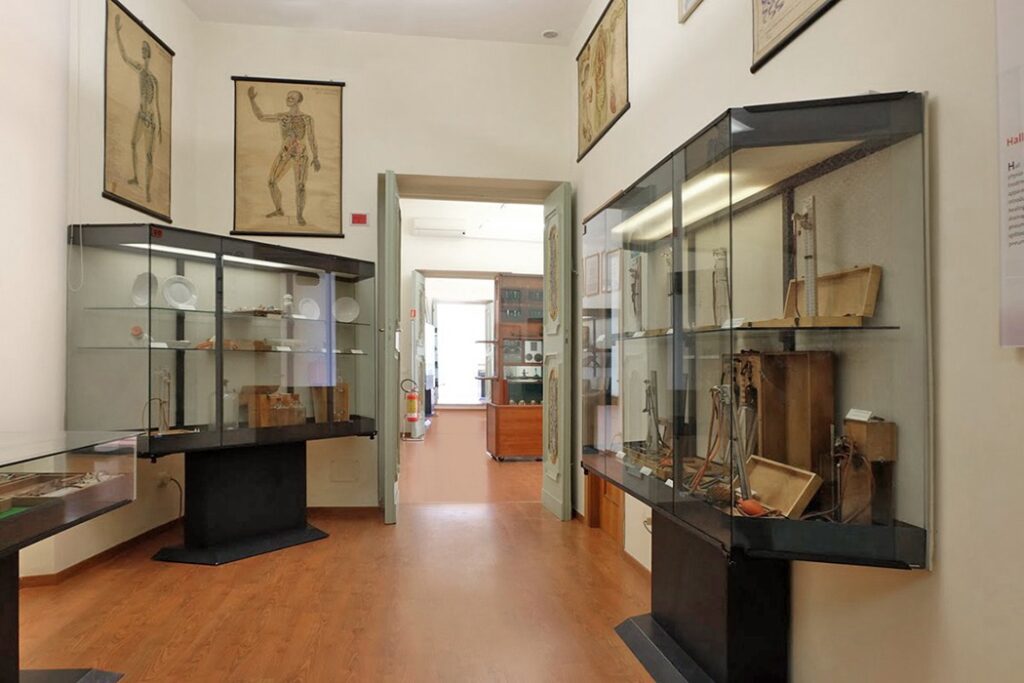
A fascinating gallery of sacred depictions, landscapes, still lifes, and portraits welcomes visitors to the five rooms of the permanent collection.
The rich holdings of paintings range from theRenaissance to the Novecento telling the story of the genius of artists such as Sabatini and theSolimena, up to the followers of the Scuola di Posillipo and the many foreigners who worked on the Coast.
The’exhibition is divided into several sections, divided according to a chronological criterion.
- In the Renaissance section we find the plates of Andrea Sabatini da Salerno and the Master of the Coronation of Eboli.
- Of great interest are the seventeenth-century canvases by Giovanni Battista Caracciolo, Andrea De Lioni, Carlo Rosa.
- Of the Eighteenth century are the canvases of Francesco Solimena and his Academy.
- Numerous are the paintings by painters from Salerno and the so-called costaioli, who lived between the second half of the nineteenth century and the twentieth century, such as Tafuri, Avallone, Capone.
- A section is devoted to foreign artists, whose presence was particularly important in a province like Salerno, traversed by so many heirs of the Grand Tour. The works, in this section, different in technique and materials, mostly belong to German authors who lived on the Amalfi Coast between the two world wars,. Among them are Stefan Andres, Kurt Craemer, Richard Dölker, Monica Hannasch, Irene Kowaliska, Bruno Marquardt, Vassilij Necitailov, Lisel Oppel, Karli Sohn-Rethel, Michael Theile, and Peter Willburger.
Hores to Discover
- Salome with the head of St. John the Baptist on the plate – Bottega of Battistello Caracciolo, first half 17th century
In the work the unknown follower of Battistello Caracciolo drew on a depiction of Salome with the head of the Baptist that must have circulated in the Neapolitan Caravaggesque milieu. The painting depicts Salome in the foreground with the tray on which the Baptist’s head was placed, next to it is an elderly woman, identifiable with Herodias, Herod’s wife and Salome’s mother, and on the right is the executioner still holding the knife.
- Madonna with Child and St. John – Leonardo Antonio Olivieri,first half of the 18th century
The painting has been attributed to the school of Francesco Solimena’s pupils, with particular reference to Leonardo Antonio Olivieri active in Naples from 1715. The Madonna is depicted with the infant Jesus in her arms while holding a yellow veil, and at the bottom is the little Saint John intent on caressing one of the little boy’s feet.
- The section of foreign artists
.
The section’s origin dates back to 1999, when five etchings and three watercolors by Austrian artist Peter Willburger were purchased. Today the section houses more than fifty works by eleven different artists. The Salerno area has always been a destination for foreign travelers, already from the years of the Grand Tour when of spread great interest in ancient Magna Graecia, in the aftermath also of the discovery of ancient Poseidonia/Paestum. During World War II the Amalfi coast also welcomed many exiles fleeing totalitarian regimes, thus further fueling interest in the Salerno area.
Curiosities / to know
The term comes from the union of two words in Greek: pinax, picture, and théke, casket. In the ancient world the pinacotheca was the place within sanctuaries or private homes dedicated to the ‘display of tablets of a religious character.
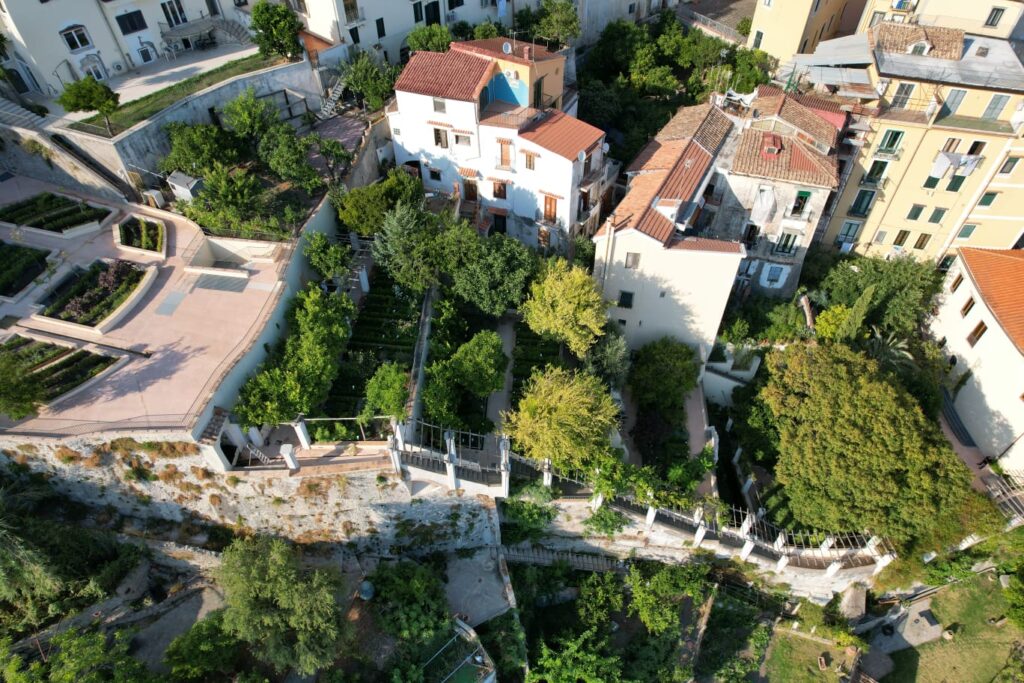
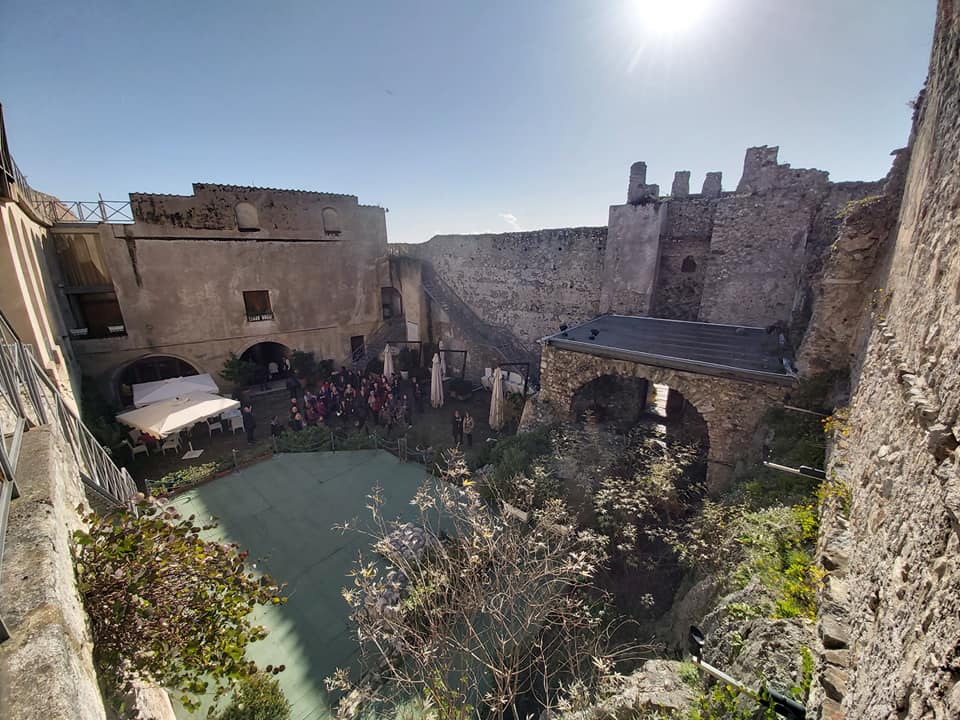
Palazzo Pinto stands in the heart of Salerno’s historic center along one of its main thoroughfares: via dei Mercanti historically home to commercial and artisan activities. The original layout is medieval as evidenced by the numerous Romanesque remains brought to light, and can be traced back to the Norman’architecture of the 11th and 12th centuries.
The palace was built in the Middle Ages.
Over the centuries, the palace was remodeled and enlarged on several occasions, with modifications that transformed it into a splendid and elegant aristocratic residence to which the surviving architectural elements bear witness: capitals, cornices, decorative inserts and arches such as the Catalan one, on the ground floor.
The present layout of the’building dates back to no later than the mid-17th century: from that date onward there was further expansion through the acquisition of other neighboring buildings to the south and the covering of a loggia on the second floor, creating a much larger aristocratic seat. In 1756 the whole complex passed into the ownership of the Pinto family, which retained ownership until the death of the last heir Gennaro, in 1910, who donated it by bequest in his will to the Province of Salerno.



 L'evento inizierà tra 167 giorniSan Matteo fest Free admission 21 Sep 2026