


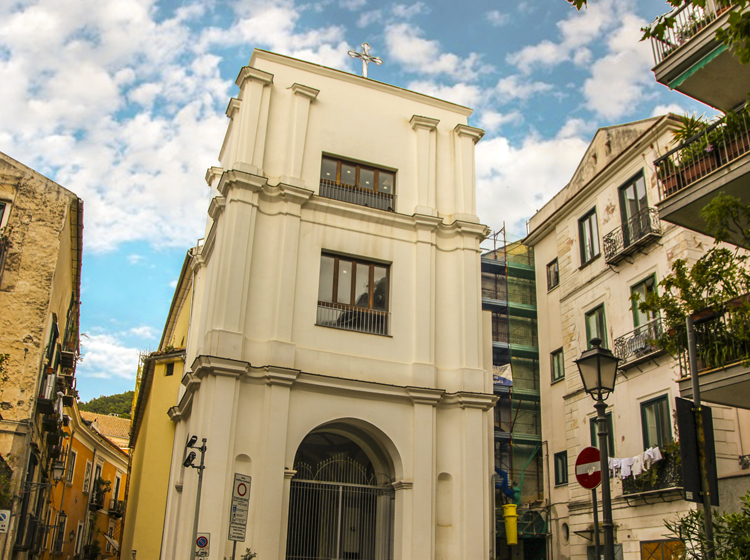
With its arches on four levels, the monastery of San Lorenzo, of very ancient foundation, dominates the panorama of the Upper Old Town.
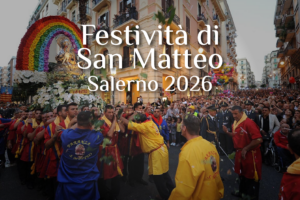 L'evento inizierà tra 167 giorniSan Matteo fest Free admission 21 Sep 2026
With its arches on four levels, the monastery of San Lorenzo, of very ancient foundation, dominates the panorama of the Upper Old Town.
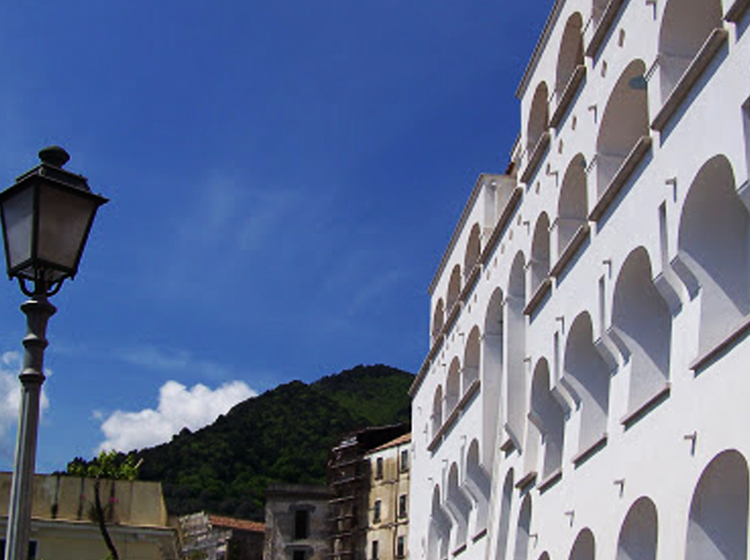
The Monastery of San Lorenzo is among the oldest conventual sites that arose in the Plaium Montis area, high up and away from the built-up area but within the city walls, on the only road that led to the Castle and with a vantage point for observation of the coast from Agropoli to Capo d’Orso.
The earliest document of its presence dates from 976, but many assume that it may have been erected on the ruins of an ancient Lombard palace.
At the end of the12th century, the monastery experienced a moment of great splendor and wealth: Pope Boniface VIII authorized the daughter of the grand chancellor John of Procida, to move from the Convent of St. Spirit along with other sisters to introduce the rule of St. Clare. Giovanni da Procida provided at his own expense for the restoration of the monastery.
In 1586, following a decree by Pope Sixtus V merging the monasteries, the Poor Clares were forced to abandon St. Lawrence and join in the monastery of St. Michael Archangel, the nuns of the Pieta and St. Spirit. The monastery decays in structure, becomes an asylum for thugs and is despoiled of its most precious ornaments.
In 1616the Reformed Fathers acquired it and provided for a new renovation on a project drawn up in 1620 by the Cavese Ingg. Matteo Vitale and Gioan Lonardo Caffaro and the Lombard engineer Camillo Migliaccio. The structure, elevated on four floors, is given an easier entrance and surrounded by vegetable garden – olive grove and garden. The access road is made wider and embellished with several fountains.
Work proceeded despite numerous disputes with other religious orders concerning the dividing wall with St. Nicholas, the use of water from various springs, the demarcation of some land, and the right of way in processions.
In 1707 the library was built, located on the fourth floor of the building in three adjoining rooms.
In 1811, due to Napoleonic decrees, the monastery was suppressed and a few years later restored, then finally suppressed in 1866 and annexed to the nearby Provincial Male Orphanage, located in S. Nicola de Palma, which also became its rightful owner.
On October 16, 1953, the Salerno Superintendent of Education communicates to the Umberto I Orphanage the authorization to open an art school with a ceramists section, which is placed on the top floor of the S. Lorenzo. An optional drawing school is also organized with M° Pasquale Avallone, in other premises of the S. Lorenzo, which declined equally to the compulsory inclusion of the subject in the Professional Institutes and disappeared definitively upon Avallone’s death.
In 1954, part of the monastery and the church were entrusted to the Franciscans of Railway Square, while the remaining part remained the property of Umberto I and was used for civilian housing. In October of the same year, during the tremendous flood that hit Salerno and in particular the Canalone area, the building suffered serious damage and the friars distinguished themselves, with others, for the relief work done from the first hours of the event.
In 1957, the rooms of a Section of the Ist. Prof.le Trani for composers-linotypists and bookbinders were placed in some rooms of St. Lawrence, in 1970 theUmberto I Reading Center was set up, and in 1979 the Ceramics Section of the art school returned to the rooms on the top floor . After being heavily damaged in the wake of the 1954 flood and the 1980 earthquake, it becamethe property of the City of Salerno, which, having obtained European funding, implemented its restoration by making it the home of its Historical Archives.
There is no news for this venue yet.
| Monday | : – : | : – : | |
| Tuesday | : – : | : – : | |
| Wednesday | : – : | : – : | |
| Thursday | : – : | : – : | |
| Friday | : – : | : – : | |
| Saturday | : – : | : – : | |
| Sunday | : – : | : – : |
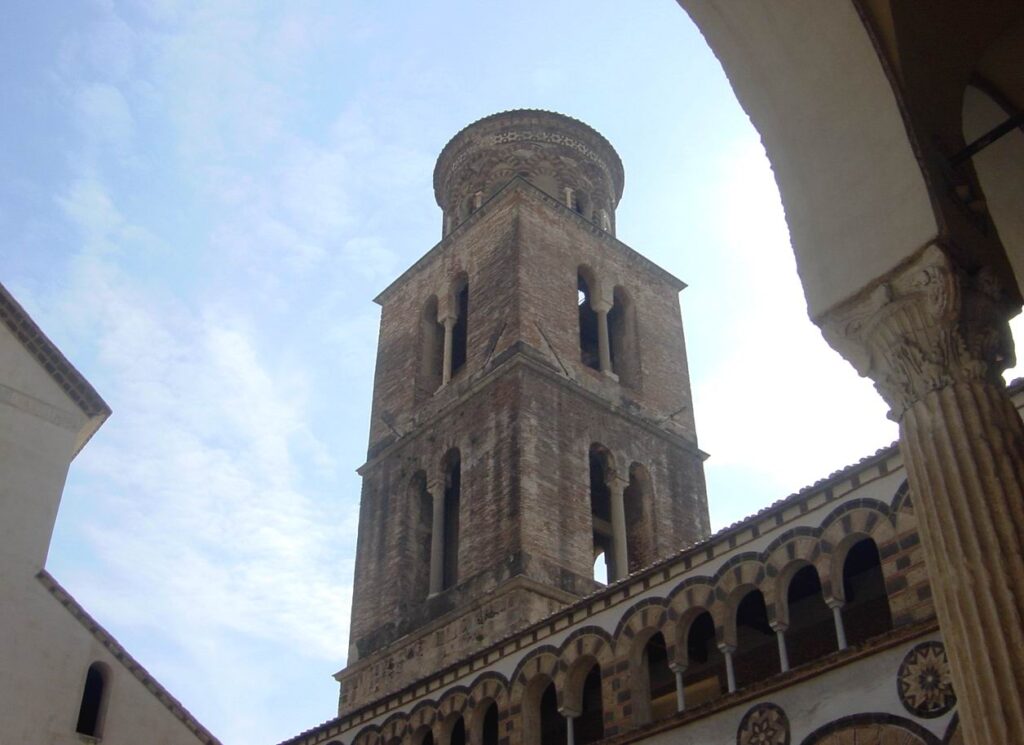 Cathedral of St. Matthew – Salerno CathedralSalerno's most important monument, containing the most precious relics of the body…
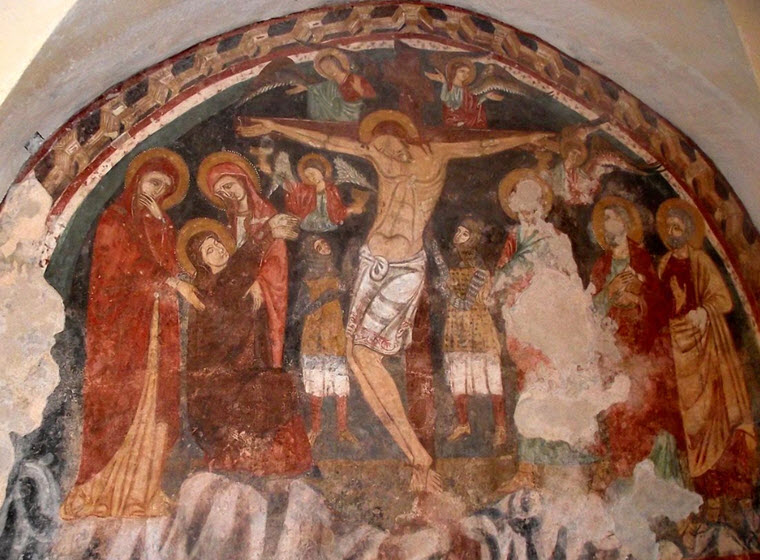 Church of the Most Holy CrucifixA church with an anonymous facade, but very beautiful inside, full of…
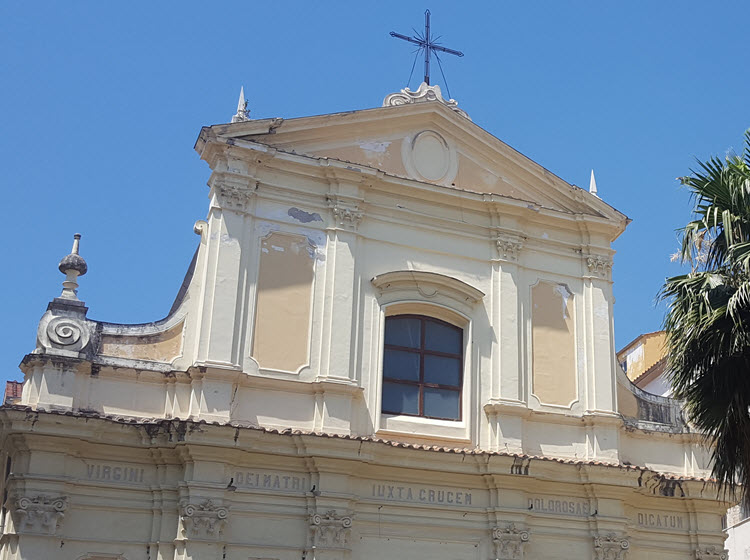 St. Sophia Complex and Church of Our Lady of SorrowsOn the site where the ancient Roman Forum probably stood, a scenic…
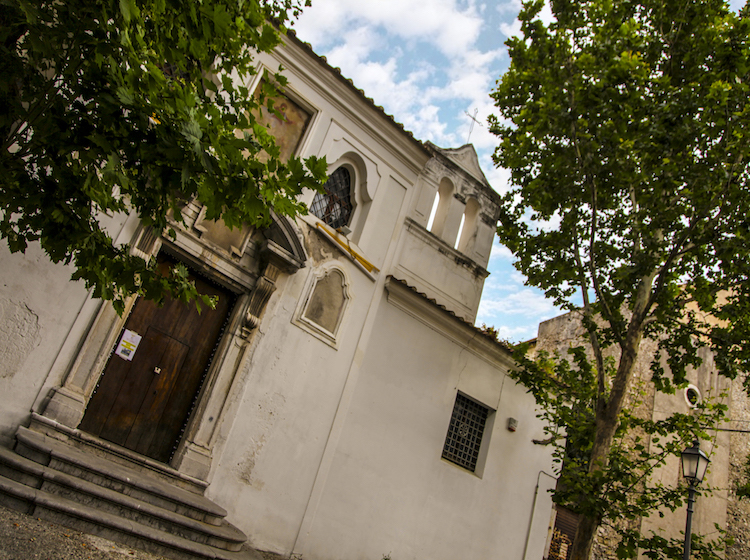 Among the churches in the historic centerEnchanting and evocative is the itinerary that sees the ancient churches of…
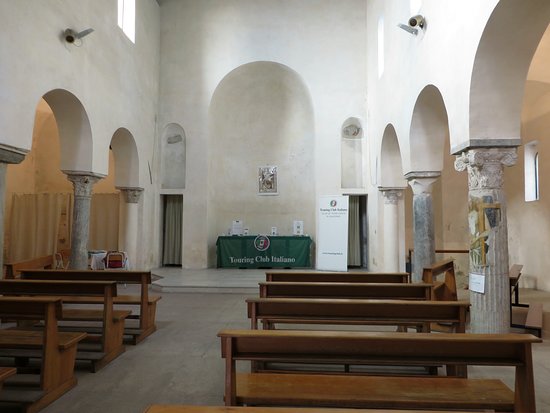 Church of S. Maria de LamaAncient Lombard frescoes are the unique and exceptional merit of this beautiful…
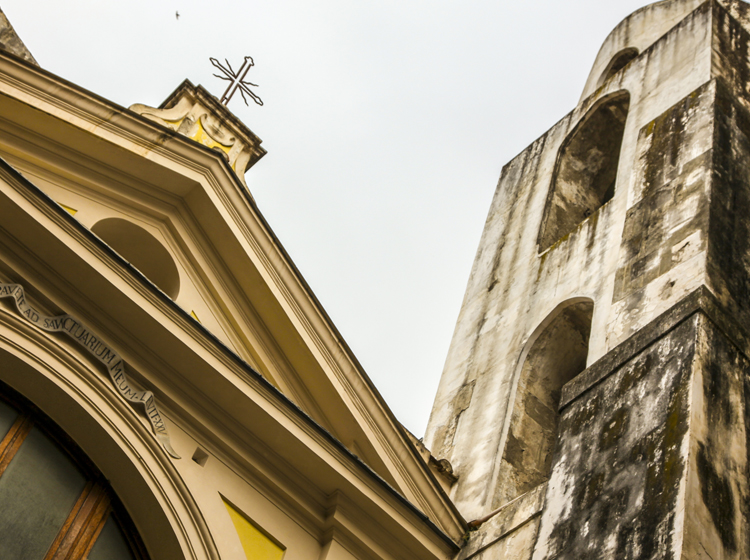 Church of St. Andrew de LavinaA very old church, built on three levels from the 9th to…
 Church of St. Michael the Archangel and St. StephenThe ancient church dedicated to St. Michael, a saint for whom the…
 Chapel of St. LudwigA beautiful Gothic fresco graces the Chapel of St. Ludwig on the…