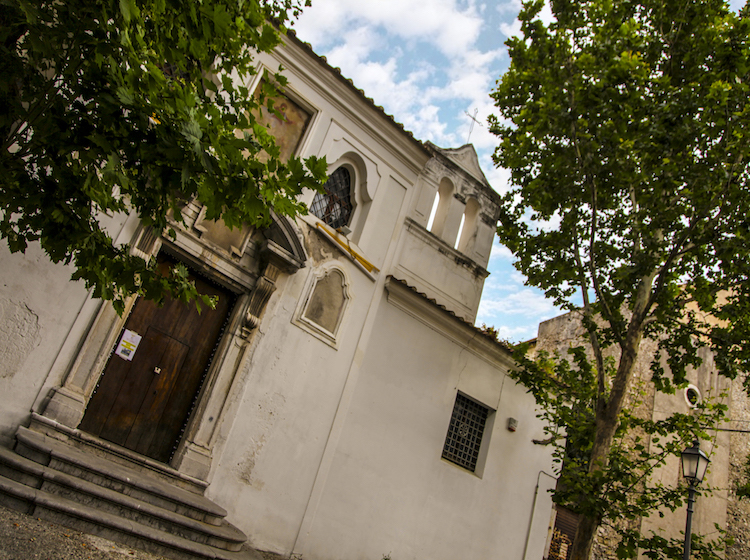
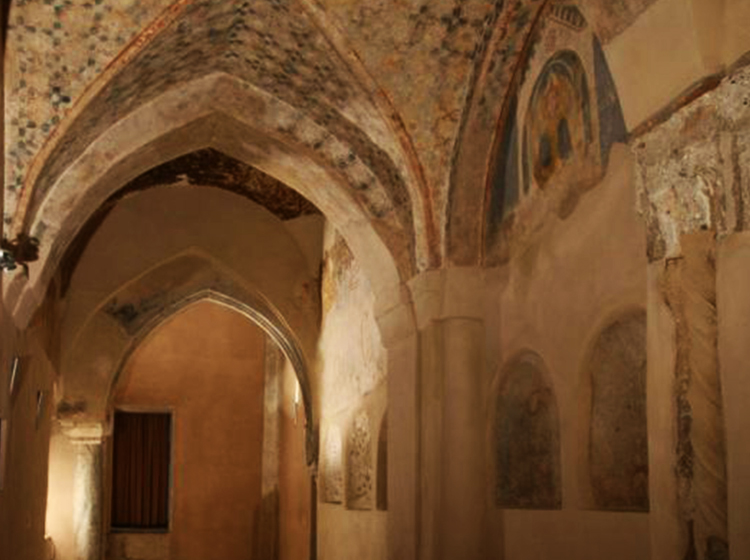
The ancient Monastery of St. Benedict is located on the small plateau called Orto Magno. Founded in the 7th-9th centuries, its church was probably enlarged at the behest of Alfano, abbot of St. Benedict, on the occasion of his election as archbishop of Salerno in 1057.
The monastery’atrium and Castel Terracena are founded on the Lombard fortifications of Arechi II from the second half of the 8th century.
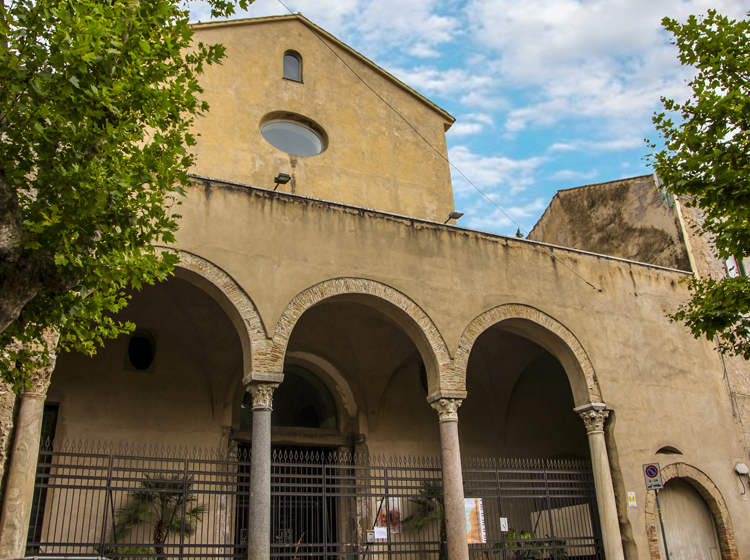
The church is entered through the 11th-century wing of a quadriporticus, now only partially visible. Three round arches remain of it, resting on four columns with Corinthian capitals.
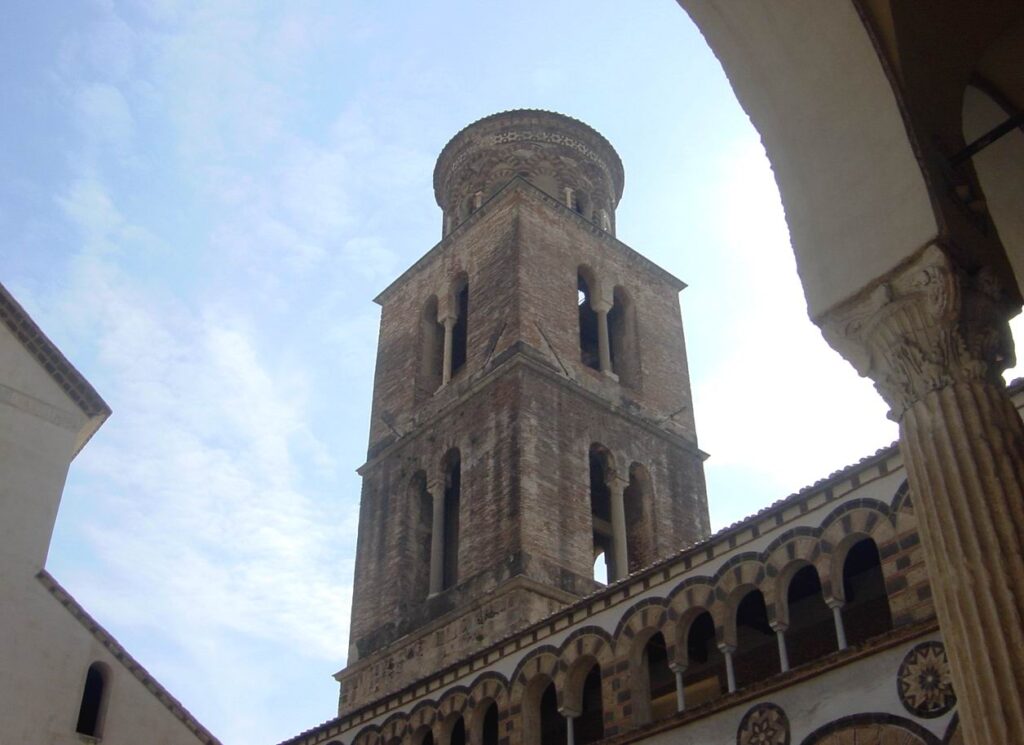
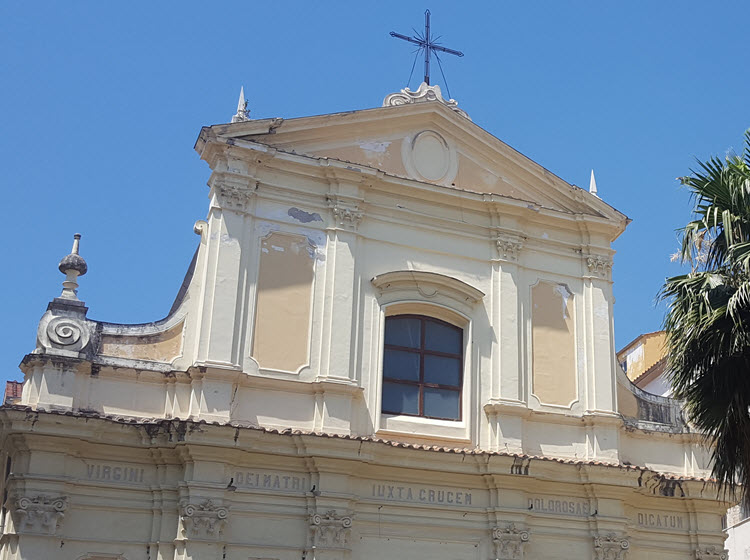
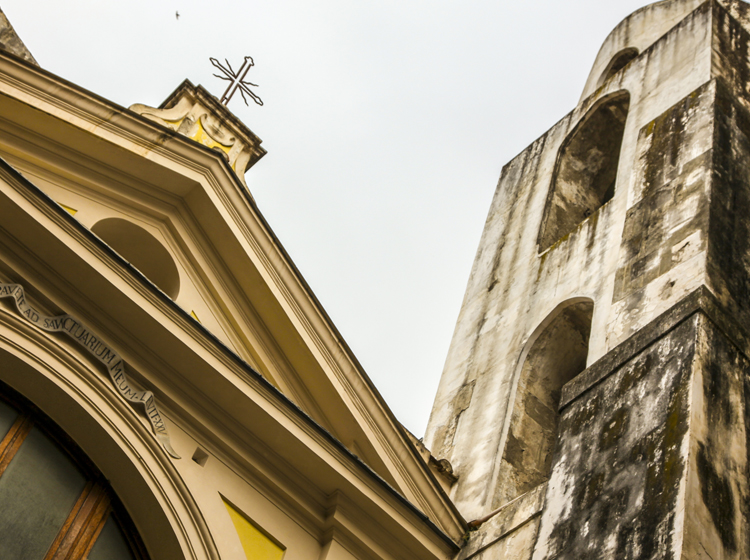
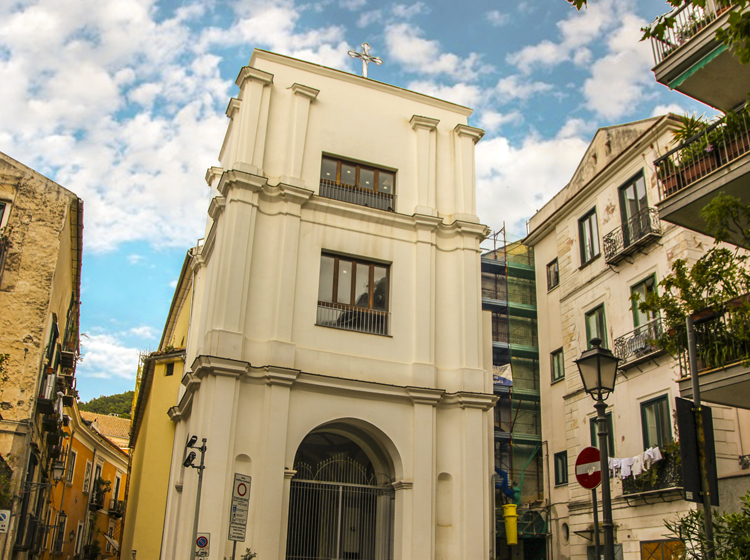
The Provincial Museum, part of the monastery, became home to the Royal “Castelnuovo” of Queen Margaret of Durazzo, in the early ‘400s. Great transformations determine the caesura of the quadriporticus. In 1807 the monastery was suppressed and used as a barracks. In 1810 the church became San Gioacchino theater and, from 1815 to 1845, “Real Teatro di San Matteo”. For the construction of a new road, the campanile(of which the basement and cell on the second floor remain) is halved. In 1816 the present St. Benedict Street is created.
.
The monastery is in the shape of an S. In the longest wing were the monks’ cells and here is the actual facade of the complex. Two side arms draw an L in which we find the cloister, characterized by porticoes with round arches resting on small columns and, on the upper floor, a loggia (late 15th, early 16th century).
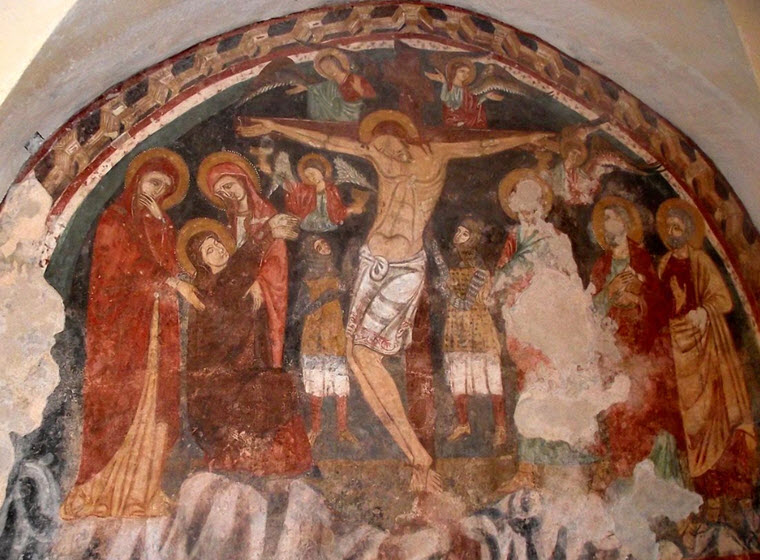
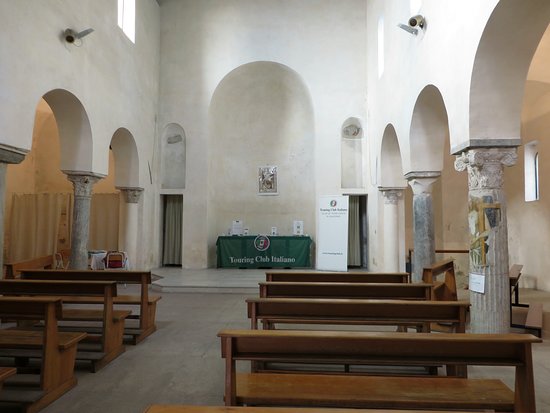
The church, which we see today, dates back to the 10th-11th centuries, and is the result of restoration in the ’1980s. The basilica has a nave and two aisles divided by perusal columns from the Roman period and pillars connected by round arches. The central nave ends in a wide semicircular apse. The predominant style is Romanesque, but in the center of the church are three wider arches resting on pillars, dating from the Baroque period, and above them is a large, undated Roman tile arch, which manifests a desire to enlarge the church to a Latin cross plan. At the north end of the west aisle is a baroque chapel, from the 18th century, covered with a dome and culminating in a lantern.



 L'evento inizierà tra 167 giorniSan Matteo fest Free admission 21 Sep 2026