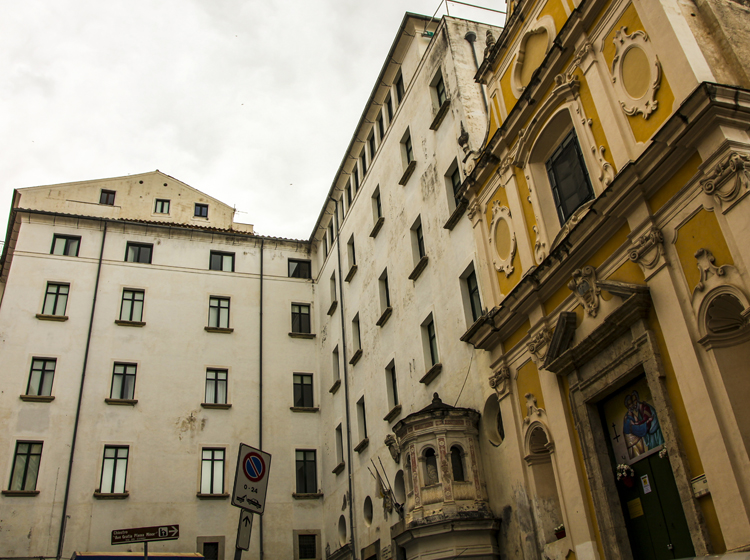
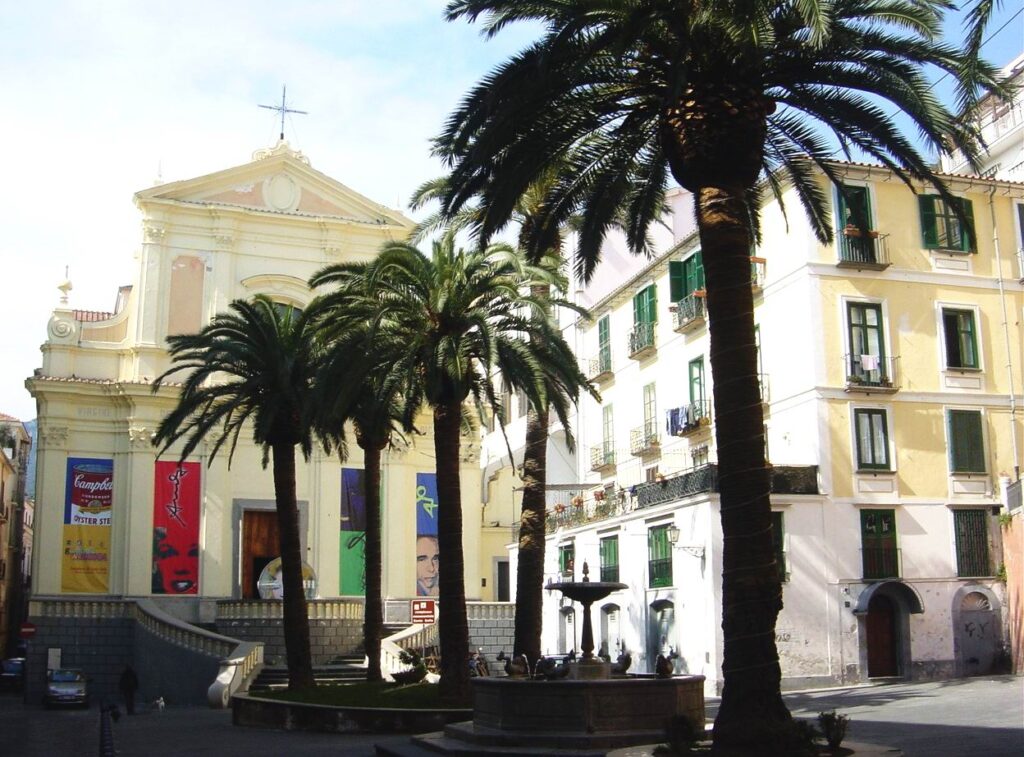
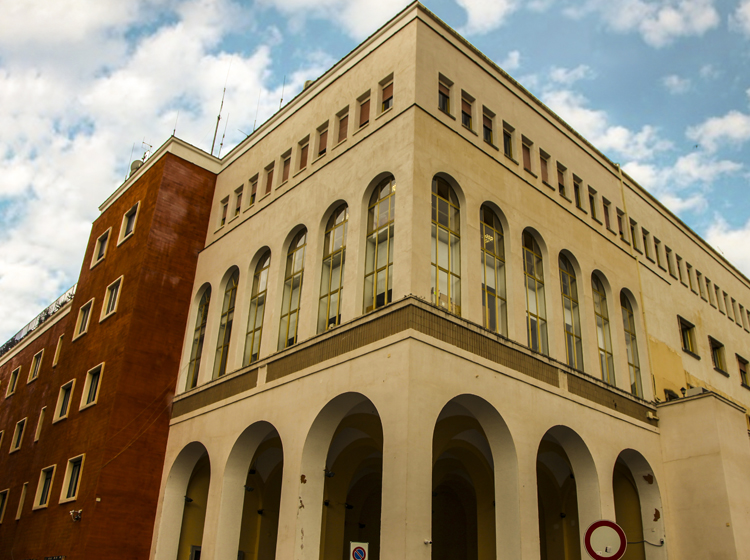
The Bearded Quarter, the central core of the ancient part of the city, probably derives its name from the Lombards (men with long beards) who inhabited it. It is bounded on the north by Via Tasso, on the south by Via Roma and on the west by Via dei Canali.
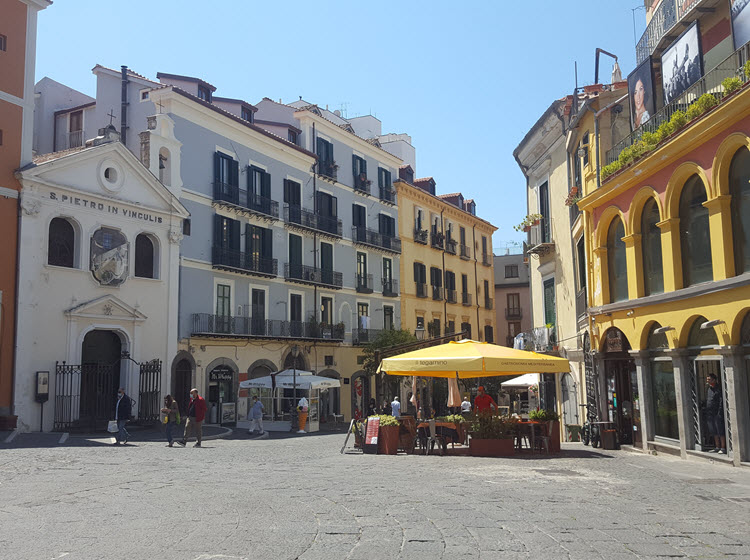
Largo Barbuti, also known as “Curtis Dominica”, in the thirteenth century was the most important square with stores and a market; from the nearby Porta di Mare one could reach the beach. East of the square began the Drapparia, today via dei Mercanti, where merchants of damask and velvet flocked. To the west was the “Ruga Speciarorum” with apothecary stores.
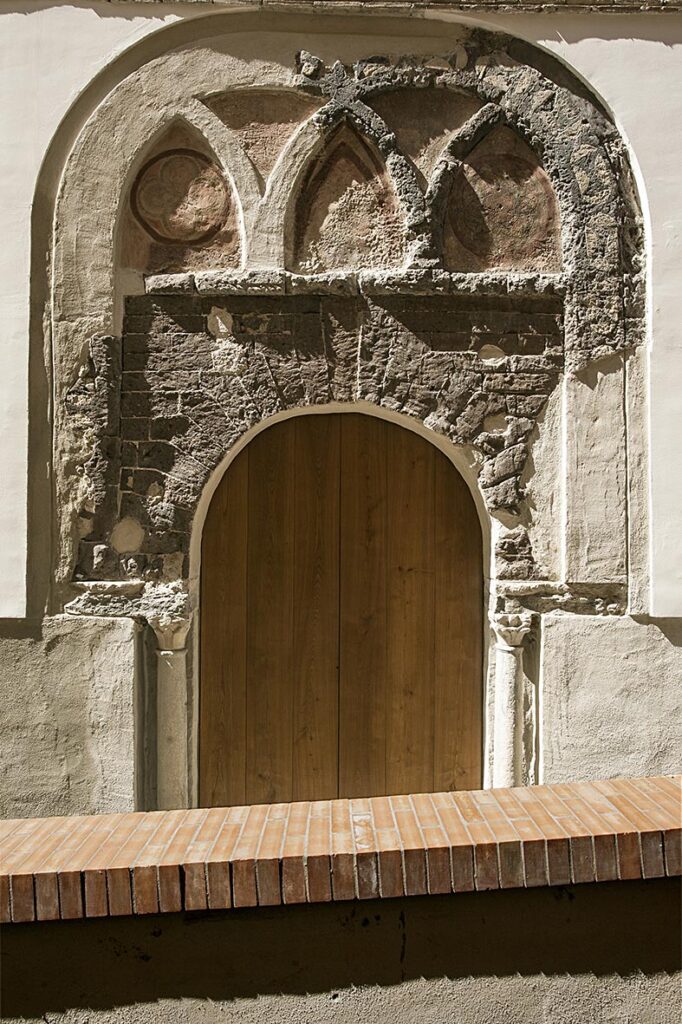
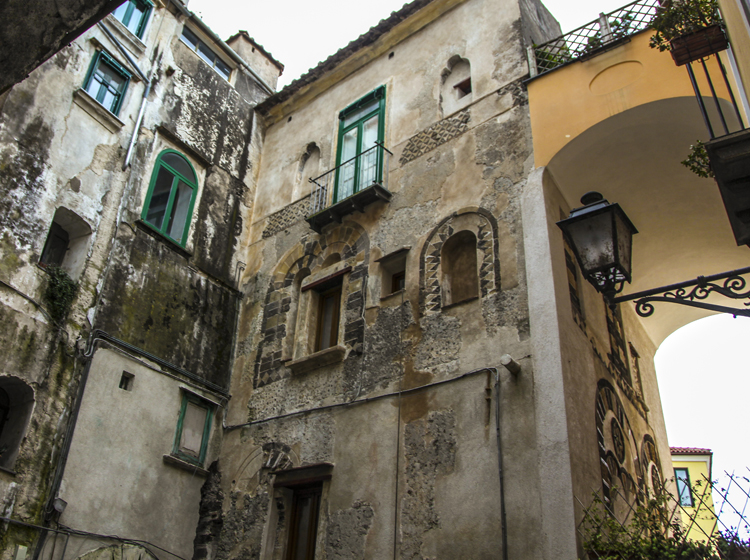
Worth seeing, between Adelberga Street and Santa Maria dei Barbuti Street, Palazzo Fruscione. The palace has on the upper floors an interlaced arch decoration referable to the mid-13th century, and on the ground floor polychrome inlaid decorations, a motif widespread in the Romantic Campania region. Under the’arch of the alley Pescheria there are fragments of Lombard walls, remains of the old court of Arechi.
Having passed the Complex of S. Pietro a Corte, one arrives at Via Canali, where stands the Church of the’Annunziatella and the Ave Gratia Plena Minor Conservatory, with a courtyard from the Catalan loggia, the same as in the Morese palace on Via Duomo.
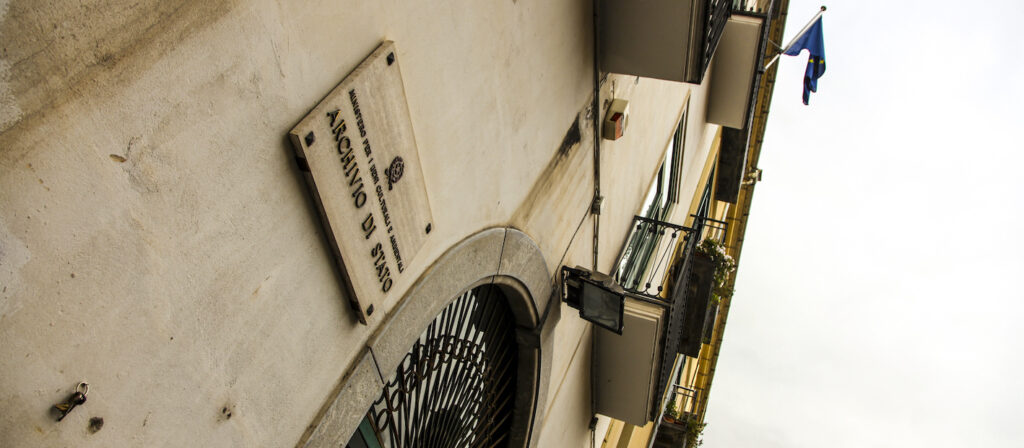
From Largo Barbuti one then comes to via delle Botteghelle. This street features the monumental Palazzo D’Avossa, now home to the BAPPSAD Superintendency of Salerno and Avellino.
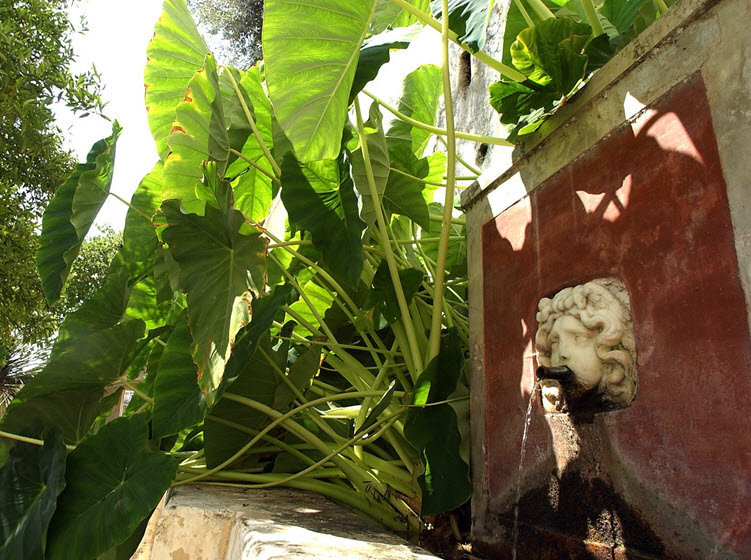
The 17th-century aristocratic palace belonging to the Della Calce family was purchased and renovated in the mid-18th century by wealthy merchant Saverio D’Avossa. The palace has a barrel-vaulted corridor through which one enters the courtyard, which, embellished with niches decorated with marble statues, housed the rooms of the palace’s former stables. On the right side of the courtyard is an elegant open staircase leading to the upper floors. The last two floors are later elevations. The walls of the majestic staircase were frescoed with episodes from “Jerusalem Delivered”. Author of the restoration in the first half of the eighteenth century was Ferdinando Sanfelice, the leading artist of the time linked to the ’Salerno environment.
From Via Botteghelle, one takes Via Guarna Romualdo II, where in Roman times the “Decumanus Maximus”, which ran from the Forum to the’Amphitheater and ended with the Arch of Triumph, passed. Laterally, along today’s Via Duomo, ran the “Labinario” which carried water from the upper part of the city to the sea.
Following adaptations and transformations, the place was preferred by the Norman Duke Robert Guiscard for the construction of the Duomo.



 L'evento inizierà tra 167 giorniSan Matteo fest Free admission 21 Sep 2026