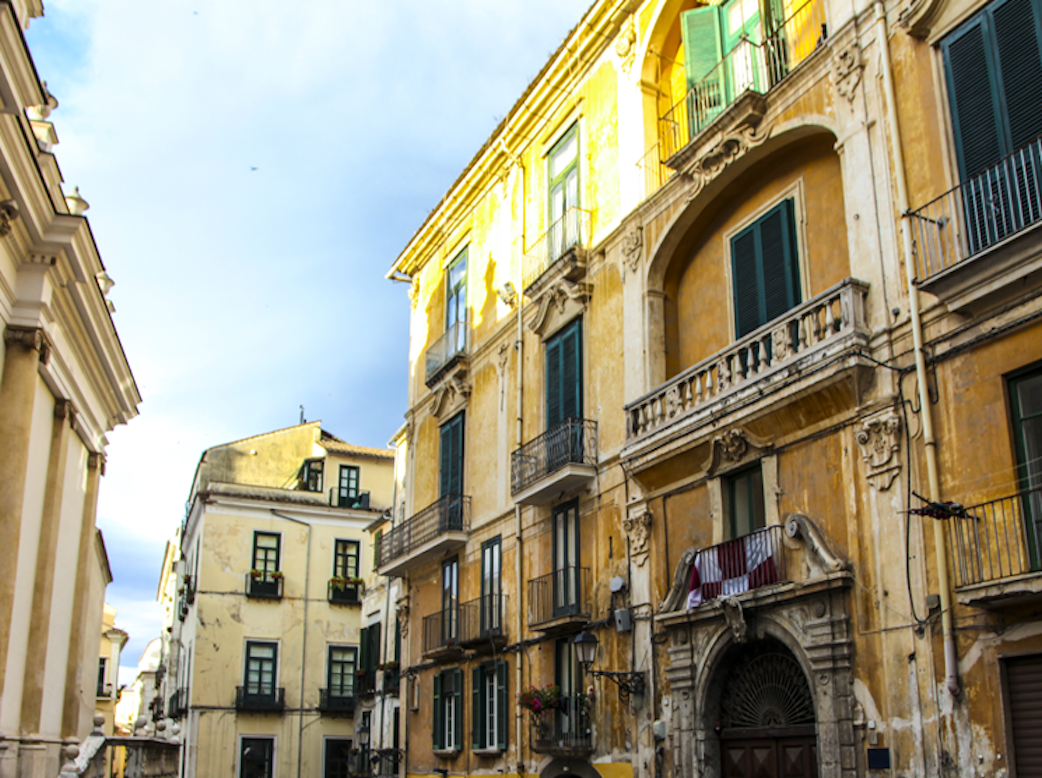
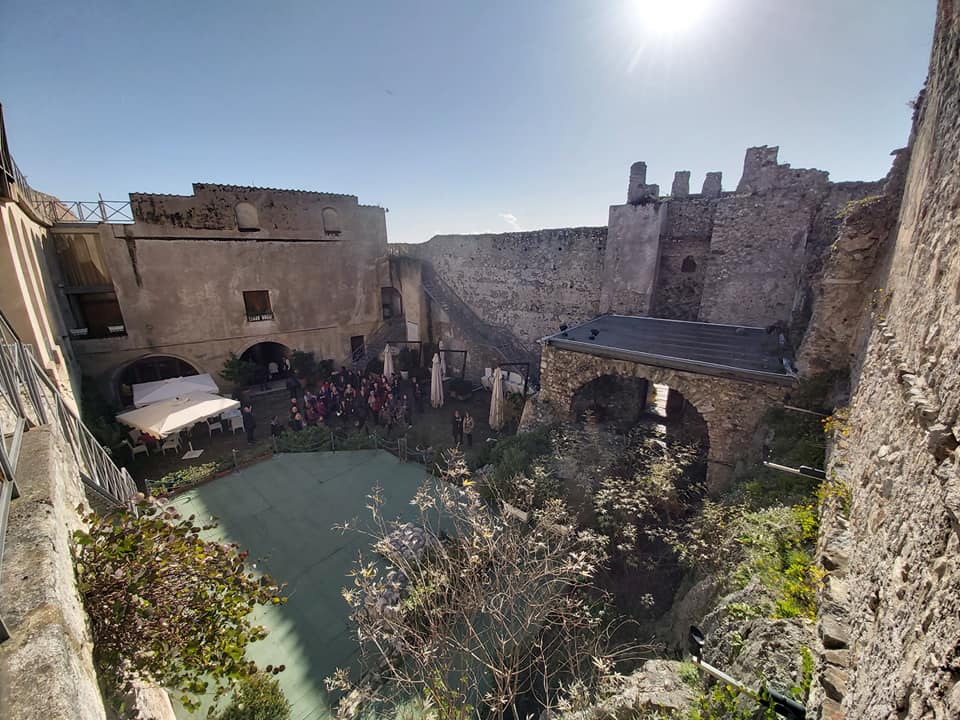
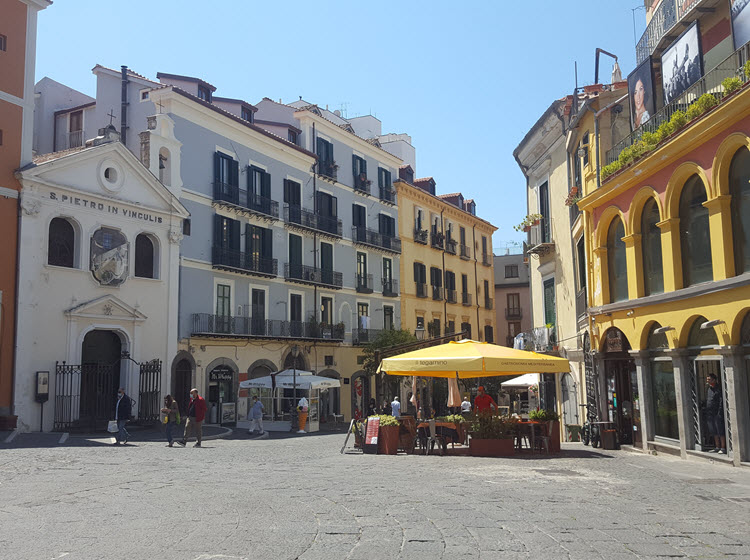
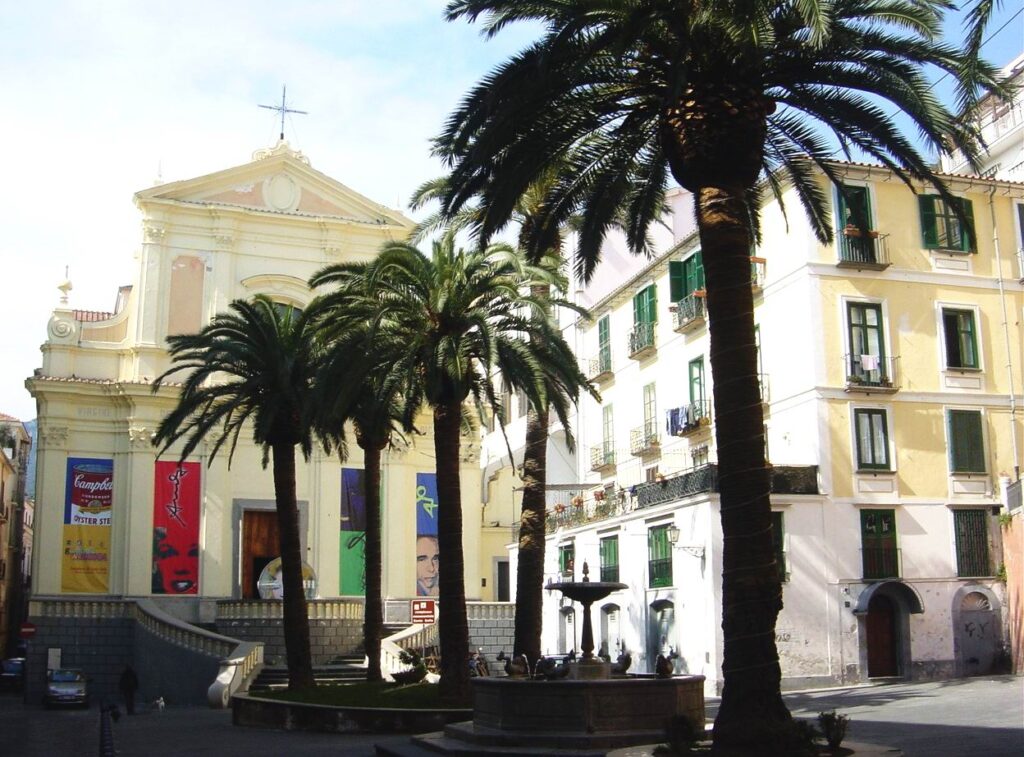
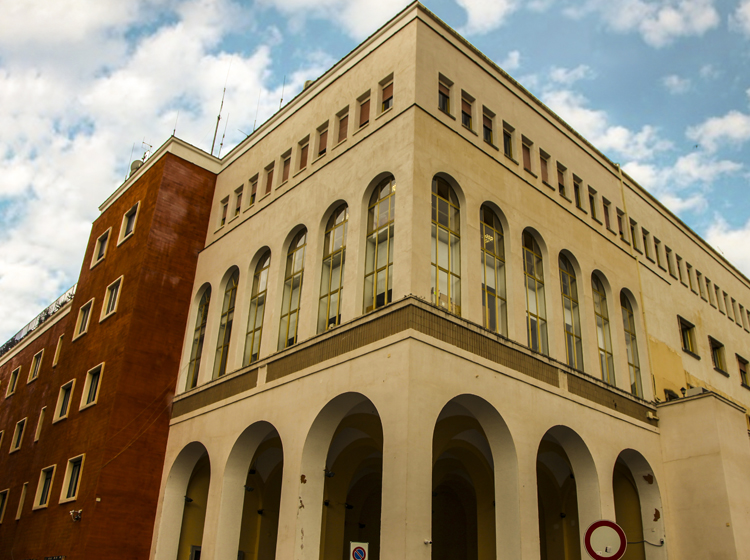
Walking along Via dei Mercanti, the main artery of the old town, one can admire Palazzo Pinto, where the noble family of the same name of Norman origin lived until the 1920s. Formerly home to the Provincial Library, the palace now houses the Provincial Picture Gallery. Opposite, a few steps away from the Virtual Museum of the Salerno Medical School, is Palazzo Carrara, characterized by an architectural structure typical of seventeenth- and eighteenth-century Salerno, but certainly built before that. The palace is known to have housed St. Francis of Paola, and a plaque commemorates the event. Further up Via Duomo, one encounters one of the most important aristocratic palaces in the historic center of Salerno. Located in front of the entrance to the Cathedral, the Palazzo Giannattasio features a Baroque facade with three floors, remodeled several times in the 17th and 18th centuries and inspired by Neapolitan architecture. On the keystone of the main door is clearly visible the coat of arms of the Giannattasio family, a family originally from San Cipriano Picentino that acquired the palace in the second half of the 18th century. A few steps from the cathedral, along Via delle Botteghelle, one can see the beautiful entrance to Palazzo D’Avossa, characterized by a marble-arched structure bearing the coat of arms of the family. The building features a series of arches and hanging structures joining several buildings and a fine balcony, adorned with six marble busts overlooking Merchants Street. Taking Adelberga alley, one enters an area, called Antica Corte, where Arechi II made a majestic Reggia when he decided to transfer the capital from Benevento to Salerno. Only the hypogeum and the Palatine Chapel remain today of this magnificent palace, which probably stretched from the Rione dei Barbuti to Vicolo Pietra del Pesce.
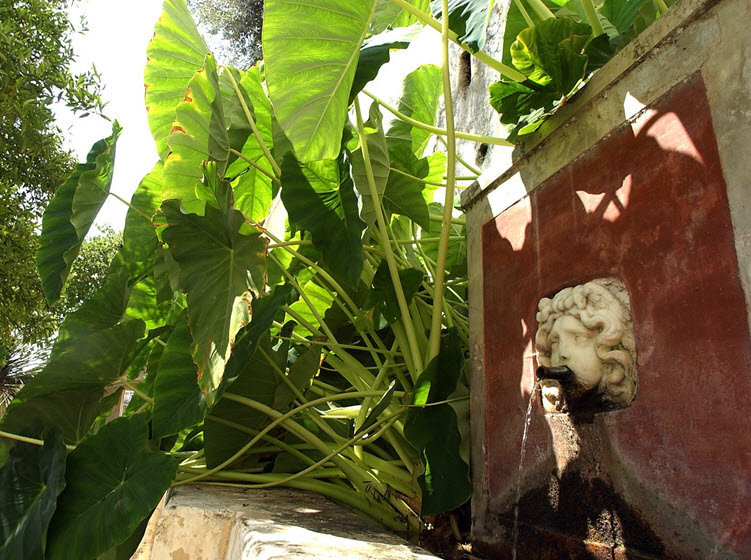
Rising Vicolo dei Barbuti, moving to the right side of the square of the same name, one climbs the steps of the charming Vicolo Gisolfo II. On the left begins Via Tasso with the palazzo that belonged to the noble Lauro Grotto family, in which an intact 18th-century chapel was found. Continuing on the same street, where the most important and noble families resided between the 14th and 16th centuries, is the imposing Palazzo Ruggi D’Aragona, considered one of the most striking buildings in the area. The palace, which now houses the “Soprintendenza per i beni architettonici e paesaggistici per le province di Salerno e Avellino” presents a partially Baroque style, but its origins certainly predate it, having hosted Emperor Charles V in 1555. The main attractions are the’entrance with its grand cascading marble staircase and the monumental Neptune Fountain in the courtyard. Still further on, as you lift your gaze, you can see the graceful stucco-decorated windows of Palazzo Conforti, a historic rococo-style mansion built in the years between the first and second half of the 18th century. On the second floor, the piano nobile, is a roof garden with a central fountain, and the apartments are adorned with precious paintings.
Following nearby Via Trotula de Ruggiero, with a detour to Via S. Massimo, visit Palazzo S. Massimo founded, together with the adjoining church, by Prince Guaiferio between 861 and 865. Despite the eighteenth-century appearance of the facade, the palace retains a medieval part in its structure, with some elements traceable to classical and early Christian and Carolingian history. After several changes of ownership and changes of use, unfortunately the palace is now in a state of neglect. Continuing on Via Trotula De Ruggiero in the direction of Giardino della Minerva, there is the palace that belonged to the Copeta family, built in the first half of the 18th century on the area of the former cemetery of the convent of S. Maria delle Grazie and S. Bartolomeo. Placed in an’inviadiable panoramic position, the building features an interesting color play of vault and wall decorations, based on the’alternation of white and red. Going up, in Largo Scuola Medica salernitana is Palazzo Martuscelli.
Returning toward the lower part of the historic center, taking Lavinia alley and descending the Gradoni Madonna della Lama, one arrives at Largo Campo, where not far from the well-known Palazzo Genovese, one finds Palazzo Bottiglieri characterized by a majestic tufa entrance portal topped by a mask.



 L'evento inizierà tra 167 giorniSan Matteo fest Free admission 21 Sep 2026