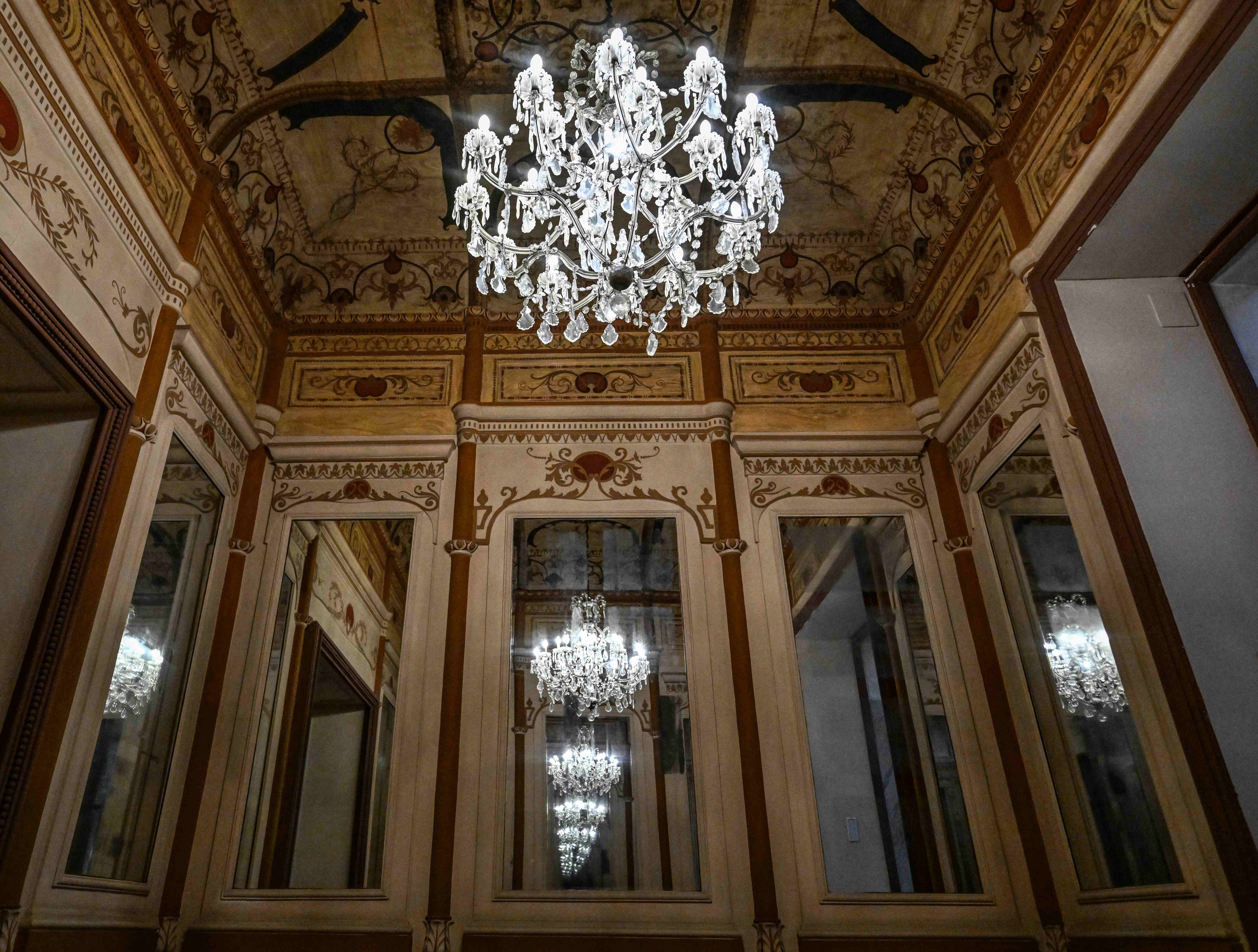
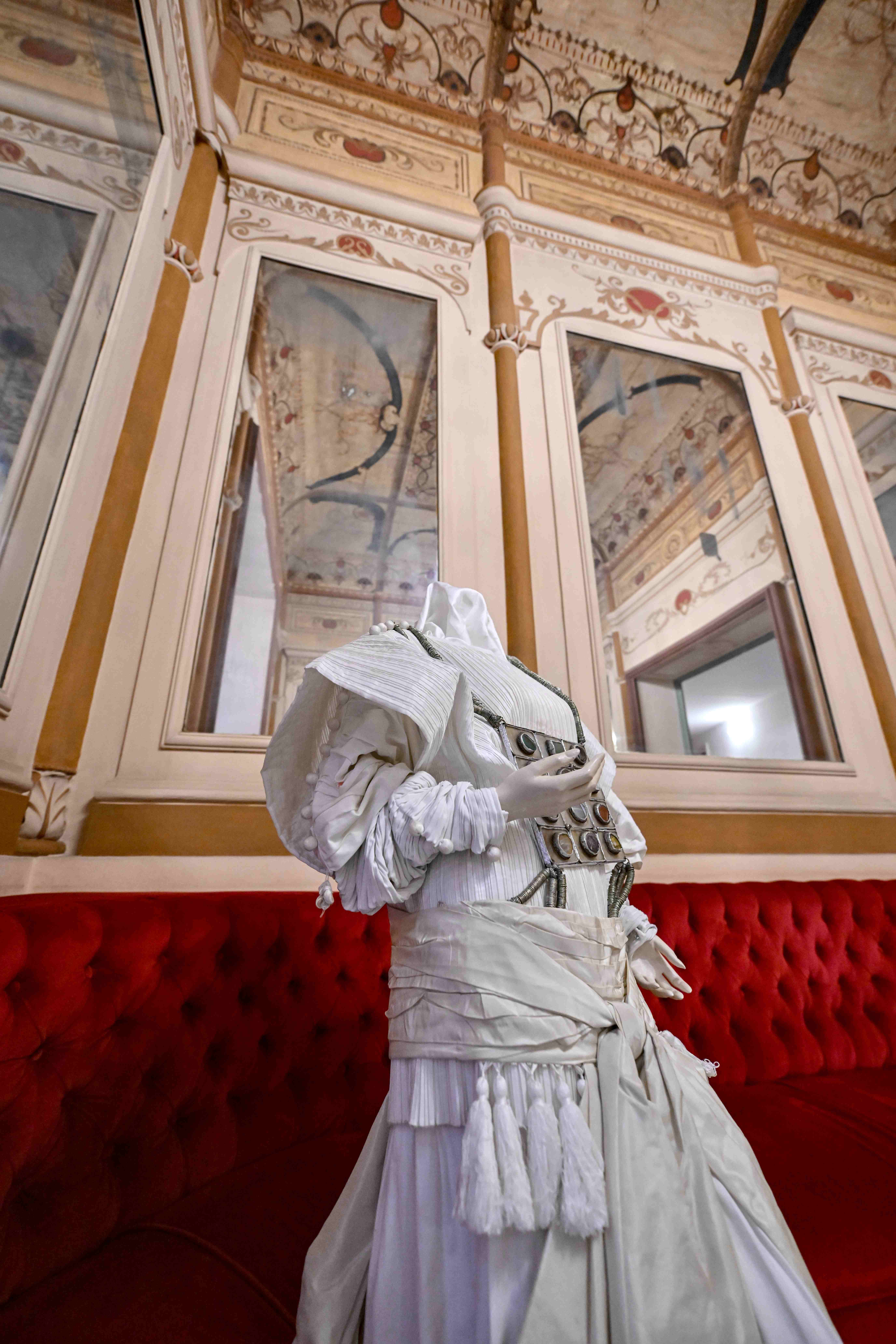
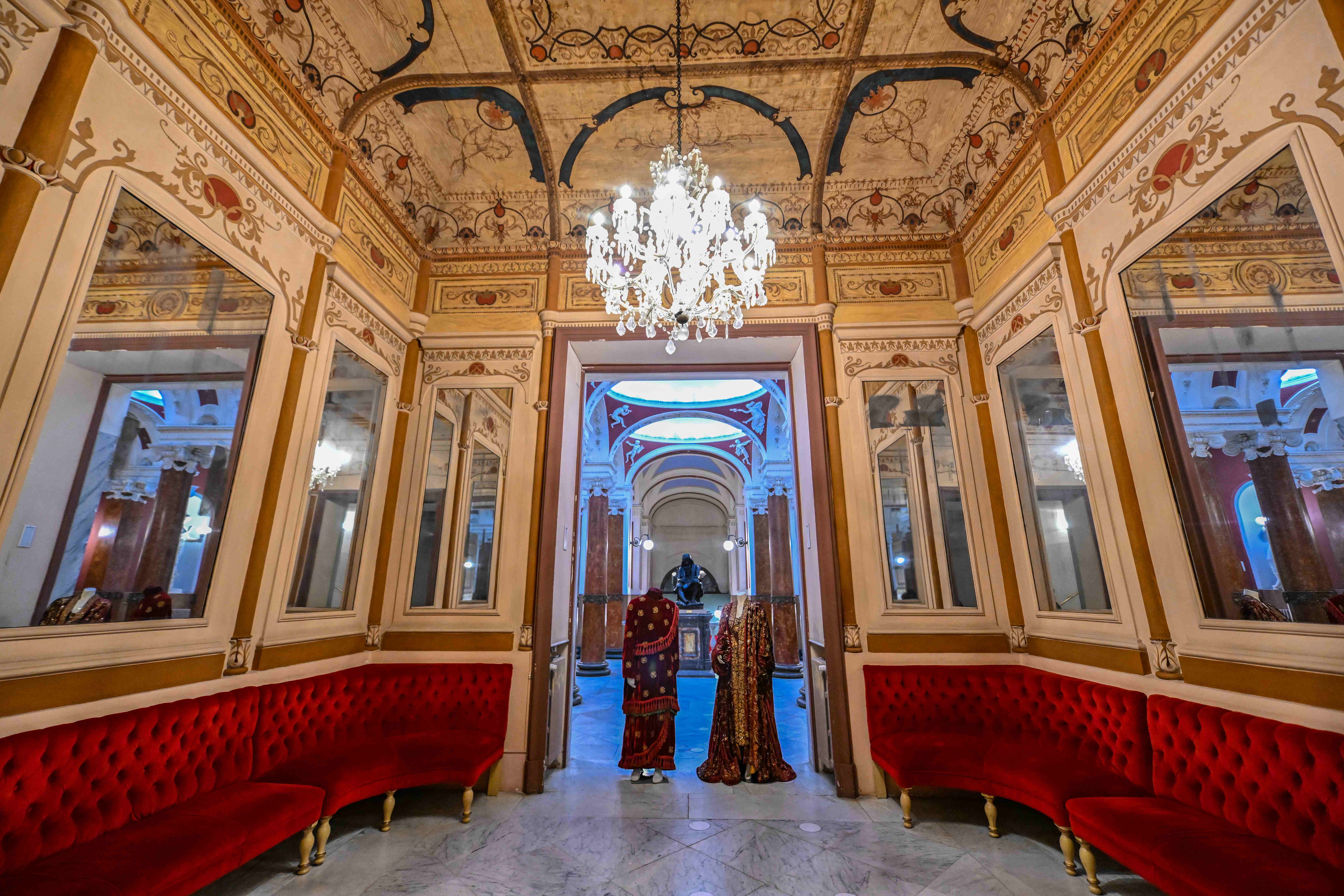
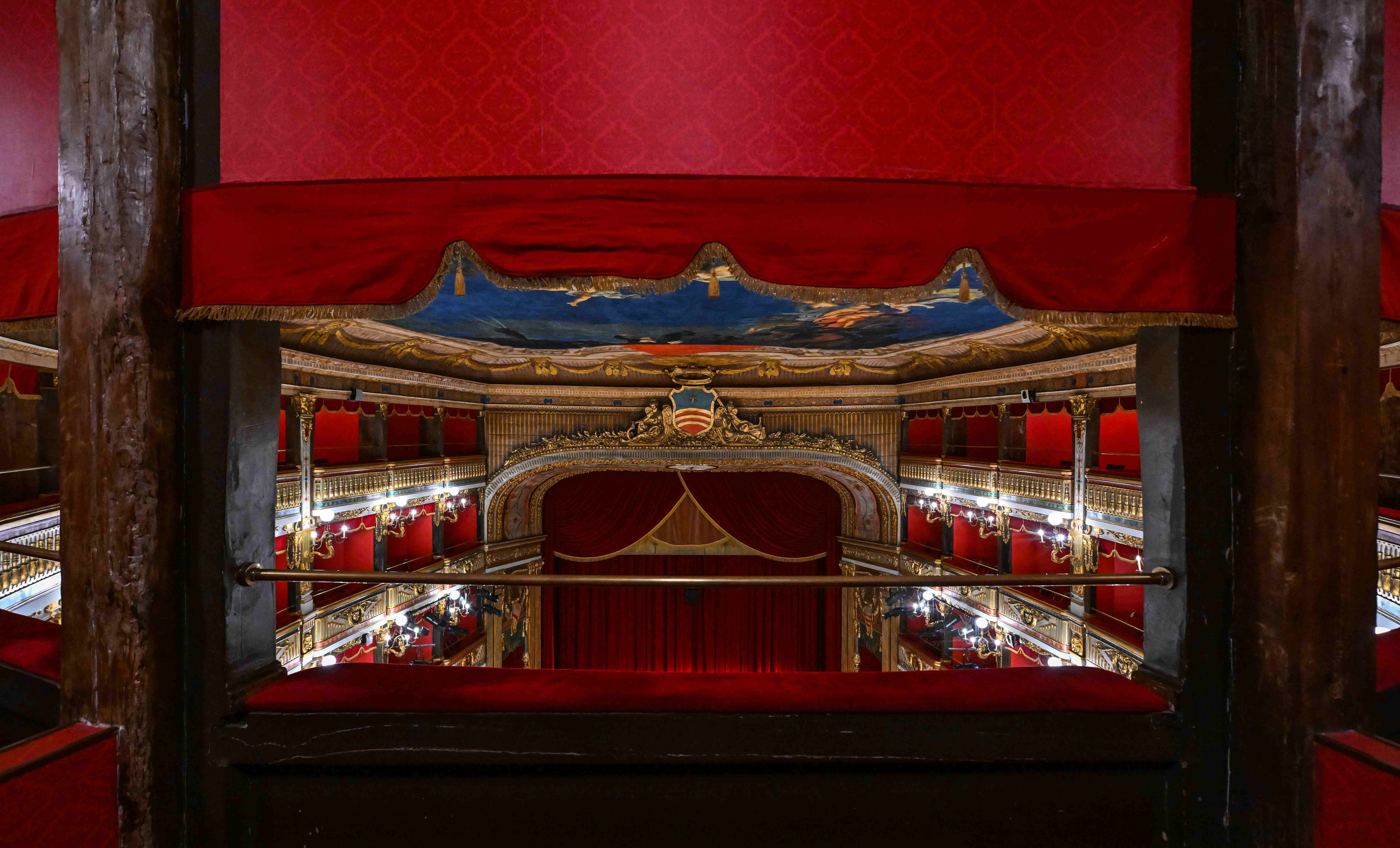
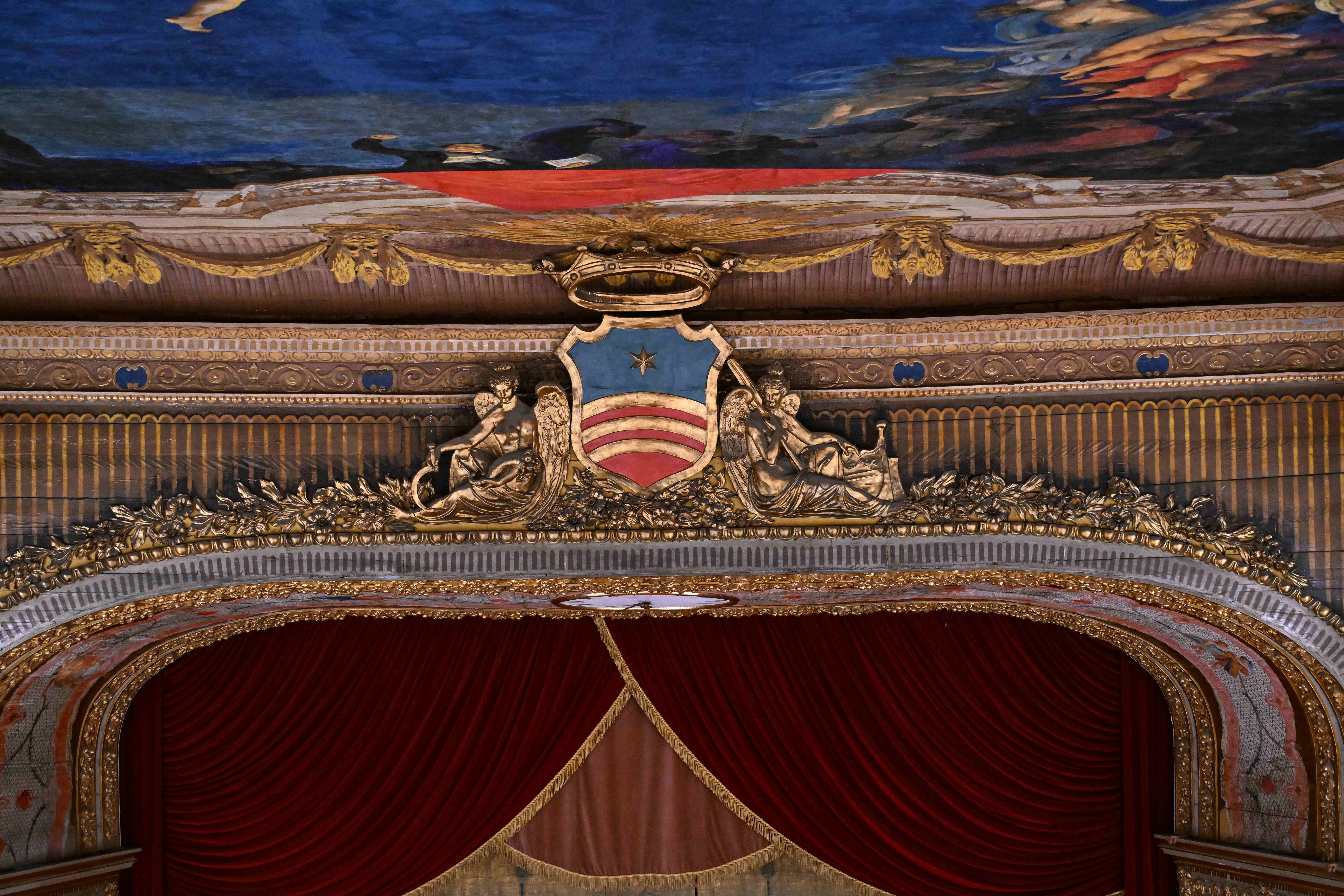
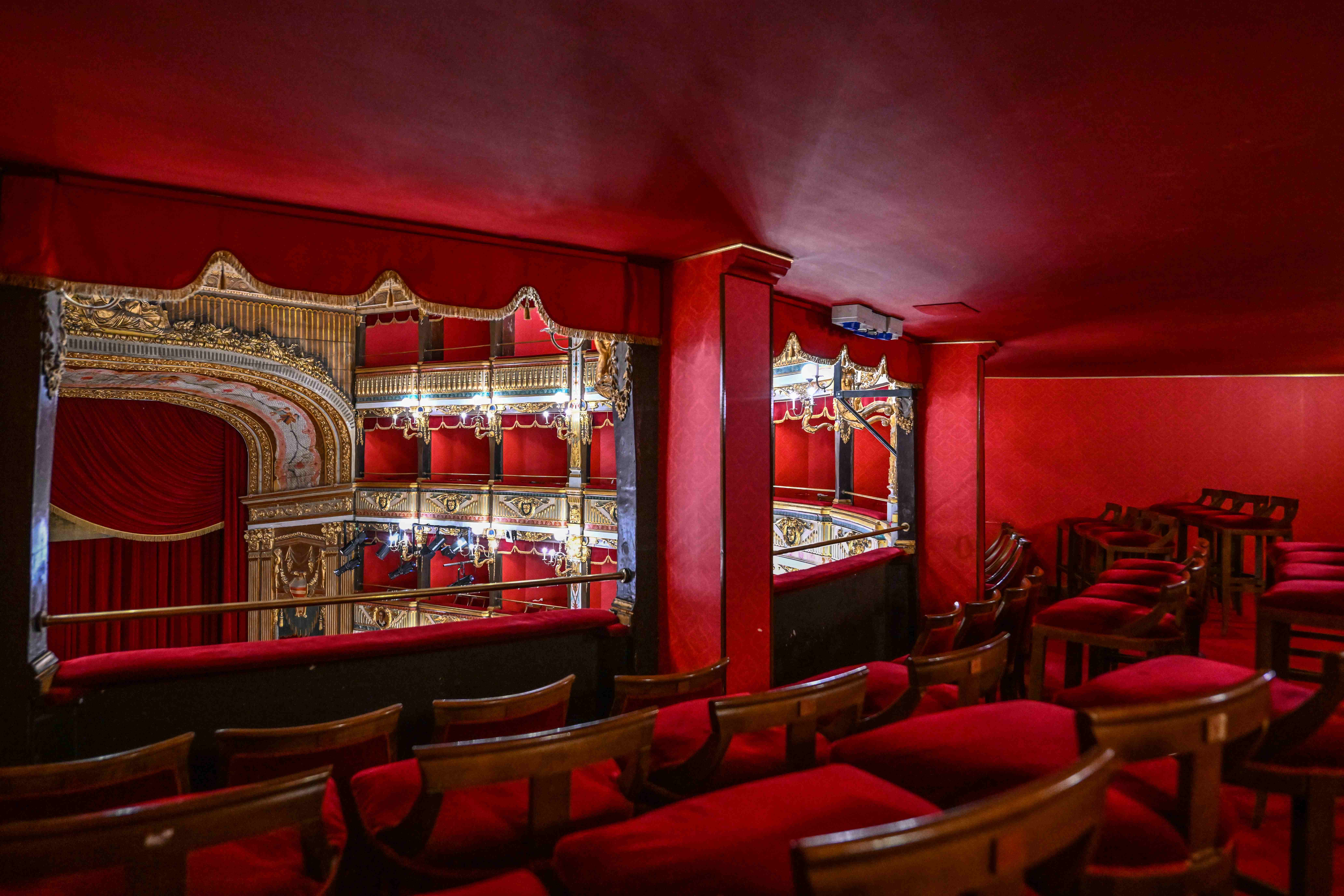
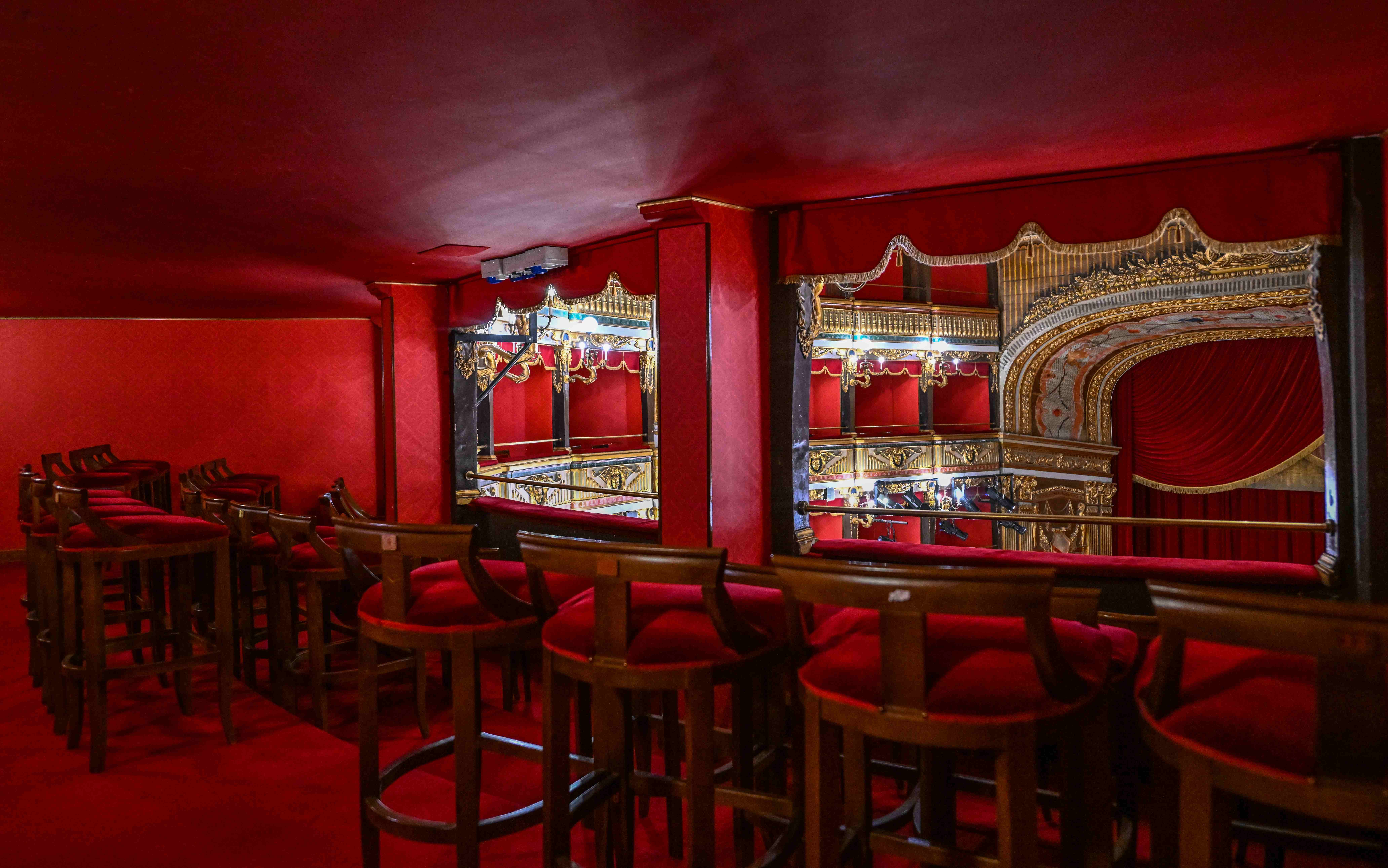
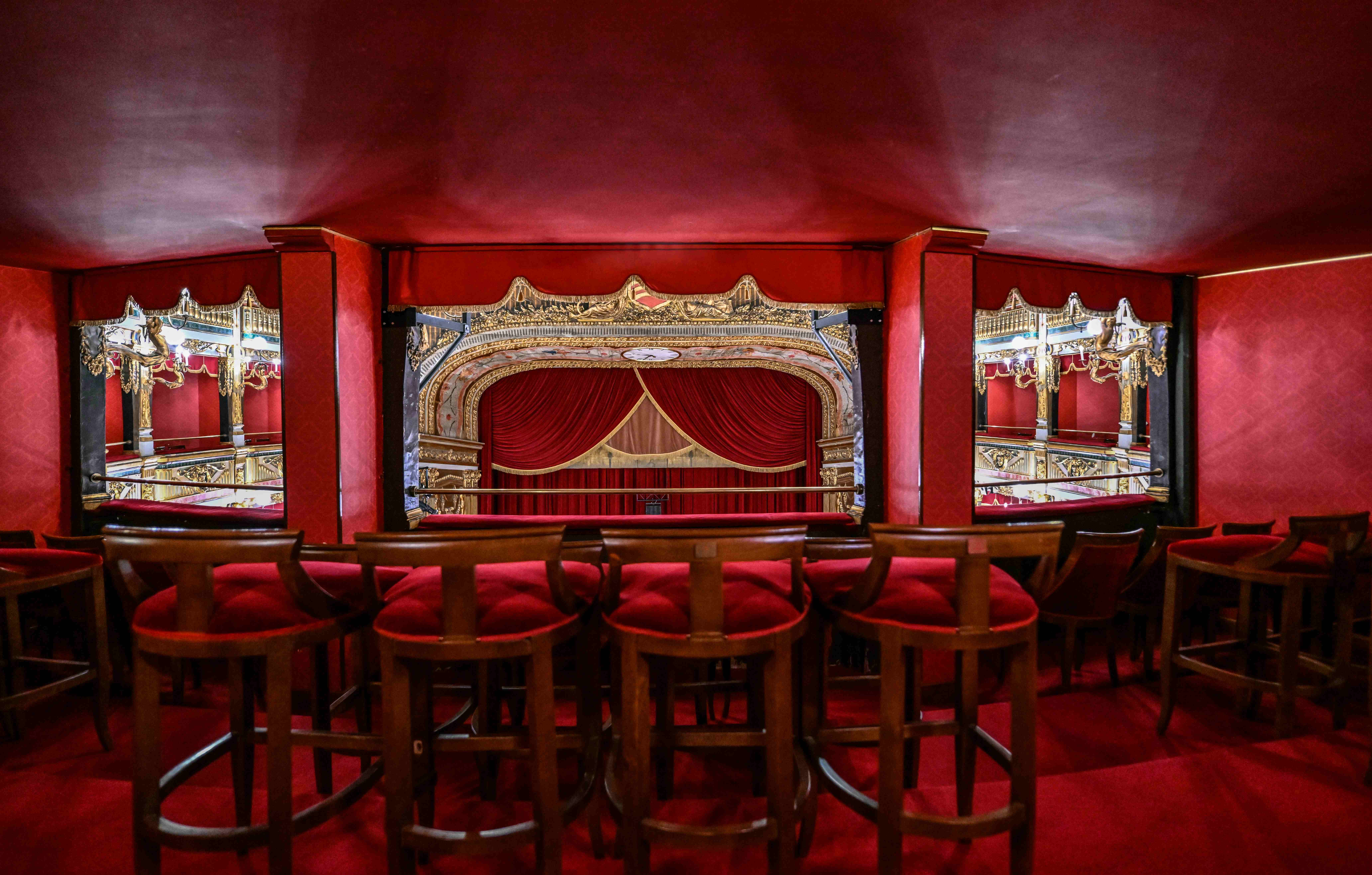
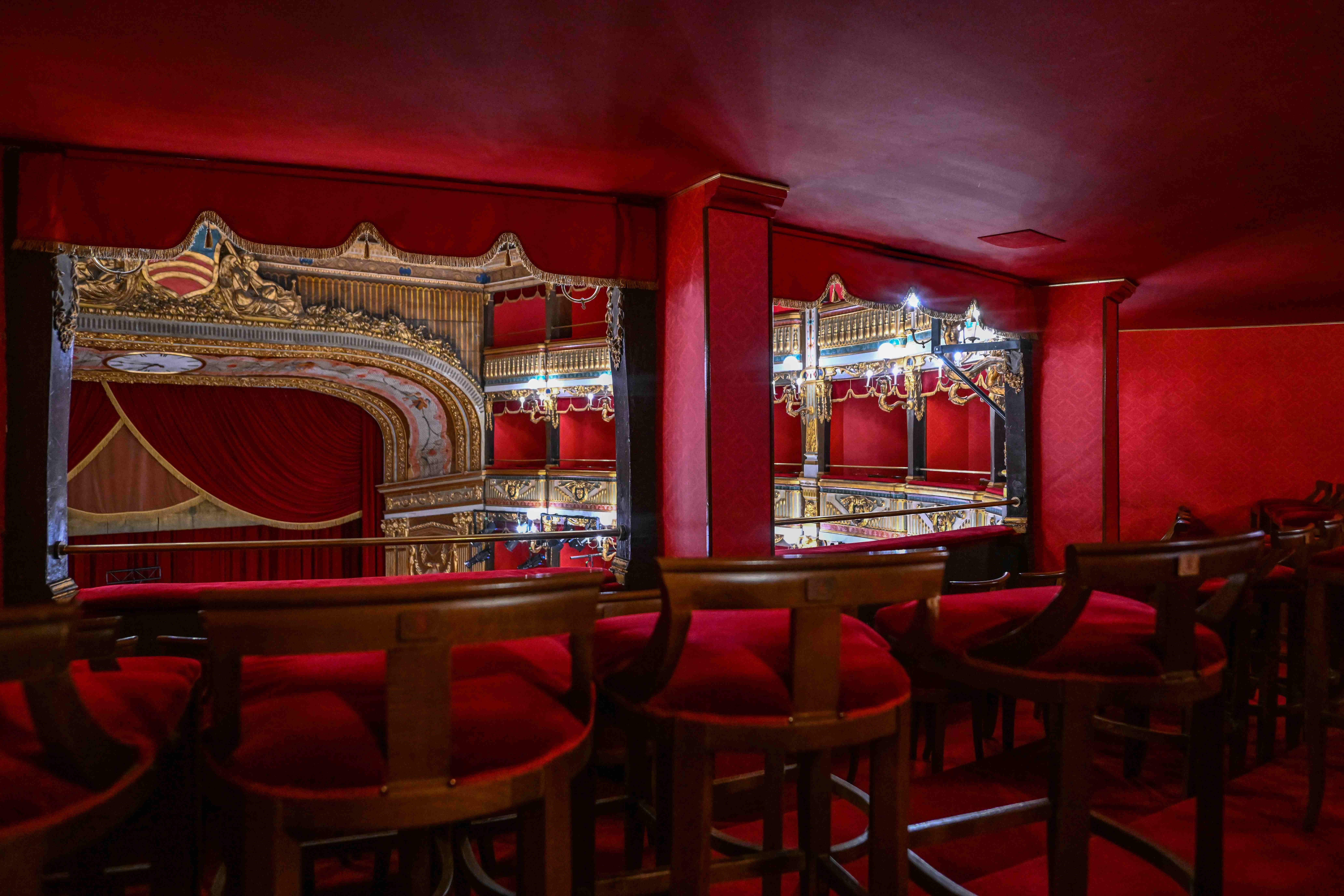
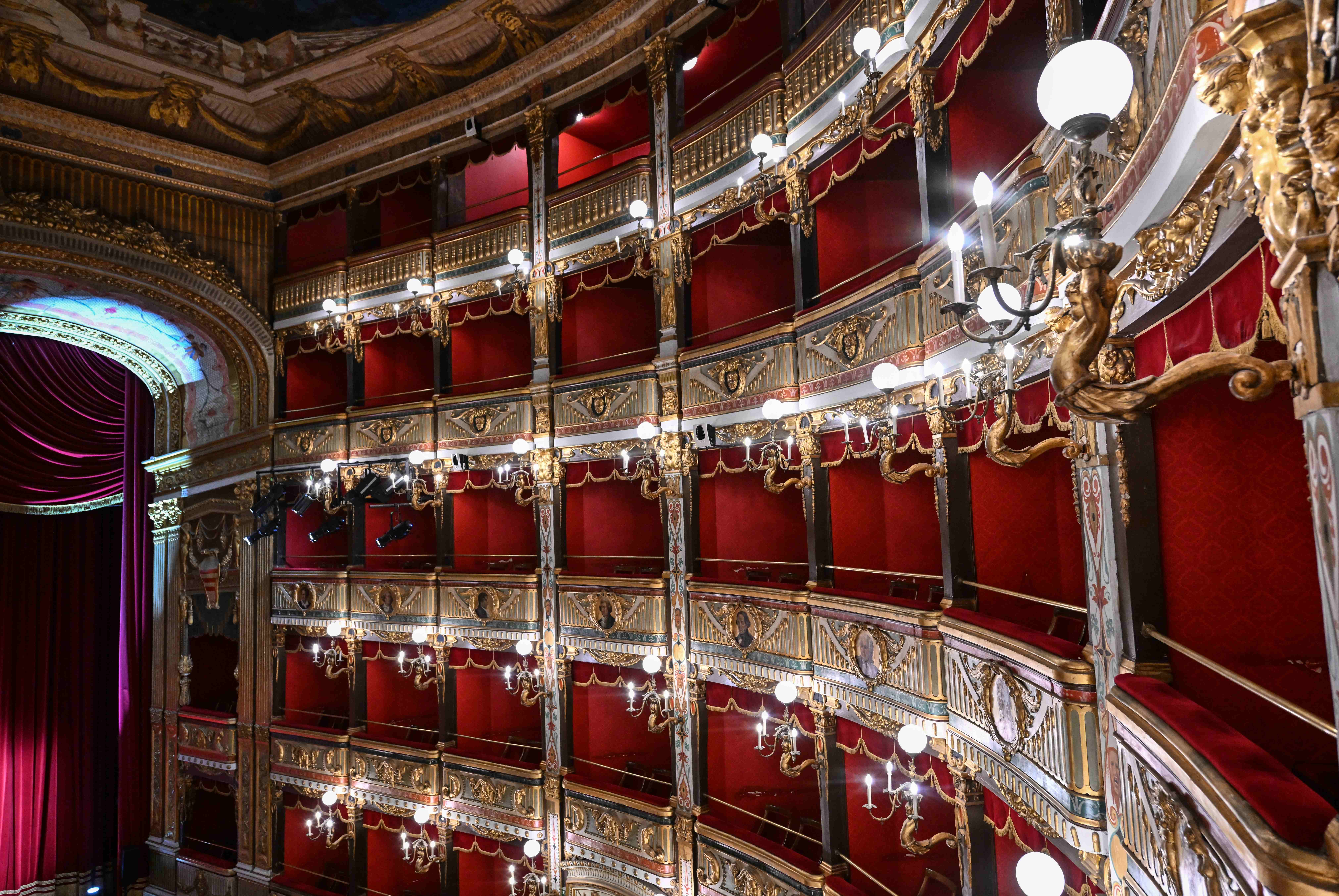
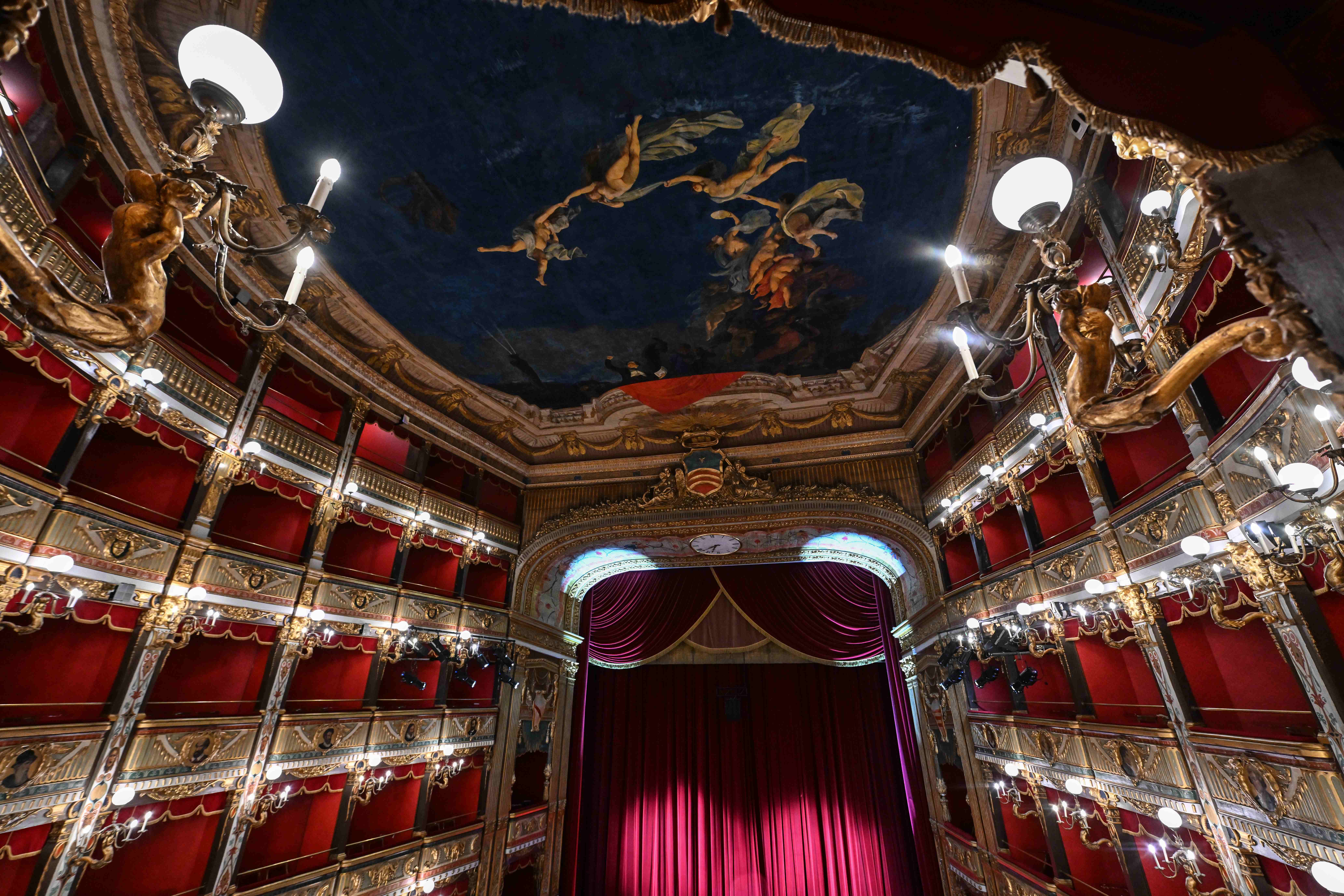
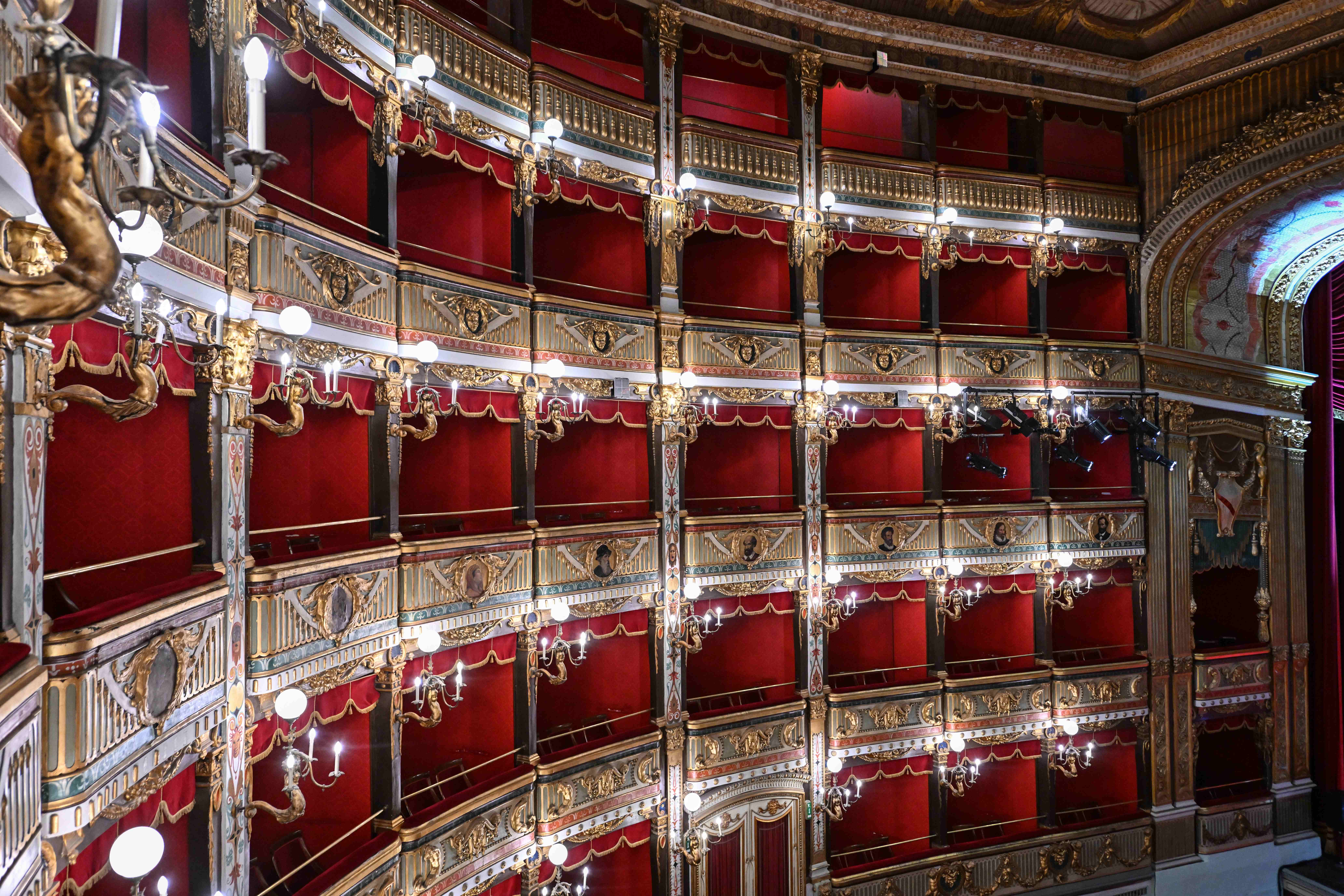
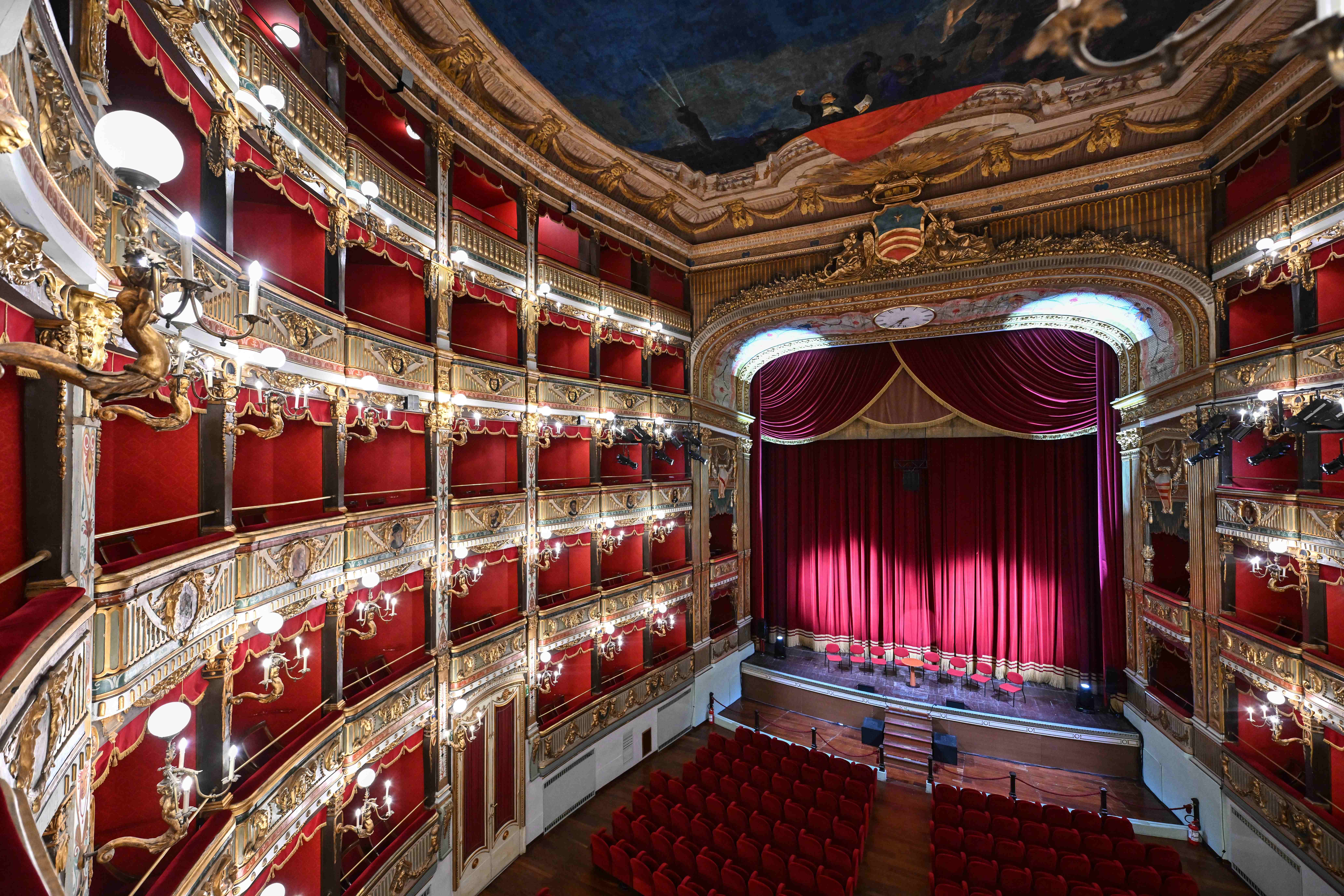
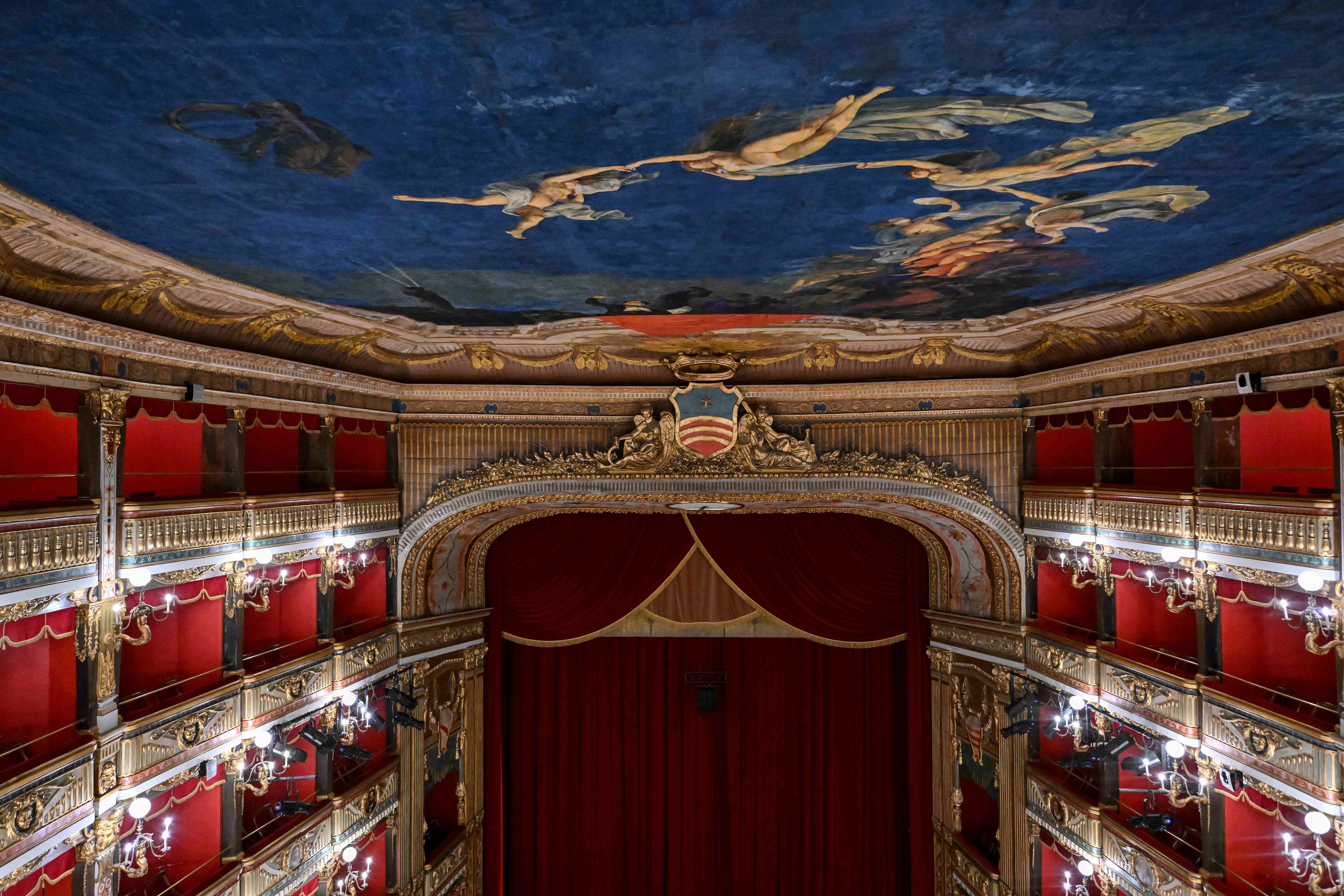
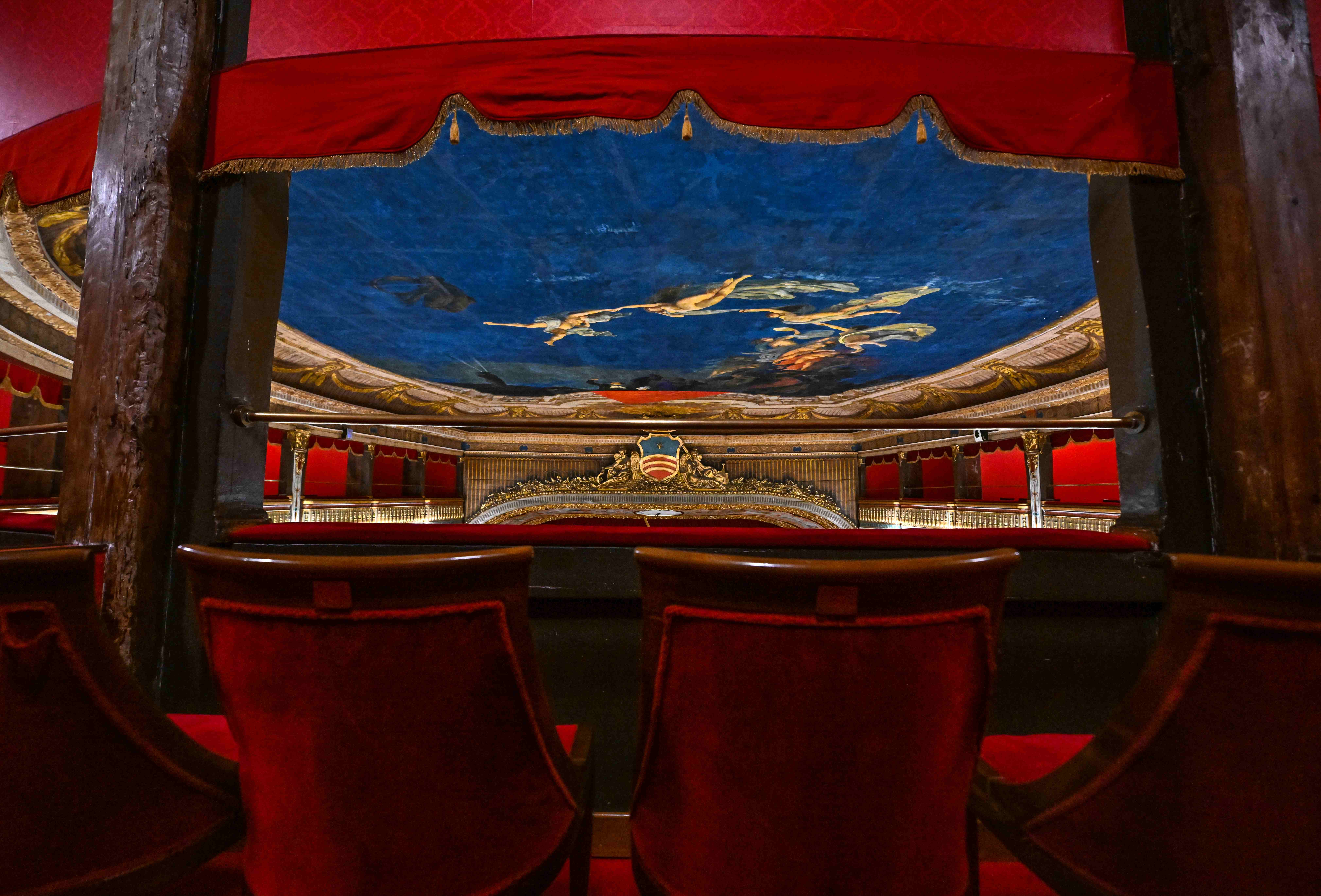
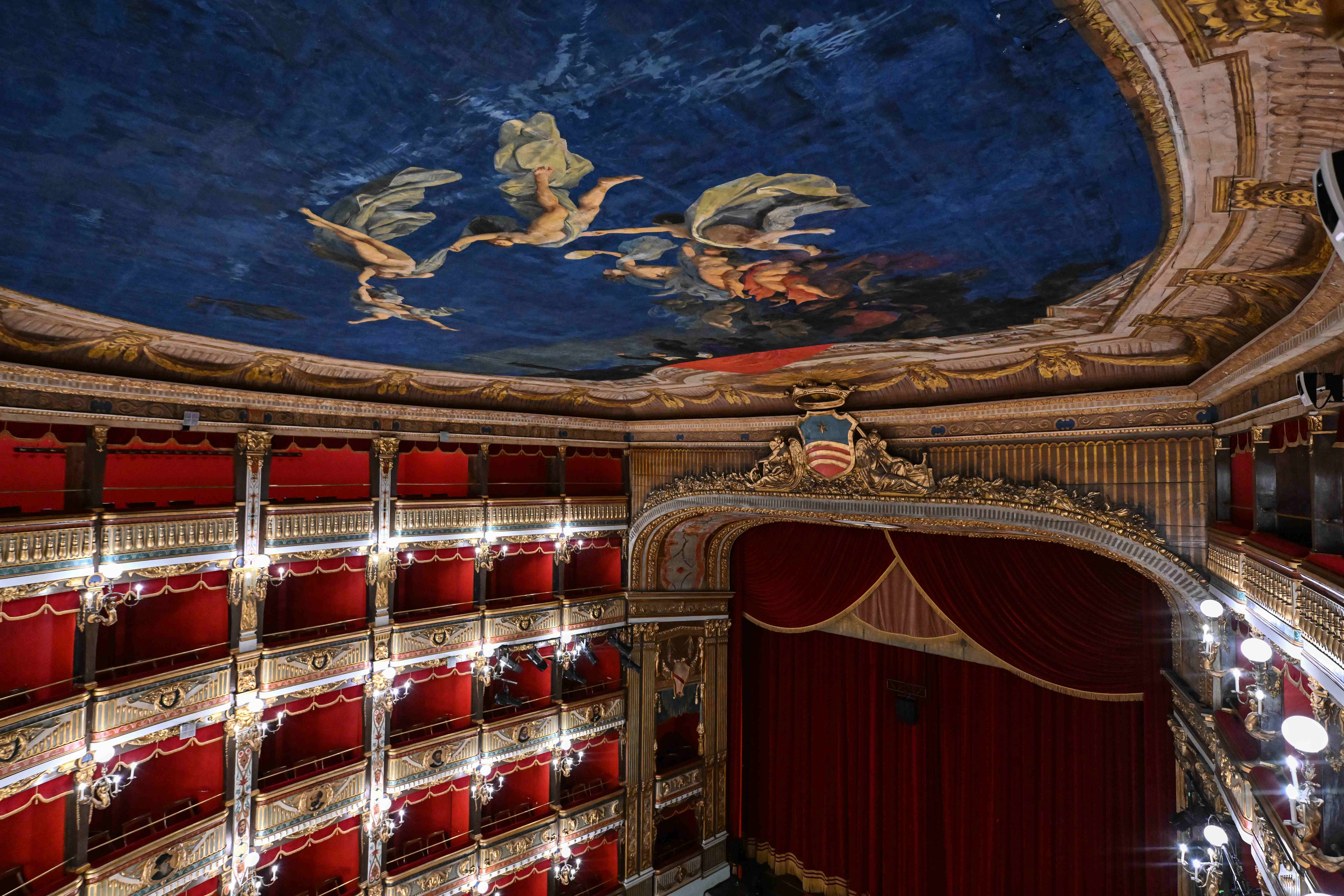
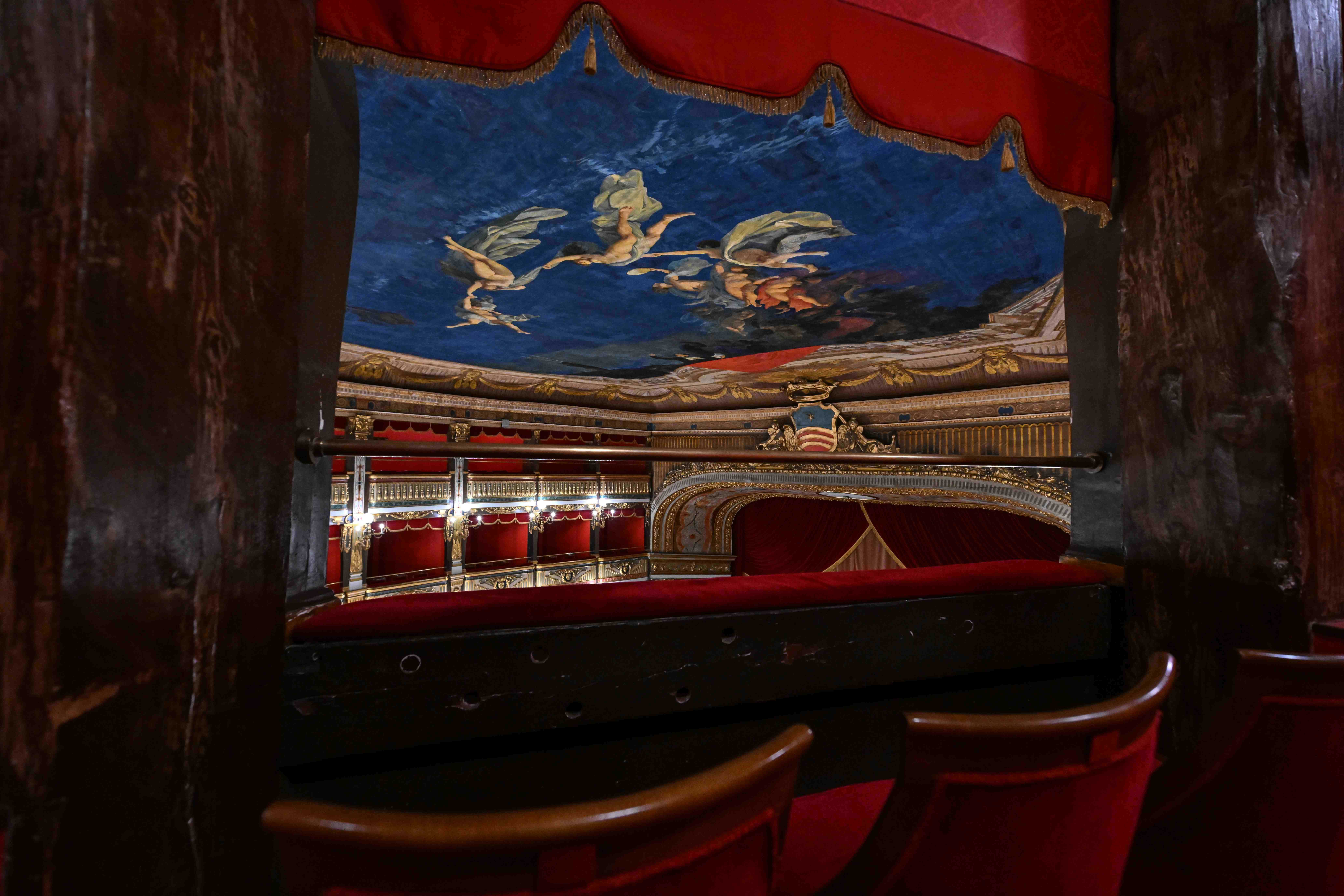
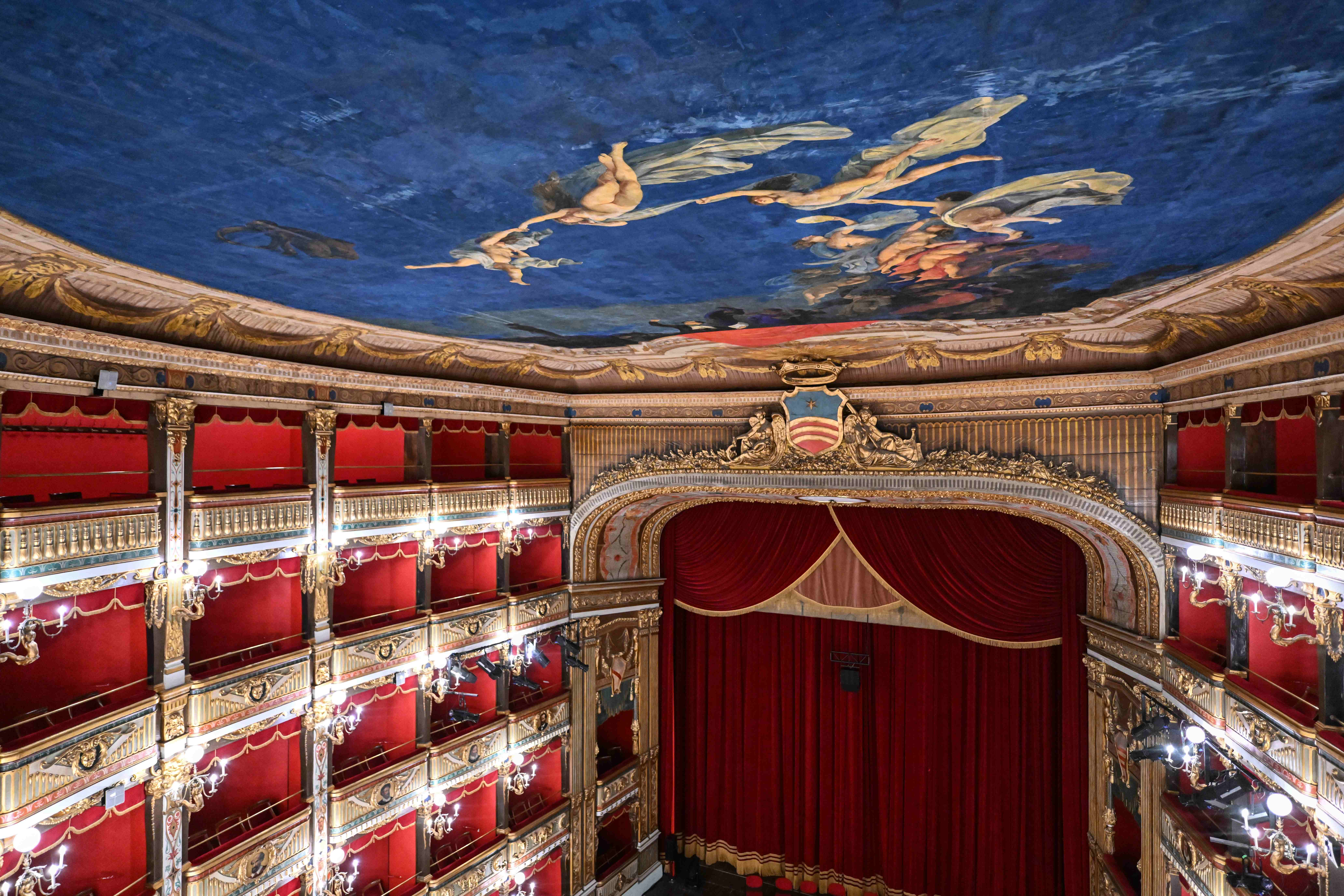
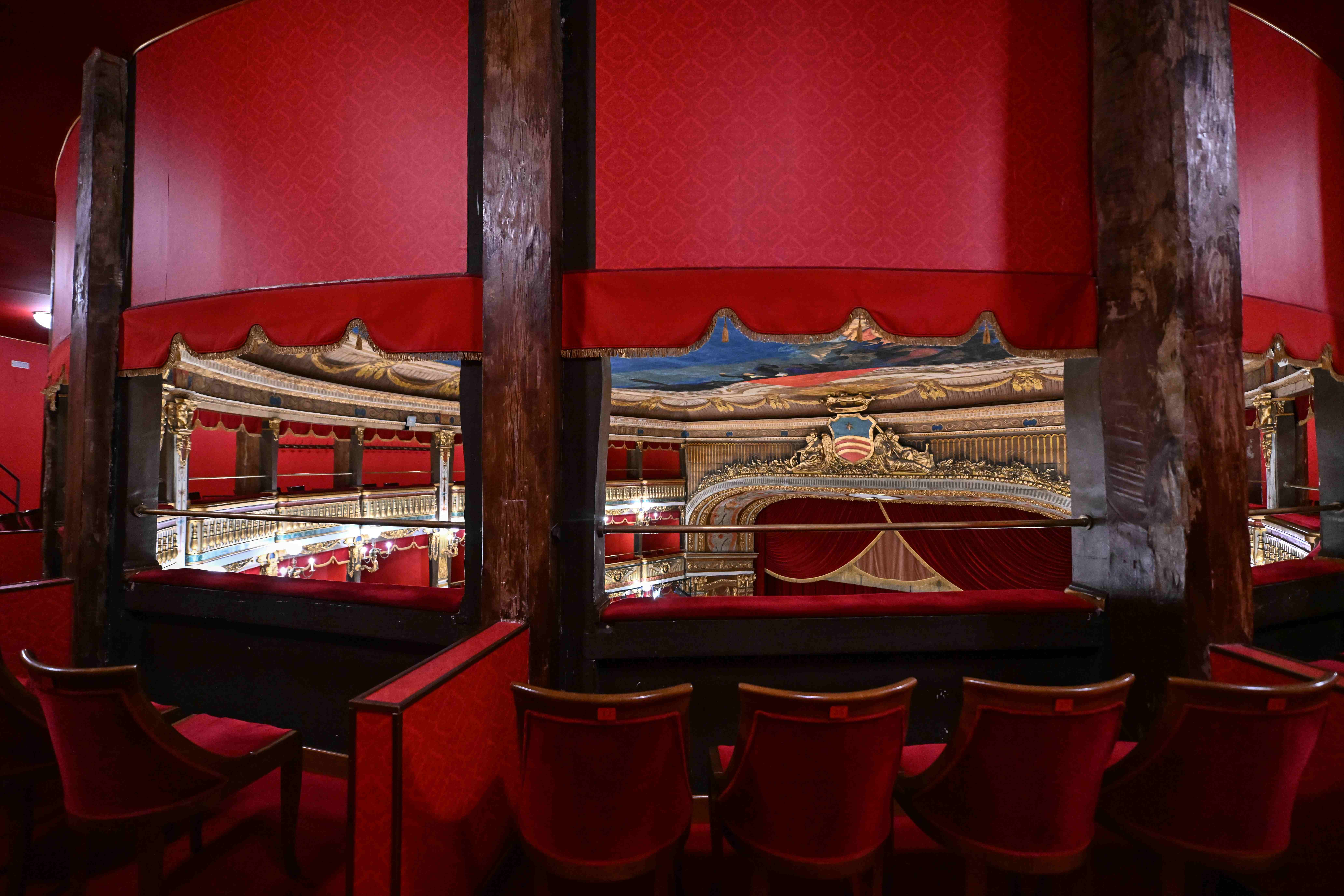
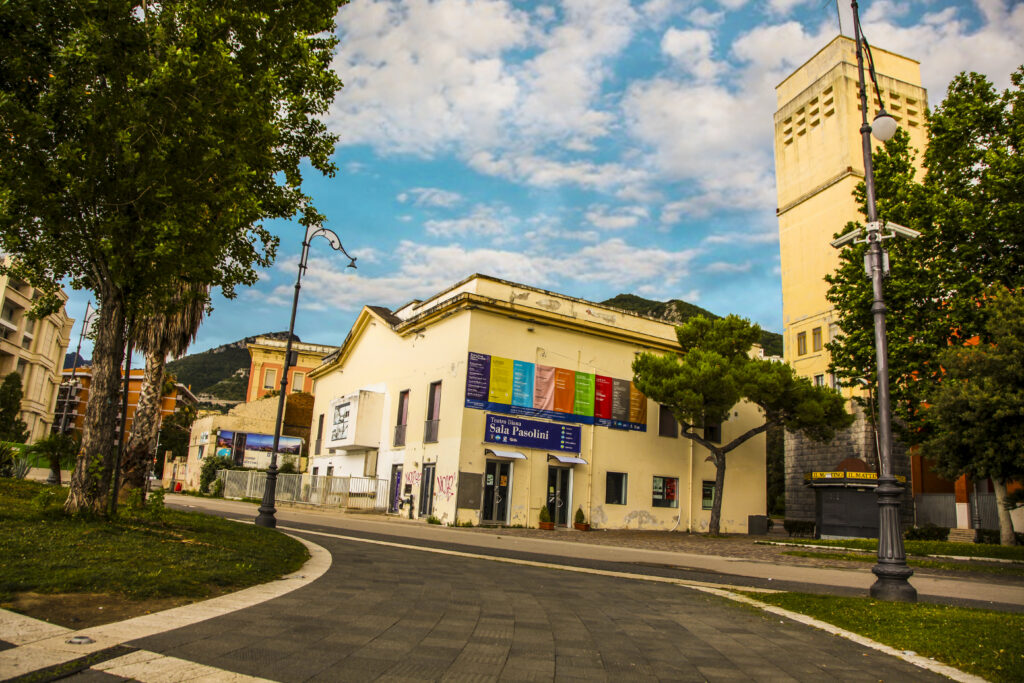
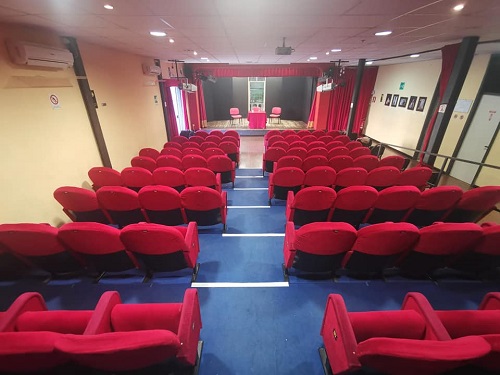
The Giuseppe Verdi Municipal Theatre of Salerno is a nineteenth‑century wooden theatre, with four tiers of boxes and a gallery.
Its construction was approved by the Town Council of Salerno on 15 December 1863, on the proposal of the then mayor Matteo Luciani.
The design and supervision of the works were entrusted to architects Antonio D’Amora and Giuseppe Manichini, who based themselves on the measurements and proportions of the San Carlo Theatre in Naples.
The Theatre was inaugurated on 15 April 1872 with a performance of Giuseppe Verdi’s Rigoletto.
In 1901 the Theatre was dedicated to Giuseppe Verdi, who had died on 27 January of the same year.
Made unusable by the 1980 earthquake, the Theatre remained closed for almost fourteen years.
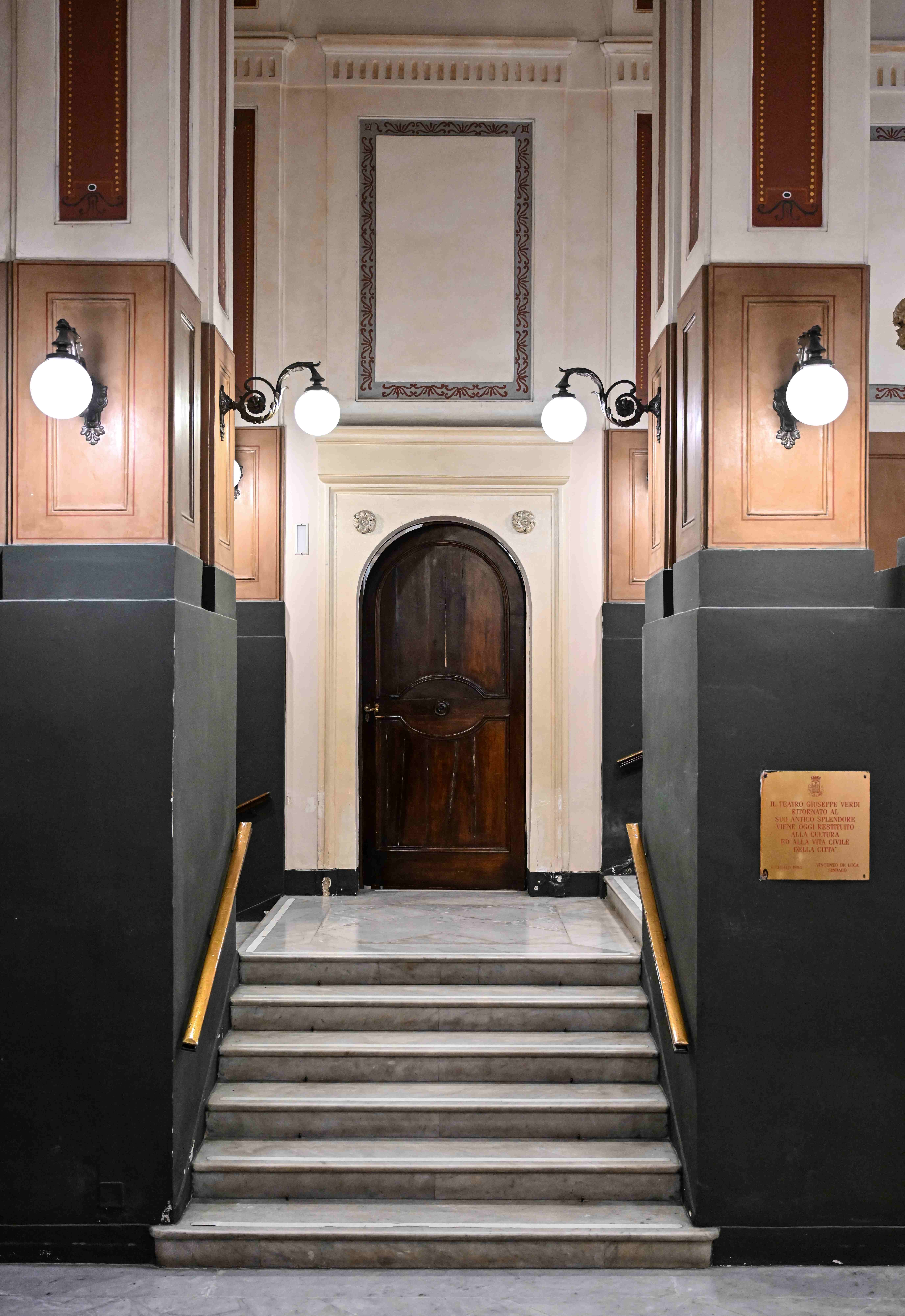
It was restored and reopened on 6 July 1994, during the celebrations for the 50th anniversary of Salerno as the Capital of Italy.
Today the Verdi Theatre of Salerno is recognised as a theatre of excellence on the national opera scene, with a carefully curated programme featuring artists of international renown.
Architectural history
Dates and curiosities about the birth of the Verdi
The need to identify an area suitable for a new theatre building in Salerno was already evident at the dawn of the fifth decade of the nineteenth century.
On 15 November 1843 the Intendant of the Province proposed two possible locations for the building to be erected: largo Santa Teresa, in the western part of the city, and largo della barriera fuori Portanuova, which extended on the opposite side.
The debate over which of the two sites to choose, together with problems related to financing the works and the slowness of the Bourbon bureaucracy, prevented the building from being constructed for twenty years.
The intricate affair reached a positive conclusion only after the establishment of the Kingdom of Italy, when the long‑standing issue of the municipal theatre returned to the fore and appeared, in all its urgency, before the post‑Risorgimento political class.
At the sitting of 15 December 1863 the Town Council, thanks to the firm will of the new mayor Matteo Luciani, resolved the matter by choosing the Santa Teresa area as the site on which the building would be erected.
The first project, signed by engineers Petrilli and De Luca in 1844, was submitted for review to architect Antonio Genovese.
However, the final design was drawn up by Antonino D’Amora, chief engineer of the Civil Engineering Office of Salerno, and architect Giuseppe Manichini, who were also entrusted with the direction of the works.
The building consists of a main block 65 metres long and 35 metres wide; at the short ends it has two symmetrical wings, corresponding respectively to the entrance area and the backstage.
In its external articulation, especially in the main façade, it reprises the neoclassical scheme already tested by Piermarini for La Scala in Milan and by Piccolini for the Teatro Massimo in Naples; the interior plan of the San Carlo is also taken up, reduced and adapted for the municipal theatre of Salerno.
Work began on 1 April 1864 and was entrusted to the contractor Vincenzo Fiorillo who, in 1867, because of increased design difficulties and the resulting higher costs, was joined by Bonaventura Della Monica, as financial backer, and the company of Antonio Avallone, for the execution of the complex building works.
On 1 October 1869 the shell was completed and the decorative works began.
The master of the theatre’s visual image was Gaetano D’Agostino, a painter and decorator of great talent, who chose to be assisted by some of the most prestigious names of the Neapolitan academic world.
At his side were Domenico Morelli, Pasquale Di Criscito, Ignazio Perricci, Giuseppe Sciuti and a large group of artists from Salerno: his brother Antonio, his cousin Ermenegildo Caputo, Matteo Amendola and the sculptor Giovan Battista Amendola, originally from Episcopio di Sarno.
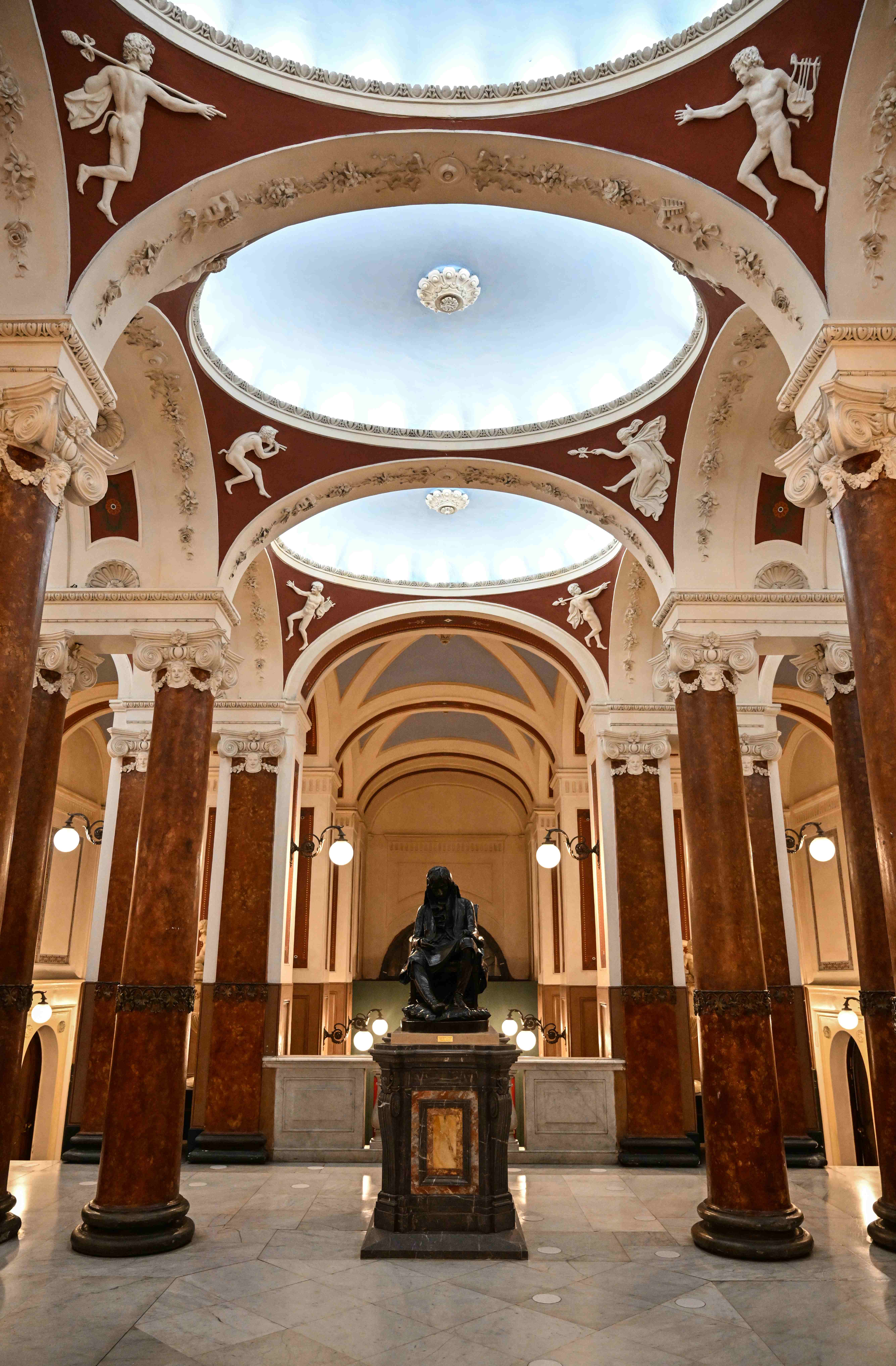
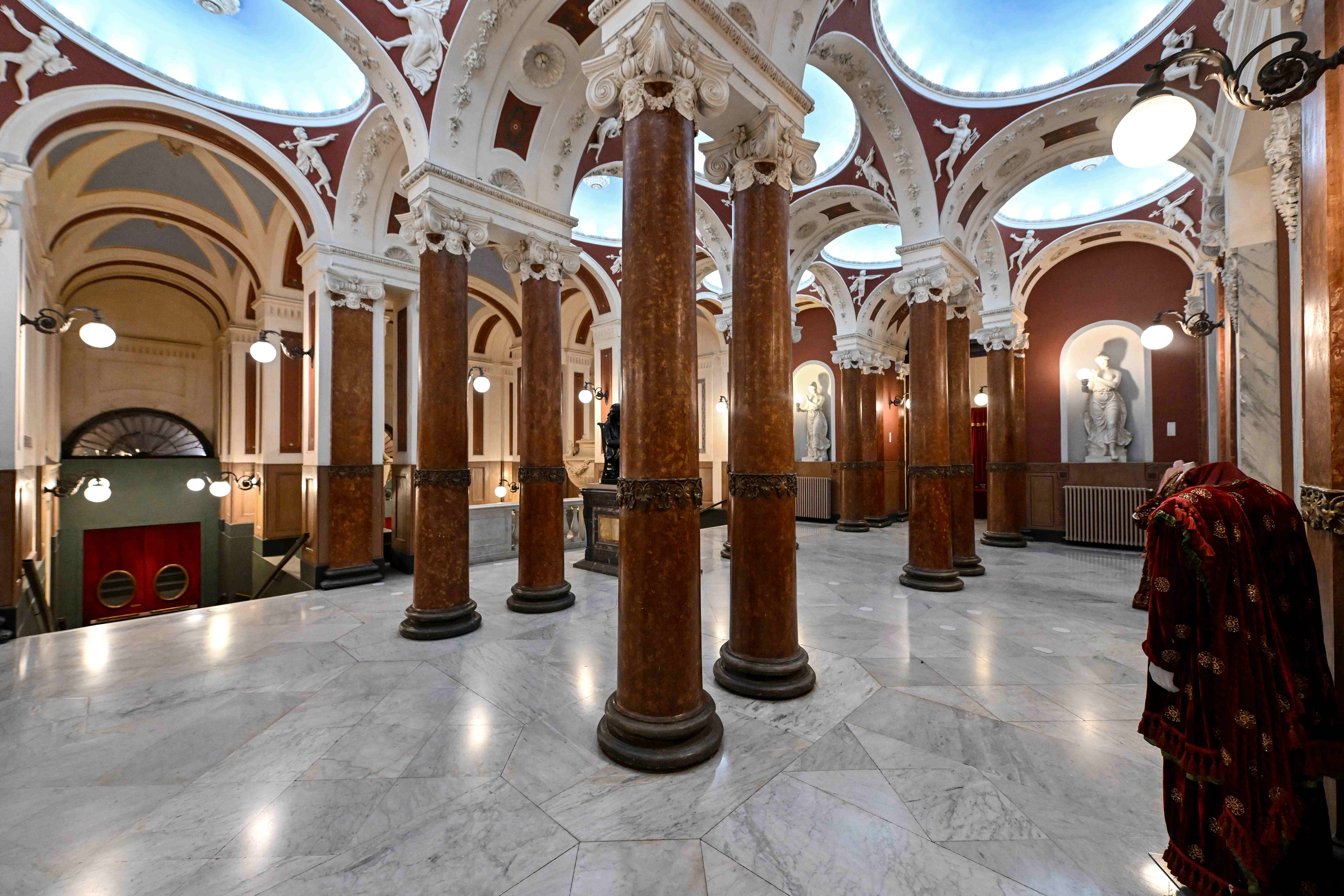
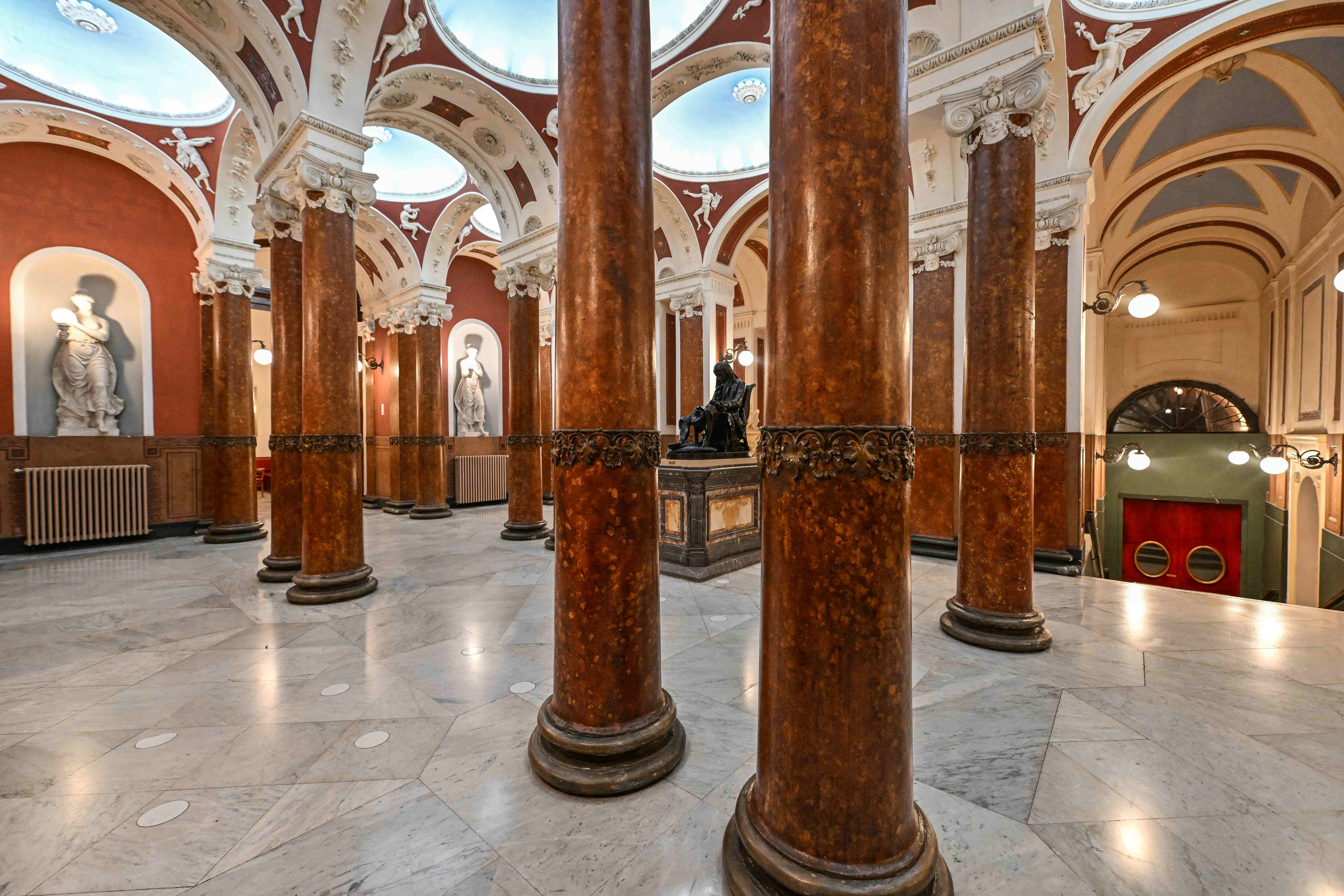
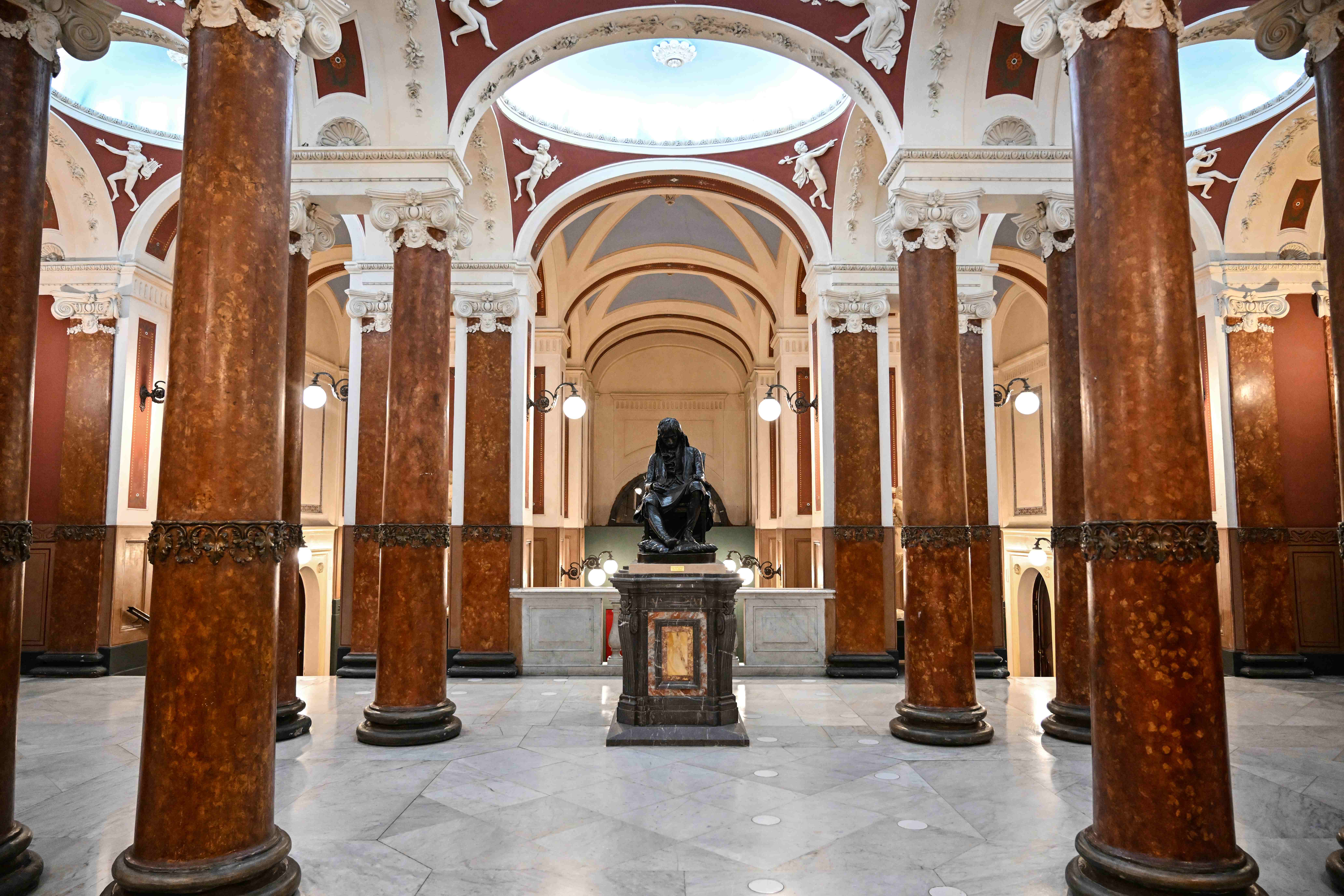
From the foyer onwards, the iconographic programme is defined with great clarity: the chosen images had to convey the intended use of the place, conceived as a temple of music and, in particular, of the tradition of bel canto.
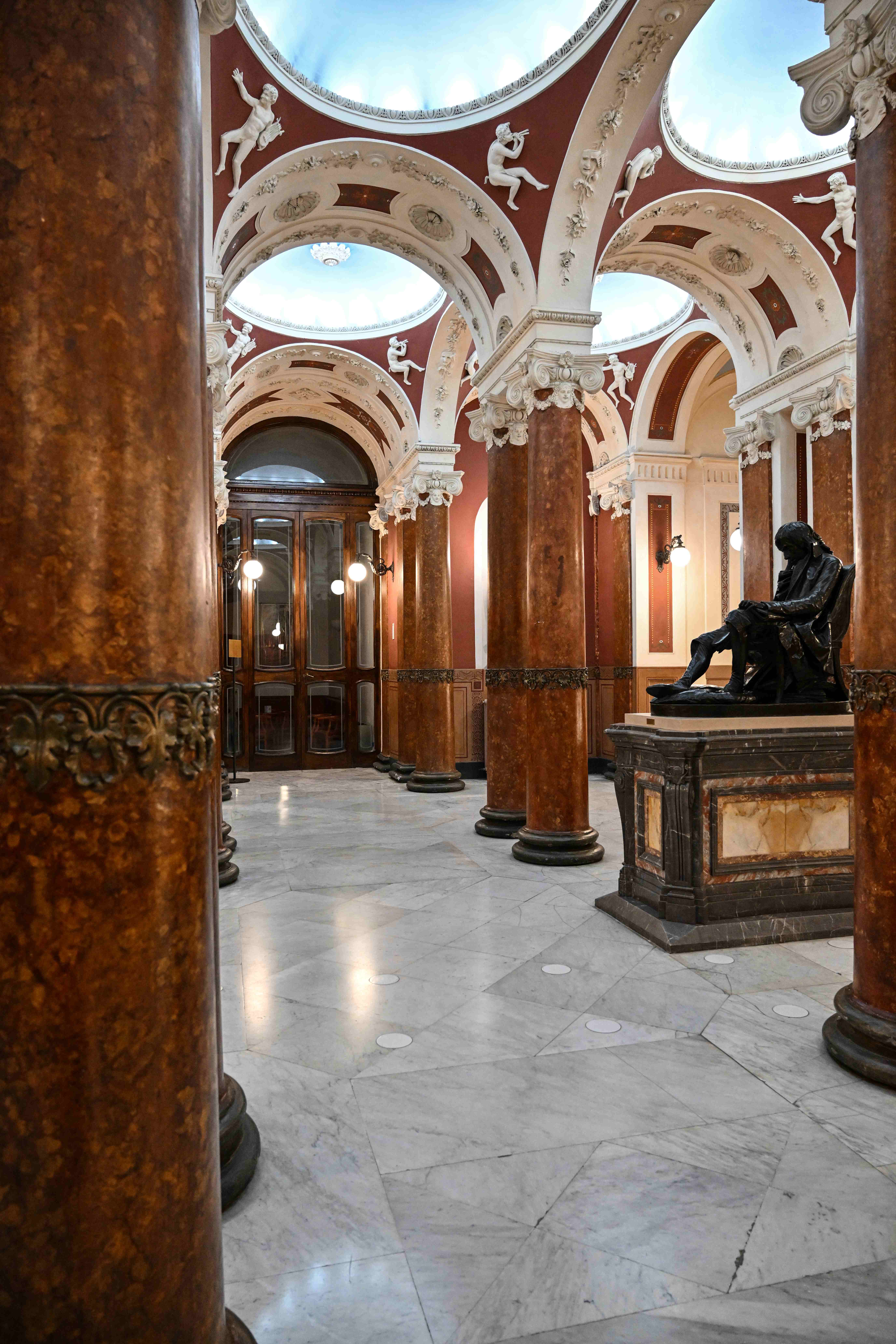
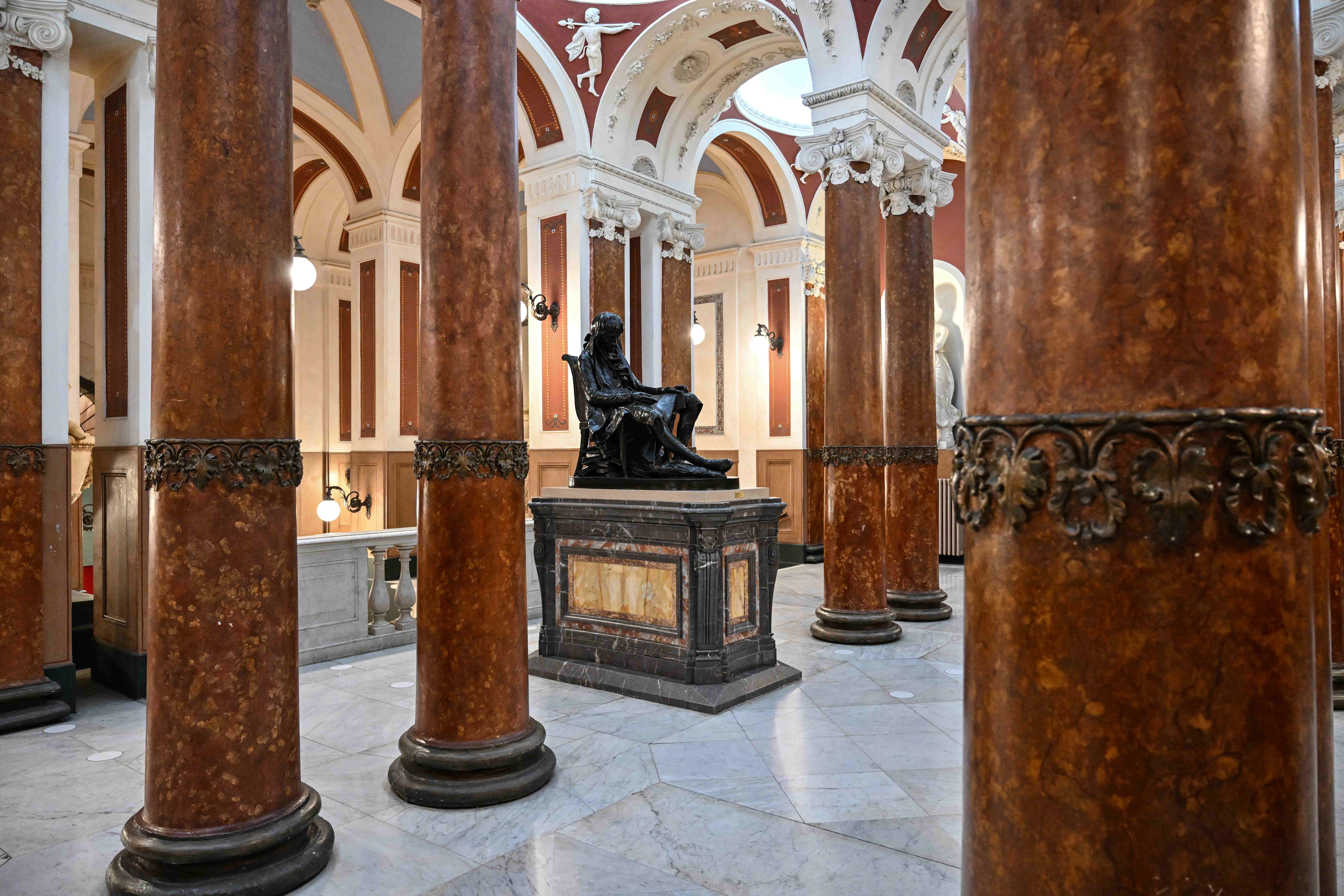
At the centre of the peristyle stands the sculpture by Giovan Battista Amendola depicting the dying Pergolesi, whose symbolic function is to introduce the spectator into the temple of music.
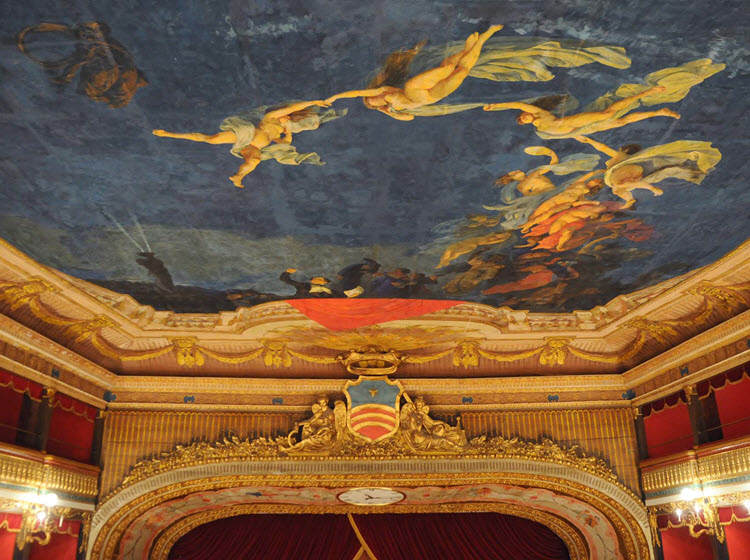
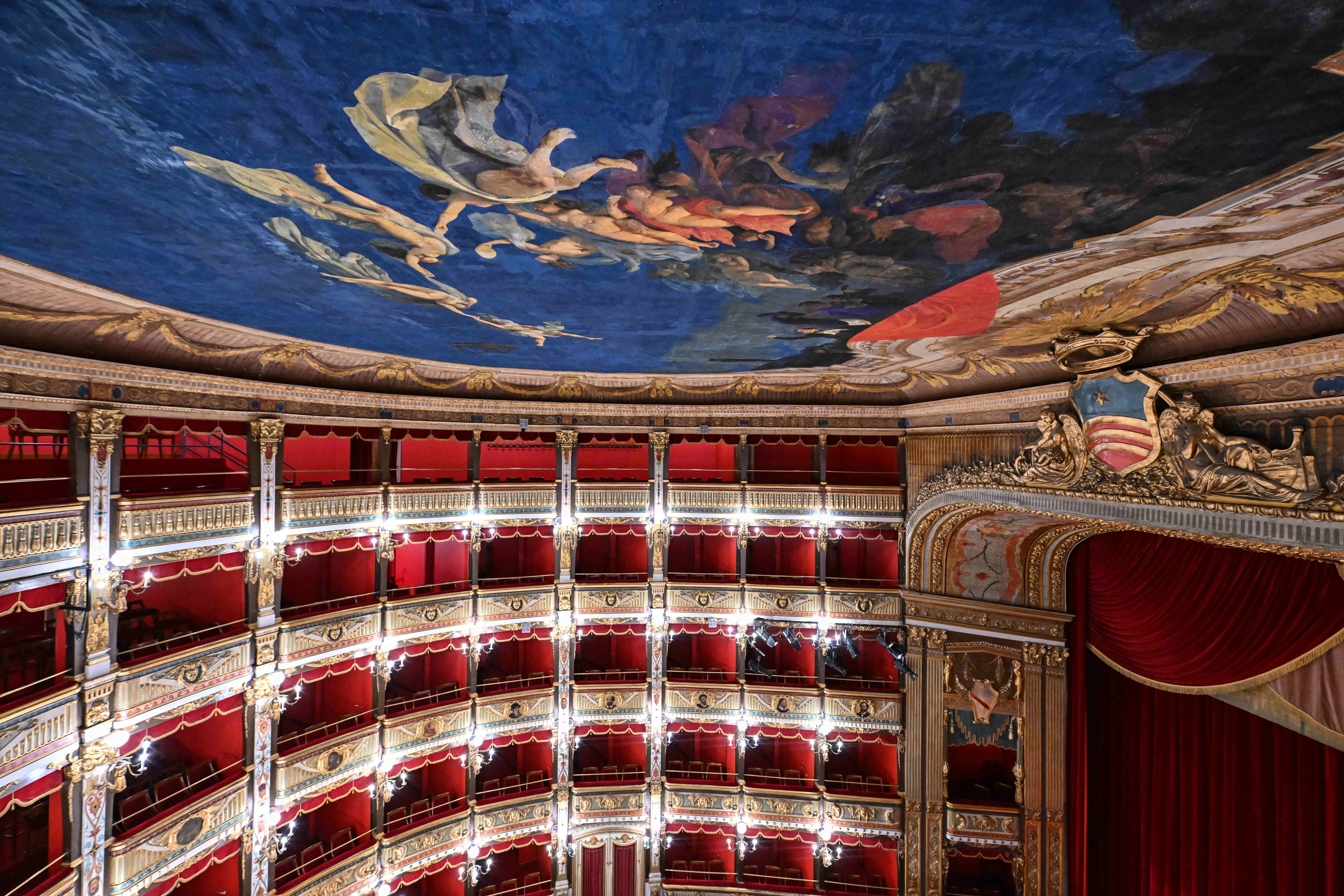
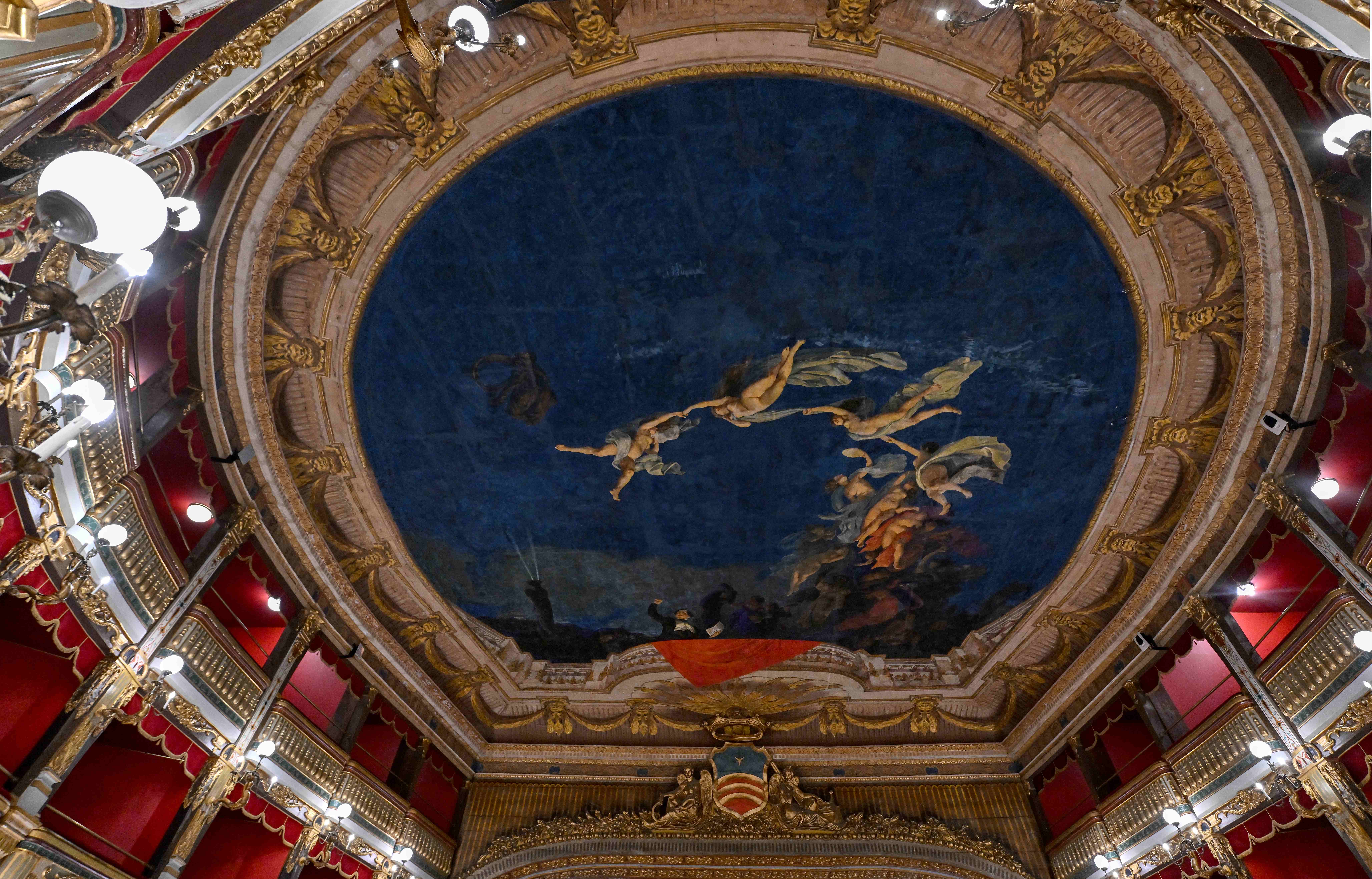
Its undisputed lord is Gioachino Rossini who, in the centre of the ceiling, from the top of a balustrade, rises to become the supreme expression of Italian and Neapolitan musical genius, having dominated the Neapolitan scene between 1815 and 1822.
The Muses surround him, emerging from the Prussian blue of the sky and holding hands in a choreographic carousel.
Younger sisters of the superb and graceful divinities of Paolo Veronese, of the flowery and voluptuous figures of Pietro da Cortona and of the lighter, more ethereal figures of Tiepolo, the Muses of the Salerno ceiling scandalised the highly cultivated Francesco Saverio Malpica.
Although he regarded Di Criscito as a painter of uncommon gifts, in two letters sent to a friend in 1872 and later published in Salerno, Malpica wrote that in the ceiling of the Municipal Theatre he had been unable to detect even a distant glimmer of artistic inspiration, since Rossini was portrayed with a “full‑moon face” and the Muses as “fat and plump women shaking their buttocks, legs and arms”, and therefore unworthy of any modest gaze.
Unperturbed by such clamour, the nine sisters display abundant neo‑Baroque grace, enveloping, in their festive whirling, the allegory of musicality, in a blue tunic and with a white hand raised to her ear; melody is personified by the power of music, whose suggested intensity is entrusted to the sound of a buccina blown by a sea creature.
Behind Rossini stretches a sequence of panels inspired by his most significant works written in Italy before his departure for Paris: Tancredi, Armida, Otello, The Barber of Seville, Moses in Egypt and Semiramide.
If Di Criscito’s sky represents the consecration of the hall to the great season of Italian melodrama, the curtain is entrusted with celebrating the history of the city by evoking a glorious episode from the past.
Thanks to his personal friendship, D’Agostino succeeded in persuading the master Domenico Morelli to create the theatre’s most emblematic work.
The chosen episode is the Expulsion of the Saracens from Salerno, which took place in the summer of 871, when the people of Salerno, led by Prince Guaiferio, resisted the Aghlabid invaders commanded by the fierce Abdila.
From the literary sources, Morelli selected the moment in which the overconfident Saracens, strong in their military superiority, advance to avenge seventy of their men, killed by the defenders during a lightning raid beyond the walls.
The alliance of the three Campanian cities – Salerno, Benevento and Capua – illustrated in the medallion at the top centre of the curtain, and the popular effort, exemplified by the figures of archers and women painted in the eight cameos of the frame, symbolise Salerno’s heroic and victorious resistance.
Twenty‑four preparatory drawings, the final sketch and two large‑scale studies of the central episode constitute the entire process of Morelli’s work.
In practice, the transfer of the work onto the 122‑square‑metre drop curtain was entrusted to two painters very close to the master: Giuseppe Sciuti, from Zafferana Etnea in Sicily, who painted all the figures, and Ignazio Perricci, an architect from Monopoli in the province of Bari, who created the ornate frame.
The frame is the truly original element of the sumptuous curtain.
Its elegant yellow and blue medallions are perfectly balanced with the historical scene, constructed through a skilful blend of grand operatic choreography and exotic oriental touches reminiscent of Mariano Fortuny.
Master builders, wood‑carvers and gilders of proven experience assisted D’Agostino in the execution of the decorations.
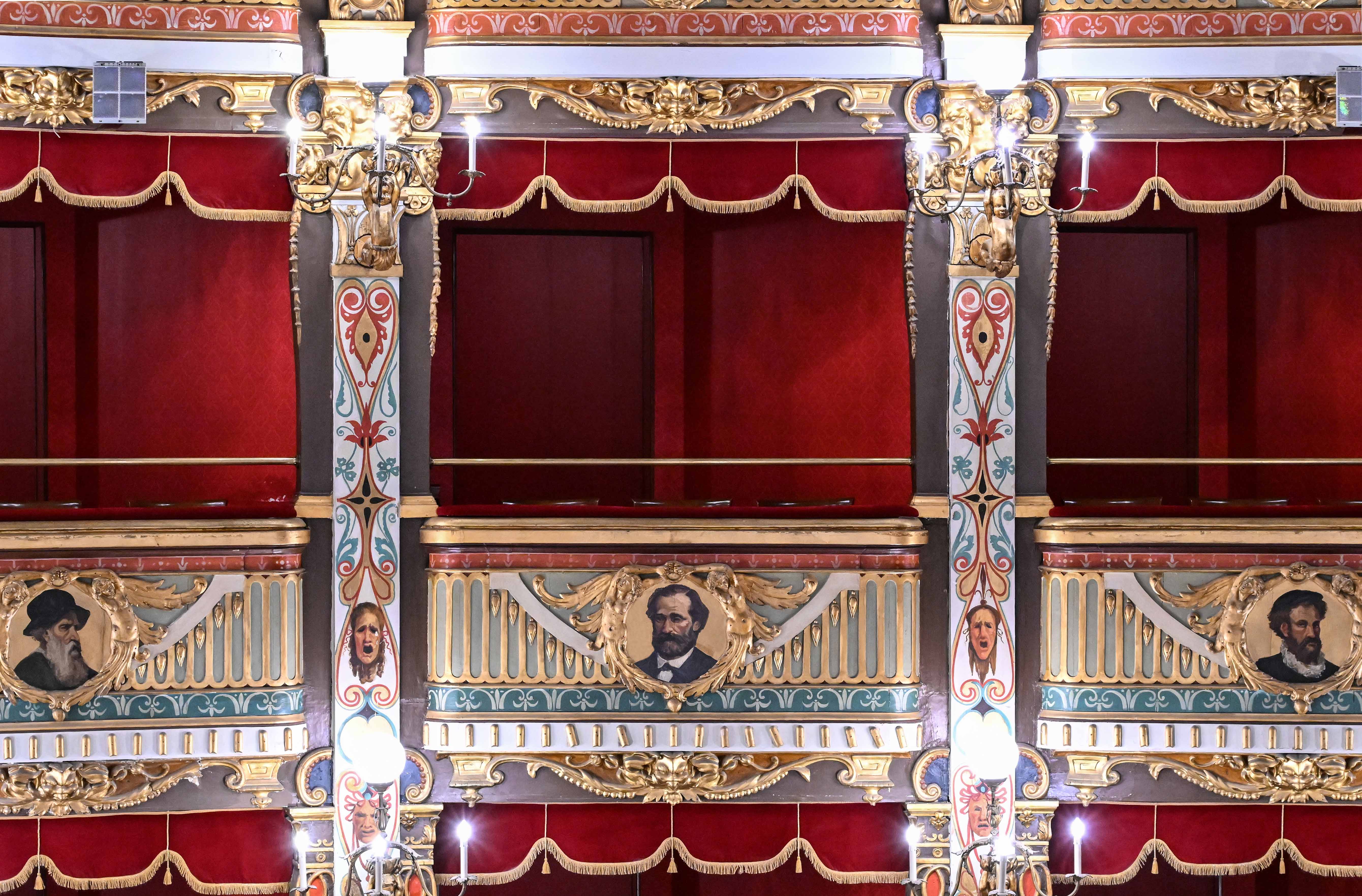
On the parapets of the first‑tier boxes stand putti holding medallions; on the second tier, powerful neo‑Mannerist giants have their bodies ending in chalice‑shaped scrolls; on the third, female figures interlace to form cameos that contain the images of a poet, a painter and a musician.
In these medallions, from right to left as you enter the hall, are depicted: Vincenzo Bellini, Domenico Cimarosa, Giovan Battista Pergolesi, Carlo Goldoni, Gioachino Rossini, Gaetano Donizetti, Vittorio Alfieri, Torquato Tasso, Dante Alighieri, Michelangelo Buonarroti, Raphael, Giotto, Leonardo da Vinci, Andrea Sabatini, Benvenuto Cellini, Salvator Rosa and Giuseppe Verdi.
The Municipal Theatre of Salerno (Giuseppe Verdi Theatre from 1902, by resolution of the Town Council) was inaugurated on 30 March 1872 with a performance of Giuseppe Verdi’s Rigoletto.



 L'evento inizierà tra 167 giorniSan Matteo fest Free admission 21 Sep 2026