The museum
.
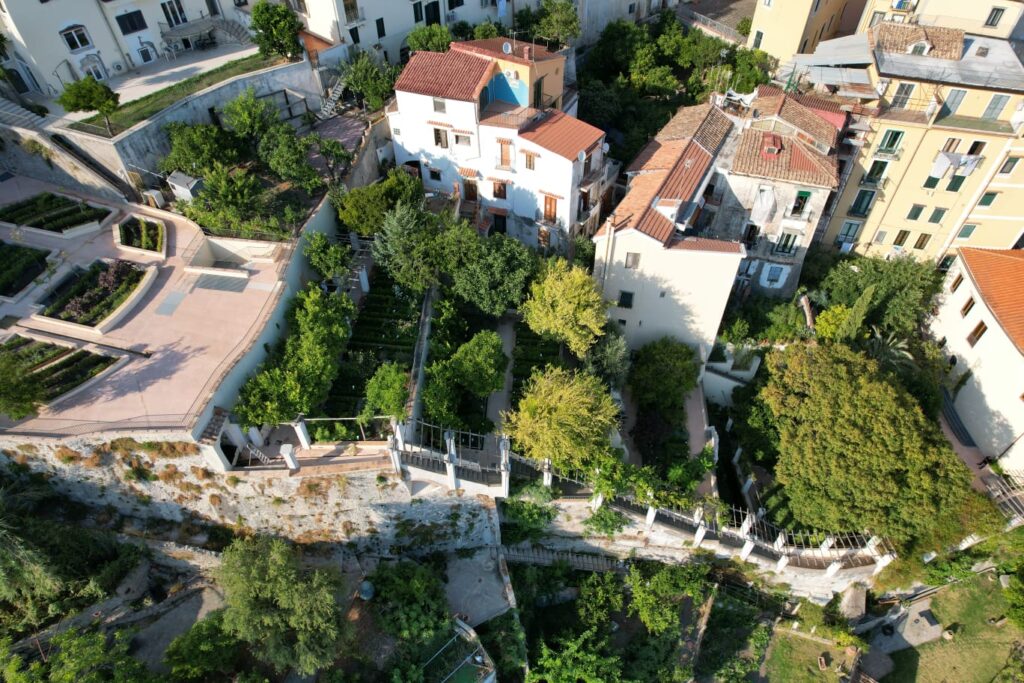
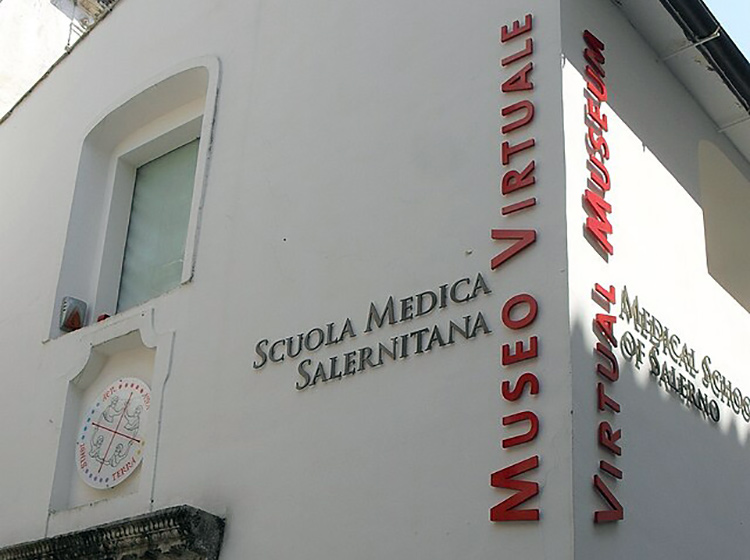
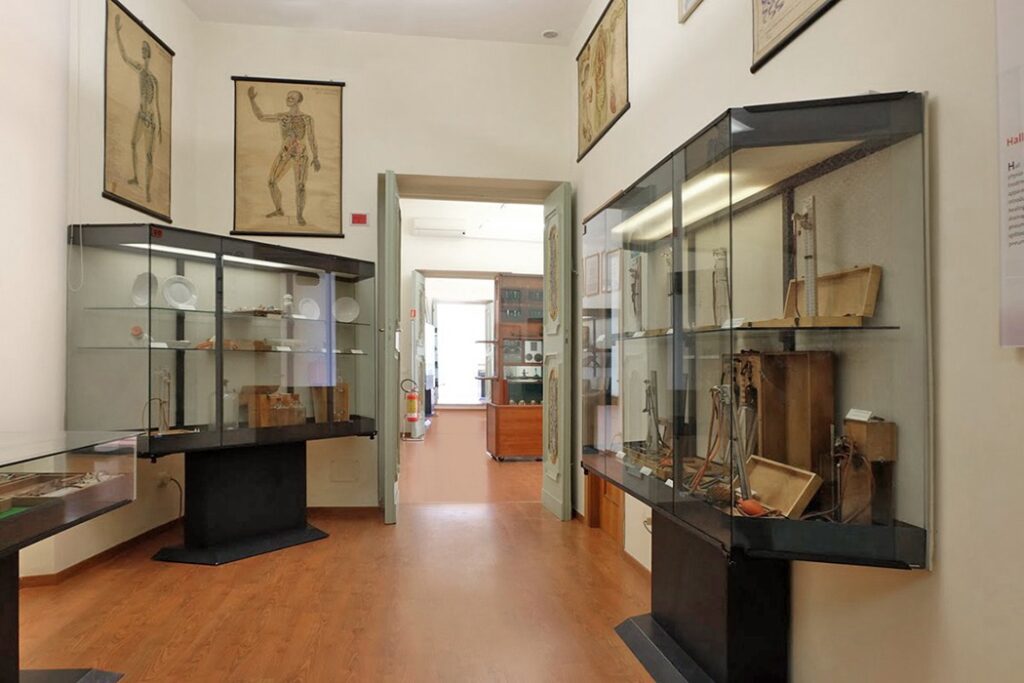
The Museum is housed in the historic Archbishop’s Seminary building, which was, previously, the last home of the Salerno Medical School (suppressed in 1811).
The same building also houses the Library and the diocesan Archive, where ancient volumes, documents and hundreds of medieval parchments are preserved.
The palace’s current facade has an elegant neoclassical line, the result of changes made by Archbishop Lupoli in 1832. The symmetrical design is centered on the central doorway, decorated with the archbishop’s marble coat of arms, while the upper balcony is framed by a small shrine reminiscent of the style of classical temples.
The collection
The original nucleus of the collection consisted of the works of art donated by Marquis Ruggi d’Aragon and Archbishop Isidoro Sánchez de Luna, as well as notable artifacts kept in the Cathedral sacristy. It was also enriched over time by other works from churches in the diocese and by interesting artifacts acquired on the antiques market or from testamentary bequests.
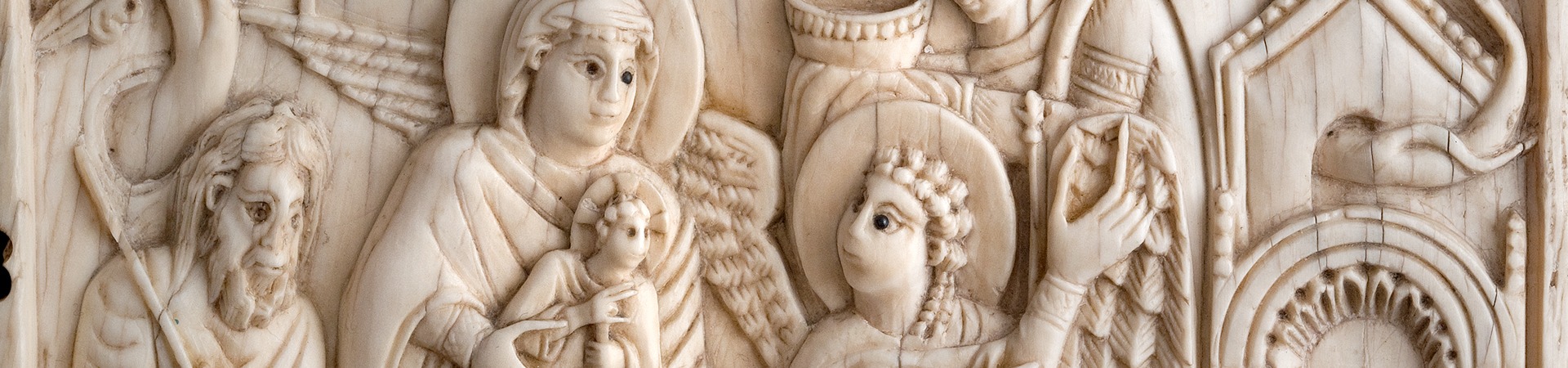
First and foremost among all the works is the cycle of ivories, the largest and most comprehensive collection of ivory tablets from the Christian Middle Ages in the world. The cycle consists of 64 pieces, 34 of which are illustrated with scenes depicting episodes from the Old and New Testaments. It would date from the late 11th to the early decades of the 12th century.
Another work of note is the Exultet, a 13th-century parchment scroll consisting of 11 sheets illustrated with miniatures, which was used during the Holy Saturday liturgy.
These two precious works are flanked by ten medieval codices, among which the Pontifical stands out artistically, made at various times between the late 13th and early 14th centuries, as can be deduced from the page-foot coats of arms and the techniques used.
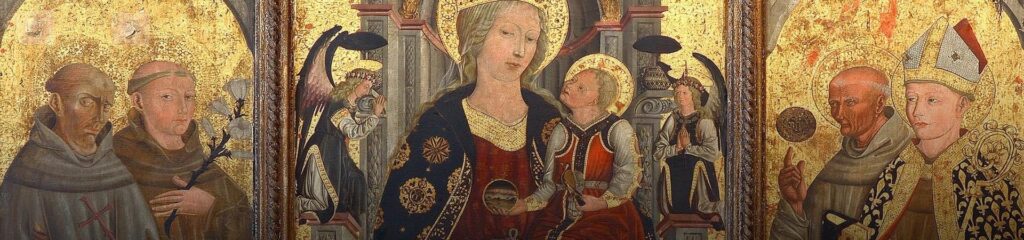
The Museum’s Pinacoteca consists of nearly 100 paintings, an expression of the figurative culture of southern Italy from the 13th to the 18th century. Among the works on display are:
- a Cross painted in the 13th century;
- the Crucifixion work by Roberto d’Oderisio, one of the protagonists of Gothic art in Naples;
- the Pietà from the church of Saints Crispino and Crispinianus, dating from the last decades of the 14th century;
- the Crowning of the Virgin from 15th century Eboli;
- a panel depicting St. Michael the Archangel, the work of Cristoforo Scacco;
- several paintings by Andrea Sabatini da Salerno, an important painter of the first quarter of the 16th century (Pietà, The Madonna and Saints Aniello and Leonard, The Madonna of Constantinople).
Operation of great significance is also the so-called Cross of the Barliario from the 12th century.
Sculpture is present with a few pieces, but of great interest, such as a St. Joseph in gilded wood dating back to the 15th century, the St. Martin, the Madonna and Child, and the Madonna of Grace in painted terracotta.
Conserved at the museum is the Lapid of Alfano I dated 1078, the first document of the Norman conquest of Salerno, and amedagliere which holds numerous coins from Antiquity to the Renaissance.
Treasures to Discover
- The Crucifix called the Barliary
.
Located in the second room “of the Crucifix” and coming from the Church of St. Benedict, it is an extraordinary example of wooden art from the 1200s. It depicts Christ Triumphans,according to Byzantine tradition. Although it suffered considerable damage from a 19th-century fire, the work still retains a strongly expressive face and has two side tables depicting the Madonna and St. John.
- St. Michael the Archangel – Cristoforo Scacco, 1503-1505
The painting depicts the saint in the role of “weigher” of souls and warrior defender of good. Influences from the Umbrian-Emilian area and references to Leonardo himself have been identified in the painting. Cristoforo Scacco, a painter of Bramantesque and Paduan-Mantegnesque training, was active between Naples and southern Lazio.
- The Pietà – Andrea Sabatini, First half 16th century
This is a painting of great intensity, made in the first half of the 16th century, probably as an altarpiece. In it, painting and sculpture interpenetrate, between the pictorial virtuosity of the panel and the marvelous carved and gilded frame, typical of early Renaissance works.
Curiosities to know
- The Ivories in the World
.
Between the 19th century and World War II, some of the ivories were taken away by collectors of the time or by occupying armies. They are currently divided among the Louvre in Paris, the Metropolitan Museum in New York, the Victoria and Albert Museum in London, the State Museums in Berlin, the Hermitage in St. Petersburg, and the Museum of Fine Arts in Budapest.
In medieval times the Exultet was written on a long scroll of parchment that the deacon or cantor read on Easter night by sliding it from the pulpit toward the faithful gathered in prayer. The text was written in the direction of the cantor’s reading, while the images were engraved or painted, on the same side of the scroll, but in the opposite direction to that of the written part. In this way, as the scroll was slid down from the pulpit, the faithful who did not know learned Latin could still follow the story and the prayer through the illustrations.
The Wizard Barliarius is a historical figure who lived in Salerno in the 12th century, about whom many legends are told, including the miraculous overnight construction of the Bridge of Devils. In fact, it is said that he once bet that he would build an aqueduct in a single night, an aqueduct capable of bringing water to the entire city. He therefore asked Lucifer for help, so that he would entrust him with his infernal court to complete the undertaking. The Lord of the Deep sent him as many as a thousand devils to help him.



 L'evento inizierà tra 167 giorniSan Matteo fest Free admission 21 Sep 2026