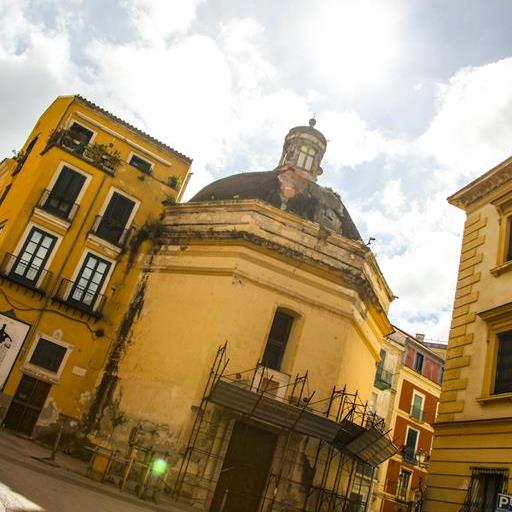
1) From Santa Maria della Pietà to the Crucifix
.
The Church of St. Mary of Pity, attributable by construction type to the 10th-11th centuries, took its present name of SS. Crucifix since 1857, when the parish of St. Benedict, closed by the military, was transferred there temporarily.
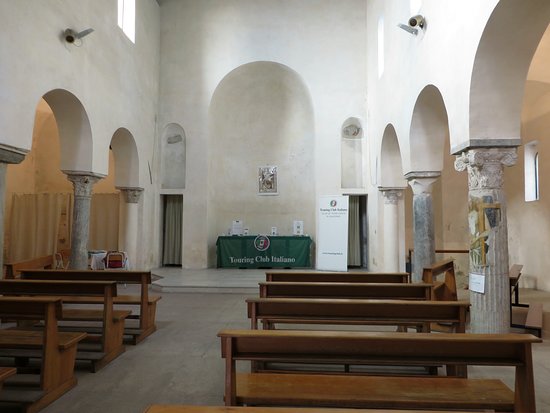
The church has a basical layout with three apses facing east and a nave and two aisles, punctuated by perusal columns, on which rest round arches of striped masonry with yellow tuff cornice. The north side of the church is slightly greater than the south side, so it is slightly inclined. In the rectangular niche to the left, at certain times of the year, there is an 18th-century wooden Crucifix, ascribed to Pietro Barliario. Beneath the’right altar are frescoes from the 16th-17th century.
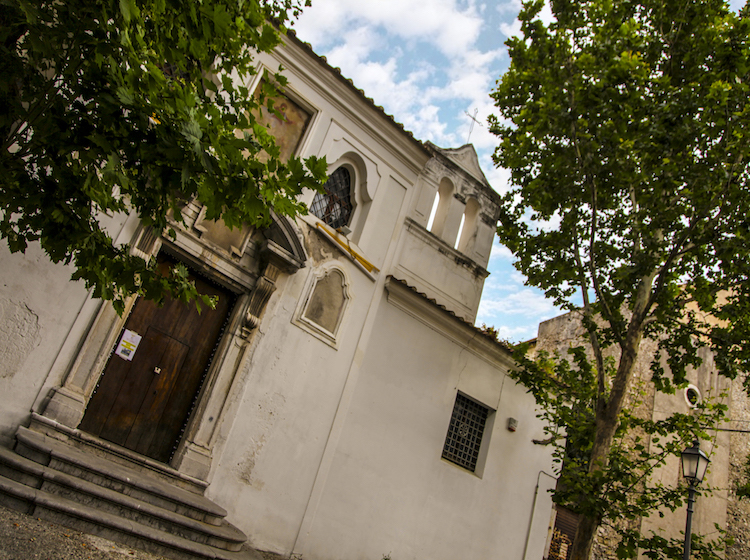
Outside, along the side wall facing Mercanti Street, it is worth admiring the original Romanesque mural, punctuated by single-lancet windows.
2) Transformations and the lower level
.
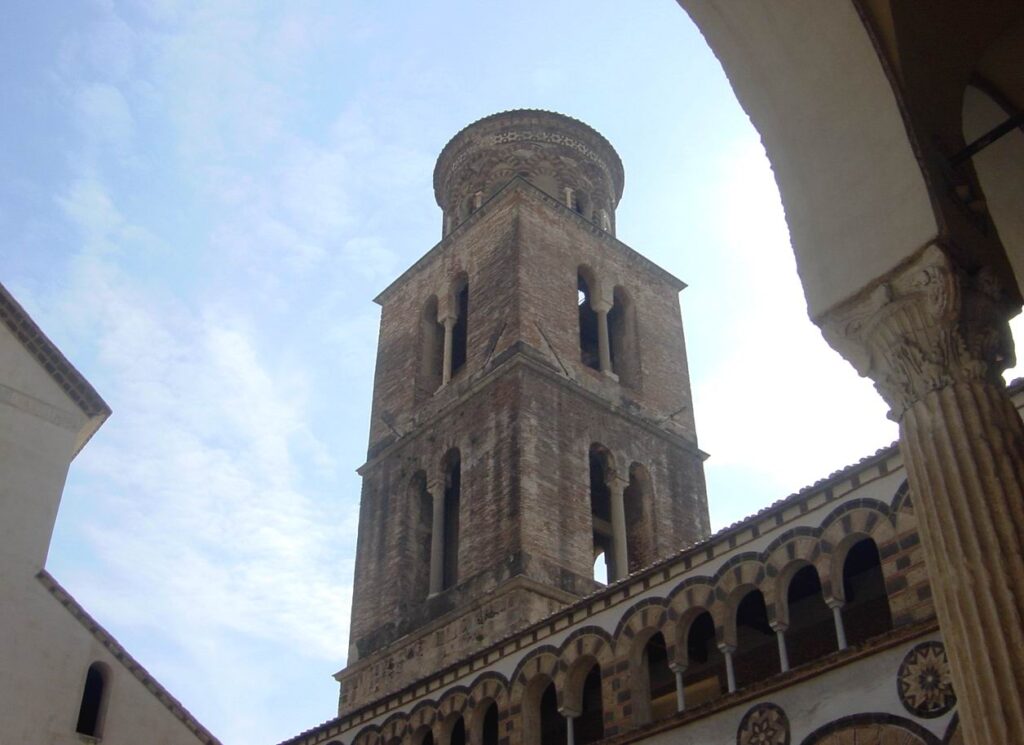
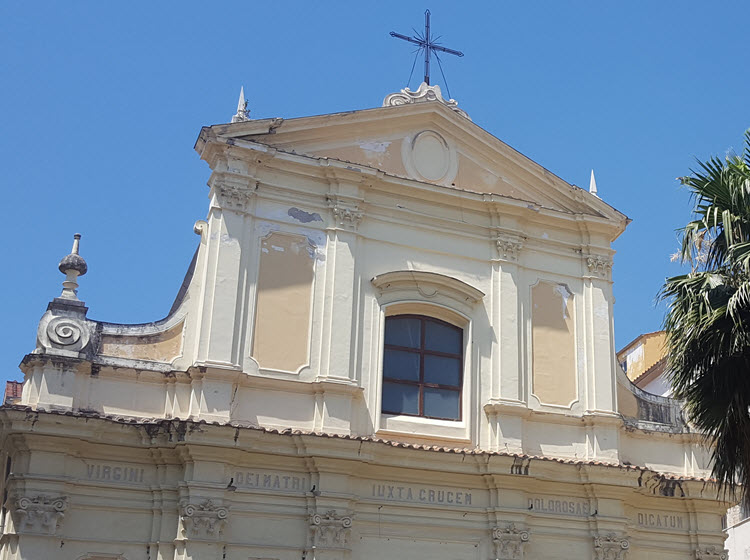
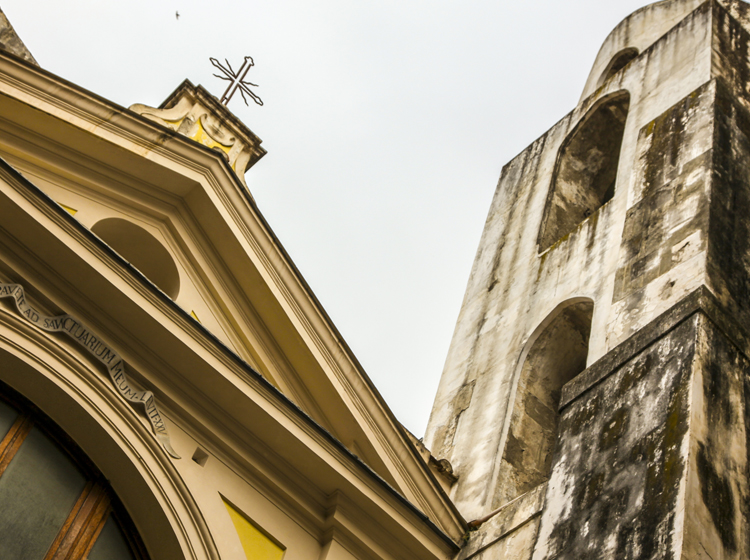
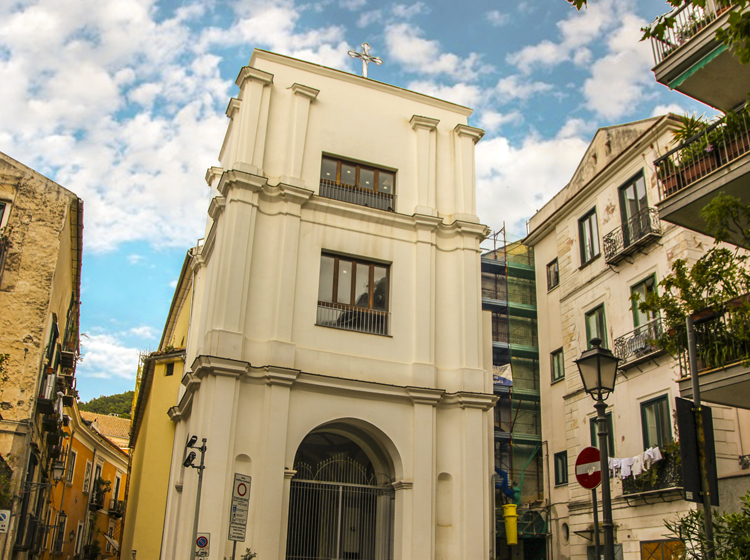
The church underwent various transformations during the 20th century. In 1928 a first new facade was built, in the academic style, with a superimposed portico that traced the interior scheme of three apses. After the great flood of 1954, the church was restored and consolidated according to the original image, in false neo-Romanesque style. The second new facade internally incorporated the 20th-century arcade, and to its right was implanted the campanile.
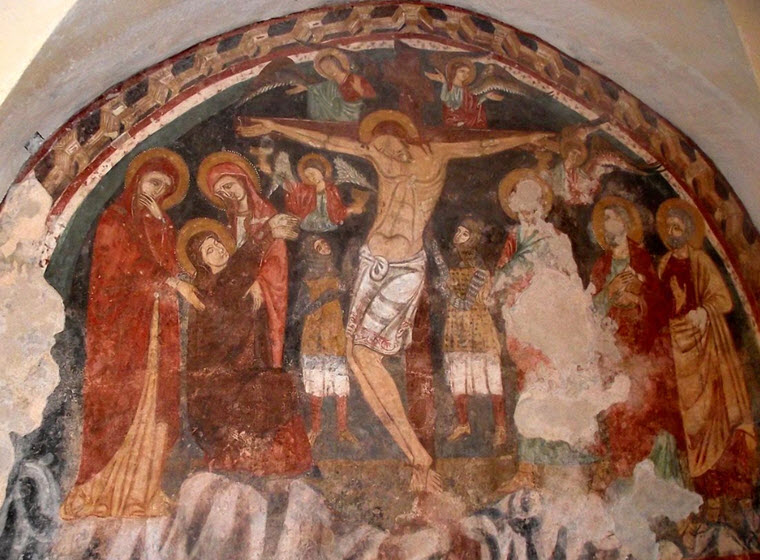
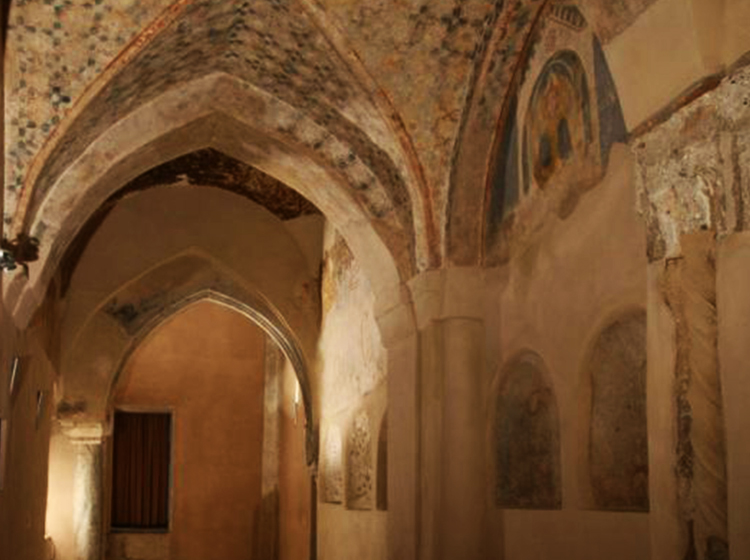
Under the church it is possible to admire the crypt, officially discovered in 1950. The crypt is thought to date back to the 8th century and predates the upper church. A famous fresco of the Crucifixion, datable between the 13th and 14th centuries, testifies to Angevin influences in Salerno, in a fully functioning structure.
The crypt is a part of the church.
The crypt, like the upper church, has a basilica plan with three naves, separated by cross-vaulted arches and culminating in three east-facing apses. The arches rest on pillars encompassing ancient columns of perusal. On the north side are single-lancet windows.



 L'evento inizierà tra 167 giorniSan Matteo fest Free admission 21 Sep 2026