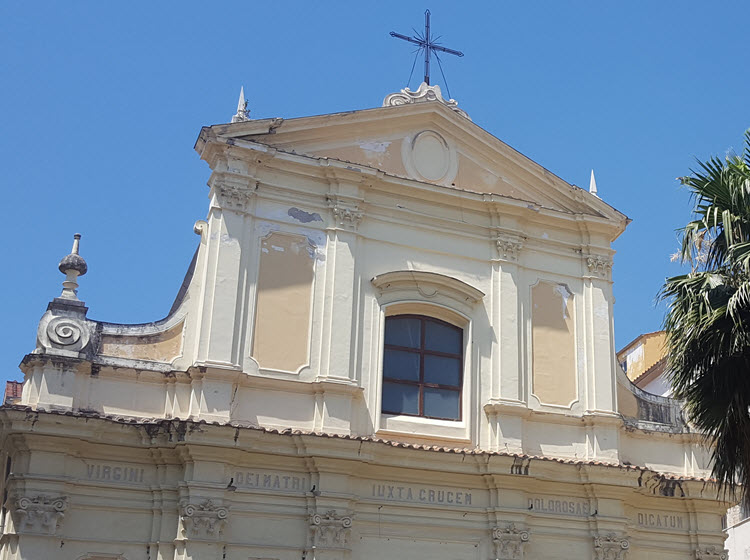
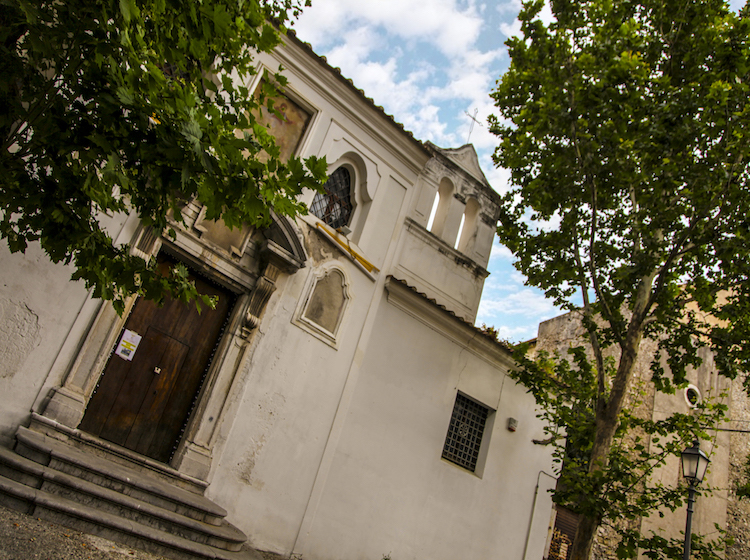
The Church of the SS.Annunziata, along with the Castle Arechi and Porta Nova represents one of the vertices of the geographic triangle, which describes the plan of historic Salerno. It is located, in fact, at the end of via Portacatena, reminding us of the bustling bustle of people that once crowded outside the now-destroyed city gate.
On the origins of this church, it is known that two donations from Queen Margaret of Durazzo were destined for it, in 1404 and 1412.
As early as the 16th century, its clergy received grants for the care and administration of the sick in the nearby St. John of God Hospital. In 1614, when the management of the hospital passed into the hands of the religious of the Order of St. John of God, the clergy of the Annunziata were left with only the task of religious and spiritual care.
The hospital’s history is the result of the presence of the Order of St. John of God.
In its history the church has undergone various reconstructions following natural disasters. Completely renovated in the mid-19th century, the church was submerged by an avalanche of mud and debris during the 1954 flood, and again underwent a three-year restoration period, which enriched it with marble, stucco, and decorations on the vault and in the side chapels.
The church was also restored to its original splendor.
Today the church, with a longitudinal plan and a dome-covered presbytery, displays a distinct eighteenth-century style. Inside we find various testimonies of distinguished Neapolitan artists. Filippo and Giovanni Ragozzino with Matteo Bottigliero are the authors, for example, of the major altar at the end of the nave, a splendid example of Baroque sculpture with polychrome decoration. Also noteworthy are the furnishings and the inlaid wooden entrance door of the sacristy, made in 1712 by master shipwright Saviotto, and the 1880s wooden organ in neo-Gothic style, placed on the counterfacade.
The church’s main altar is a splendid example of Baroque sculpture with polychrome decoration.
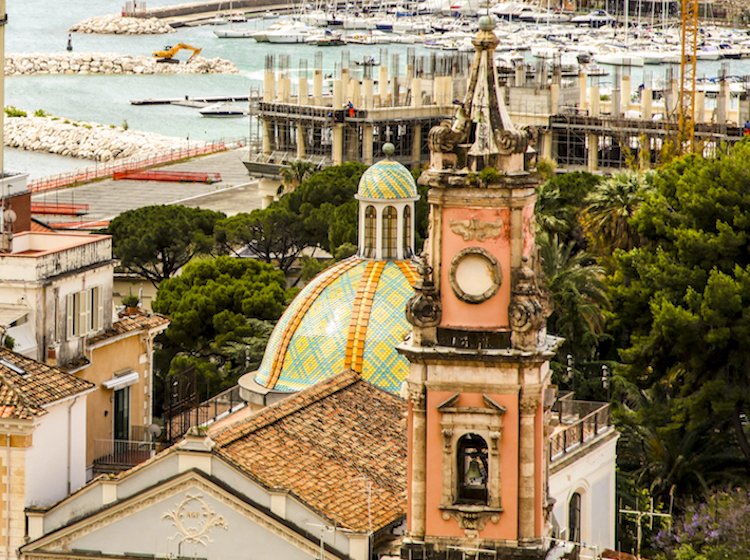
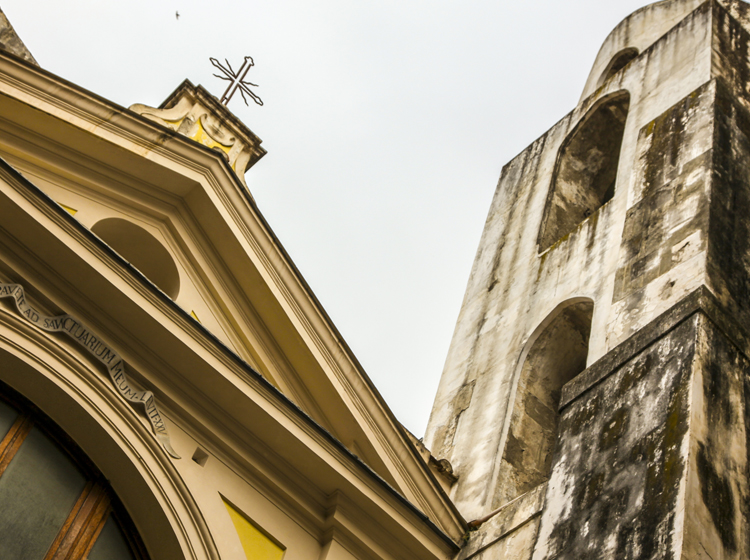
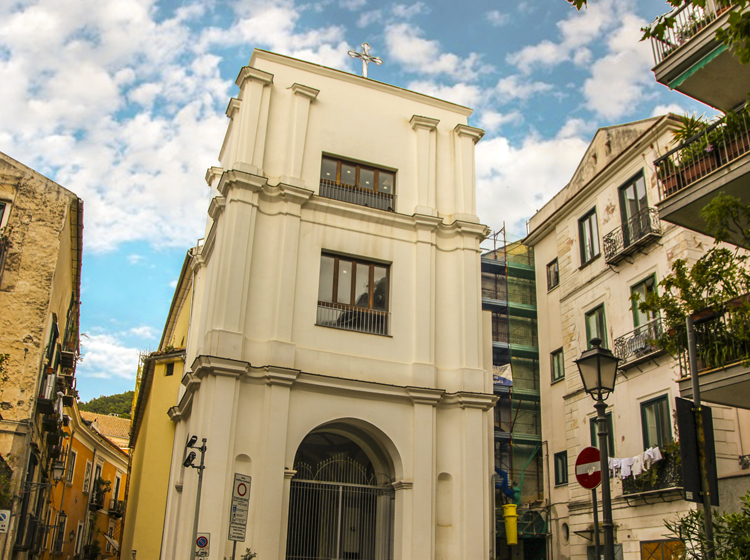
To Ferdinando Sanfelice, on the other hand, we owe the exterior view of an elegant campanile with four superimposed orders, completed by a pinnacle spire, connected by volutes. The plan of the work, completed between 1707 and 1737, is kept in the Cabinet of Drawings and Prints of the Capodimonte Museum in Naples.
The dome of the church has recently been decorated with beautiful majolica tiles, which further enhance the monument.



 L'evento inizierà tra 167 giorniSan Matteo fest Free admission 21 Sep 2026