• Home
  • Explore places
    • Itinerary
    • Verdi Theater
      • Home Verdi Theater
      • The season
      • Ticket office
      • Guided Tours Verdi Theater
    • Cultural Venues and Theatres
    • Churches and Monasteries
    • Palaces and Squares
    • Museums and Archaeology
    • Gardens and Parks
    • Modern Architecture
  • Events
    • Find an Event
    • Artist Lights
    • Must‑see events in Salerno
    • Featured Events
    • Events L'evento inizierà tra 167 giorniSan Matteo fest Free admission 21 Sep 2026
  • News
  • Salerno
    • historicals Figures
    • History of Salerno
    • The city
    • Civic Museum
    • Food and Wine
    • Traditions
    • Context and surroundings
    • How to get there
    • Cruise Ships 2026
    • Move
    • Useful Links
    • Contact us
  • Projects
  • English
    • English
    • Italiano
    • Français
Salerno Cultura -
  • Home
  • Explore places
    • Itinerary
    • Verdi Theater
      • Home Verdi Theater
      • The season
      • Ticket office
      • Guided Tours Verdi Theater
    • Cultural Venues and Theatres
    • Churches and Monasteries
    • Palaces and Squares
    • Museums and Archaeology
    • Gardens and Parks
    • Modern Architecture
  • Events
    • Find an Event
    • Artist Lights
    • Must‑see events in Salerno
    • Featured Events
    • Events L'evento inizierà tra 167 giorniSan Matteo fest Free admission 21 Sep 2026
  • News
  • Salerno
    • historicals Figures
    • History of Salerno
    • The city
    • Civic Museum
    • Food and Wine
    • Traditions
    • Context and surroundings
    • How to get there
    • Cruise Ships 2026
    • Move
    • Useful Links
    • Contact us
  • Projects
  • English
    • English
    • Italiano
    • Français
Salerno Cultura -
  1. Home
  2. Storia di Salerno
  3. Steps
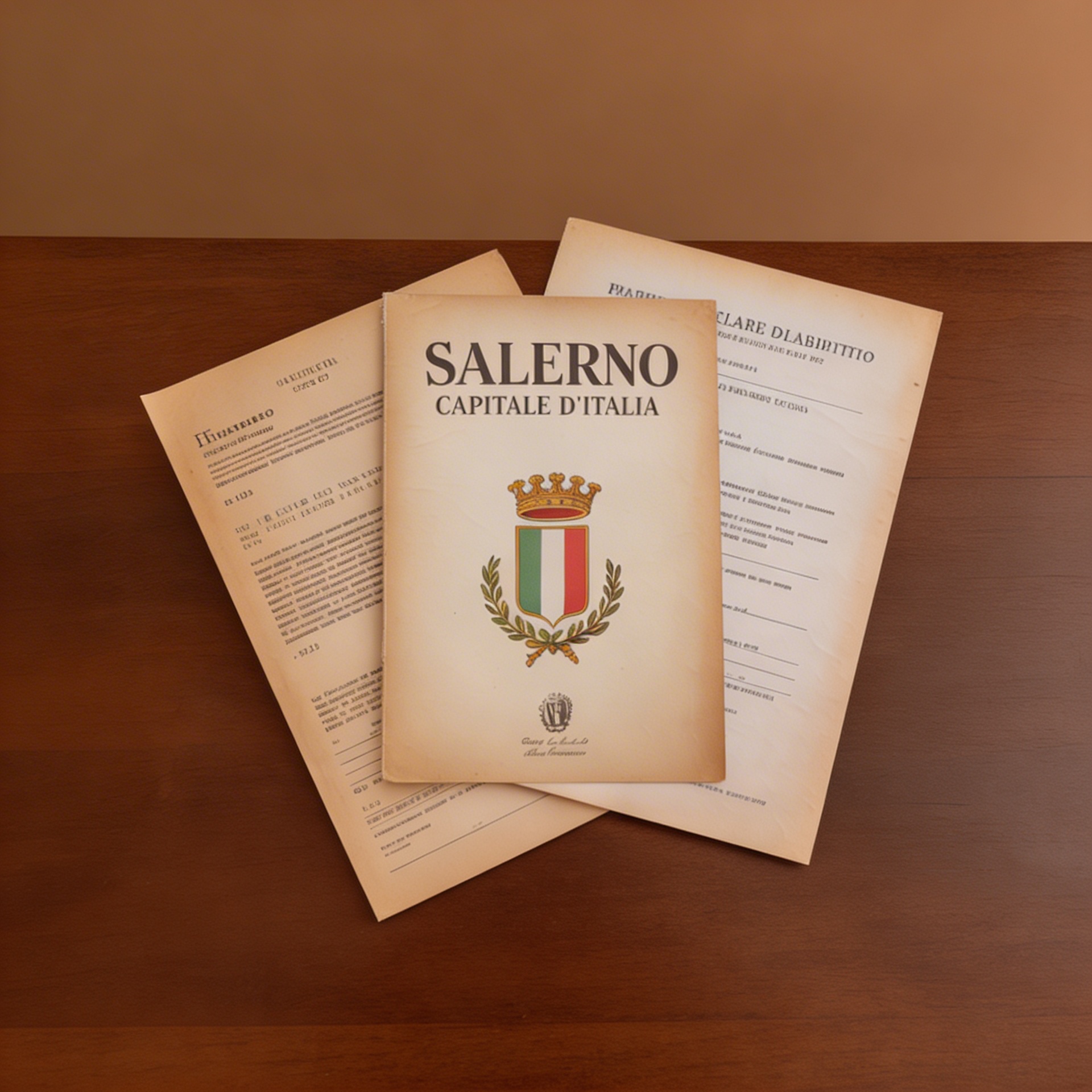
  4. Salerno capital of Italy

Salerno capital of Italy

Salerno was the capital of the Kingdom of Italy for five months of 1944, hosting three different governments and King Victor Emmanuel III.
Salerno was the seat of government and Royal Residence from February 11 to July 15, 1944. In September the year before, one of the most important Allied landing operations of the entire war had taken place in Salerno and its gulf, the one that, precisely, took the name of the Salerno Landing. It was September 9, the day after the proclamation of the armistice between Italy and the Allies, a date that was supposed to mark the end of the war and was instead the prelude to the most dramatic period of war and devastation for our country. Operation Avalanche, as it was code-named, saw the landing of American and British troops under the command of U.S. General Mark Clark all over the Gulf, from the small beaches of the Amalfi Coast, which were to create beachheads to Nocera, to the large beaches to the left and right of the Sele River, which would make up the bulk of the landing. It was a long and bloody battle, with the German troops defending themselves with order and determination and were several times on the verge of throwing the landed men back overboard. But at the end of ten days of hard fighting, the German troops retreated north of the Volturno River, making the conquest of Naples, the true and great goal of the landing, possible.
Thus it was that Salerno, partly because the front then stopped at Cassino for a year, became the main center of government for liberated Italy, and it was decided to move the King here and to house the Badoglio government, which was the first after the military occupation to take administrative control of liberated Italy, control that had until then been with the occupying military. The King went to live in Raito, in that villa Guariglia which is now a ceramics museum, while the ministries were divided between the Palazzo di Città, where the Presidency of the Council was precisely located, and other palaces, from the Tribunal, where the Ministry of Justice was based, or the Palazzo delle Poste for the counterpart ministry, or Palazzo Natella, for the Ministry of Public Works.
Three different ministries followed one another in Salerno, two headed by Badoglio and one by liberal politician Ivanoe Bonomi. It was between the second Badoglio government and the Bonomi government that there was what was called the “Salerno Turning Point.” The secretary of the Italian Communist Party, Palmiro Togliatti, arrived in Salerno from the Soviet Union where he had resided during the Ventennio, and announced that pending the liberation of the entire Peninsula, there was a need for the unity of all anti-fascist parties and to set aside the institutional question until after liberation. Until then the parties had refused to collaborate with the monarchy, which was colluding with the Regime, but Togliatti made unity against fascism privileged over all other demands. With the liberation of Rome in June 1944, the capital became the Eternal City once again.
During the period of “Salerno Capitale,” Salerno’s minister of education, Giovanni Cuomo, established the Magistero, bringing university studies back to the City.

Comune di Salerno
Via Roma – Palazzo di Città, 84121 Salerno
C.F. 80000330656 P.IVA 00263650657
Email: cultura@comune.salerno.it

Explore Places

  • Itineraries
  • Cultural Venues and TheatresCultural venues and theatres in Salerno enliven the city’s artistic life with a dense network of historic halls and contemporary spaces dedicated to theatre, cinema, music and performing arts. From the Municipal Theatre Giuseppe Verdi and the Cinema Teatro Augusteo to the Teatro Ghirelli, Sala Pasolini and neighbourhood theatres such as Teatro delle Arti, Piccolo Teatro del Giullare and Teatro Nuovo, these spaces host seasons, festivals, workshops and projects that make culture accessible to residents and visitors all year round.
  • Churches and MonasteriesThe churches and monasteries of Salerno preserve the spiritual and historical heart of the city, especially in the old town centre, where monumental buildings and more intimate spaces tell centuries of faith and art. From the Cathedral of San Matteo to the monastic complexes of San Benedetto, Santa Sofia and San Giorgio, a journey through these sites crosses different eras — from medieval and baroque architecture to spaces now repurposed for culture — keeping alive the connection with the religious roots of the territory.
  • Palaces and SquaresPalaces and squares in Salerno form a vibrant urban fabric, where noble residences, historical archives and monumental spaces recount the city’s civil and social evolution from the Middle Ages to the twentieth century. From Piazza Portanova and Largo Campo to Piazza Abate Conforti, from Palazzo Fruscione to the City Hall and the many historic buildings along Via dei Mercanti and in the Duomo district, every corner offers evocative architectural settings that combine history, everyday life and the symbolic places of the Salerno community.
  • Museums and ArchaeologyMuseums and archaeology in Salerno recount the thousand-year history of the territory through artefacts spanning from prehistory to the Roman era, housed in a network of institutions spread across the city. From the Provincial Archaeological Museum, hosted in the former monastery of San Benedetto and dominated by the famous bronze head of Apollo, to civic and diocesan museums and the routes dedicated to the Etruscan-Samnite sites of Fratte, each exhibition offers an immersive journey through everyday objects, funerary goods, sculptures and the evidence of ancient civilisations in the Salerno area.
  • Gardens and ParksGardens and parks in Salerno offer a widespread network of green areas stretching across the entire city — from historic gardens to large urban parks — creating spaces for relaxation and socialising just steps from the sea. From the Parco del Mercatello to the Parco del Seminario, from the Parco dell’Irno to the gardens of the eastern district and the Giardino della Minerva, these places combine nature, outdoor sports and cultural events, enhancing the urban landscape and making the city more liveable in every season.
  • Modern ArchitectureModern architecture in Salerno reshapes the relationship between the city and the sea with iconic buildings and open public spaces, transforming the waterfront into a new contemporary urban hub. From the Crescent and Piazza della Libertà to Zaha Hadid’s maritime station, the Santa Teresa seafront and the Cittadella Giudiziaria, a dynamic architectural landscape emerges — one of fluid lines, essential volumes and sea-facing squares designed for the social and cultural life of the city.

Events

  • Concerts
  • Dance
  • Exhibitions
  • Fairs
  • Festivals & Series
  • Music
  • Opera
  • Festivals & Series
  • Theatre

Salerno

  • Salerno
  • Contact us
  • Useful Links
  • Move
  • Cruise Ships
  • How to get there
  • Context and surroundings
  • City Museum
  • The city

© 2026 Comune di Salerno – All rights reserved

  • Credits
  • Privacy Policy
  • Cookie Policy