


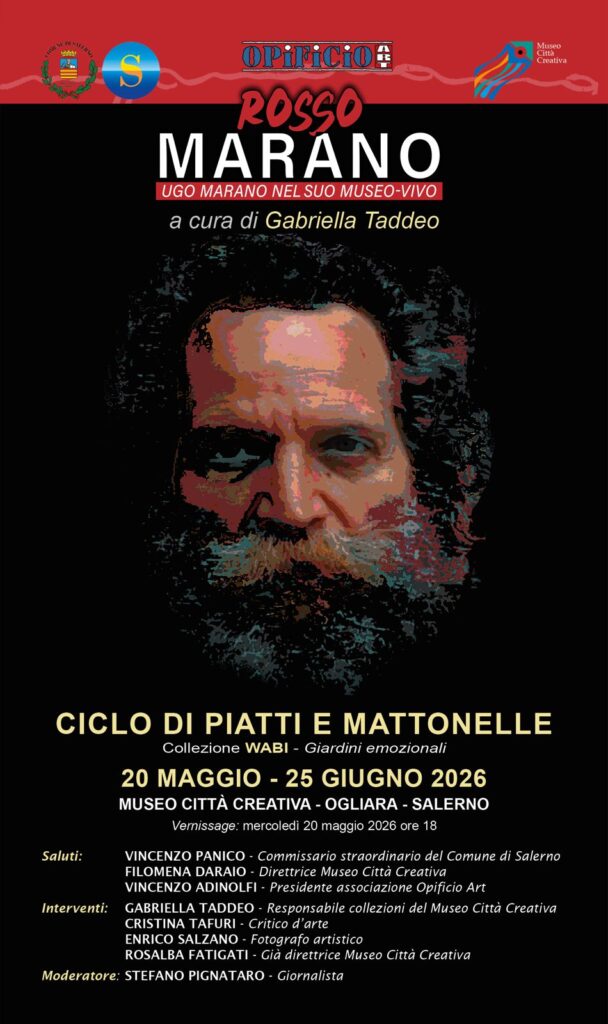
 L'evento terminerà tra 16 giorniMarano Red Free admission 20 May 2026 – 25 Jun 2026
Creative City Museum
- Description
- Event
- News
- Gallery
- Contacts
- Map
- Opening hours
- Itineraries
The museum
The museum was established in 1997 as a “laboratory space”and a place for experimentation and documentation on contemporary ceramics.
It is located on the hill of Rufoli, in the hamlet of Ogliara, a short distance from the ancient kilns of the De Martino Brothers, producers of local terracotta according to ancient fire rituals.
The Creative City Museum aims to restore vitality to Rufoli’s historical-craft tradition, rediscovering the identity of an area characterized by centuries of ceramic activities.
Since its inception, it has been organizing educational and didactic activities, hosting new artists, and promoting opportunities to meet and discuss the local, national and international ceramic tradition.
The museum collaborates with associations, artists, institutions and businesses, hosting exhibitions of contemporary ceramic art, pottery courses, artistic performances, decoration workshops and other applied arts, with special attention to the younger generations.
The Collection
The ceramic art collection has been gradually formed through donations made by artists, ceramists, architects, and associations active at the museum or who have been featured in exhibitions and displays over the years.
The artists who have exhibited at the Creative City Museum include prominent figures from the national and international scene: Riccardo Dalisi, Lello Esposito, Lucio Liguori, Ugo Marano, Enrica Rebeck and Marco Bacchilega (Bottega Ta), Monica Amendola, Ilaria Di Giacomo, the Honduran Ubaldina and M. Magdalena Manzanares, Argentines Josè Bravo and Aitor Romano, Italian-French Biagio Pancino, Sofia and Pierluigi De Mas, Gelsomino D’Ambrosio, Pietro Falivena, Augusto Pandolfi, Antonio Petti, Marco Vecchio, Pietro Lista, Giovanni Cavaliere, Ferdinando Vassallo.
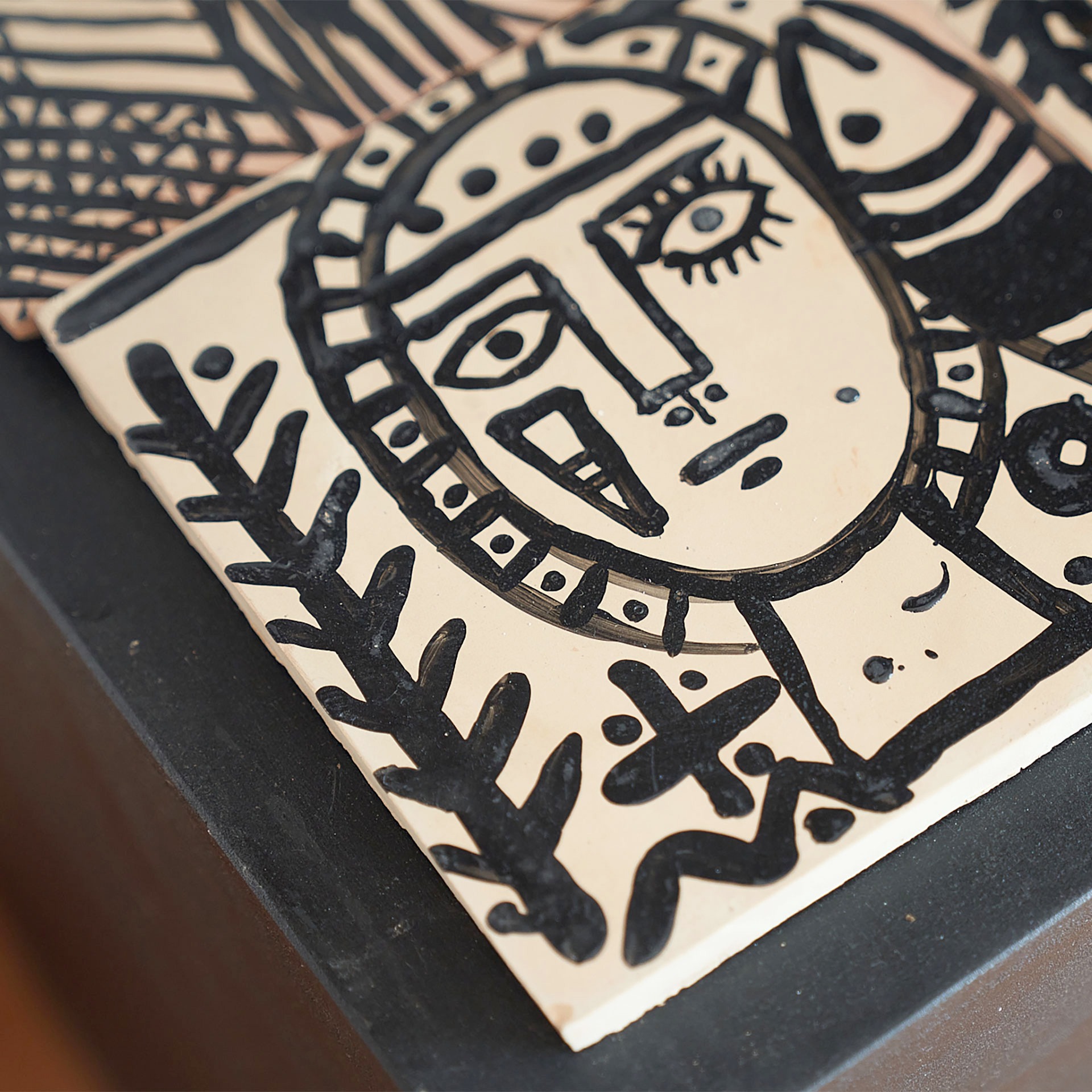
On the occasion of the 2003 edition of the Cartoons on the Bay festival, the museum invited filmmakers and illustrators to decorate one or more of Rufoli’s terracotta tiles. The collection, which consists of more than 100 tiles, is on permanent display at the museum and is signed by Bruno Bozzetto, Yusako Fusaki, Lino and Rosanna Banfi, Pierluigi Pagot (son of the creator of Calimero), Maurizio Nichetti, Fusako Yusaki, Gregoire Solotareff, among others.
.
Curiosities / need to know
.
- The ‘mother-land’ of Campanian ceramics
.
Rufoli is the ancient mother-earth from which potters in Vietri and throughout Campania have derived the raw material for their work. Since the time of the Etruscans, the area has been the site of ceramic quarrying and working from which the ancient Vietri school originated, revived and renewed between the 1920s and 1930s by the so-called “German group,” led by Richard Dolker.
In the late 1950s, new, cheaper bricks replaced the old terracotta bricks. Produced on an industrial scale they supported economically better the building and population boom of those years. And artisanal production underwent an initial swerve that gradually continued over the years.
- The bundle kilns
.
Clay blocks are pressed and shaped. The resulting forms are stacked and covered with sacks so they do not dry out. Trimming takes place on a wooden shingle. The clay cuttings (trimming) fall into the wheelbarrow, in front of the scanno, and will be partly used as spacers in the loading of the kiln. The long and delicate process of drying begins. Next they are exposed to the sun in a herringbone or palombella pattern. One is finally ready to load the kiln. It takes four days of work. The baking takes 36 hours.
- The ancient Fornaci de Martino
.
Currently, the De Martino Furnaces are the only survivors of the artisanal ways and rhythms for ceramic production. Those who visit them can witness the evocative ceramic cycle a fascìne, which has now completely disappeared, ranging from extraction in the quarry to the work of the stonemason, who trims each tile one by one.
L'evento terminerà tra 16 giorniMarano Red Free admission 20 May 2026 – 25 Jun 2026| Day | Morning | Afternoon |
|---|---|---|
| Monday | 09:00 – 13:00 | – |
| Tuesday | 09:00 – 13:00 | 16:00 – 18:00 |
| Wednesday | 09:00 – 13:00 | – |
| Thursday | 09:00 – 13:00 | 16:00 – 18:00 |
| Friday | 09:00 – 13:00 | – |
| Saturday | not accessible | not accessible |
| Sunday | not accessible | not accessible |
Cost: Free
Nessun itinerario disponibile.